comment 0

Write On!

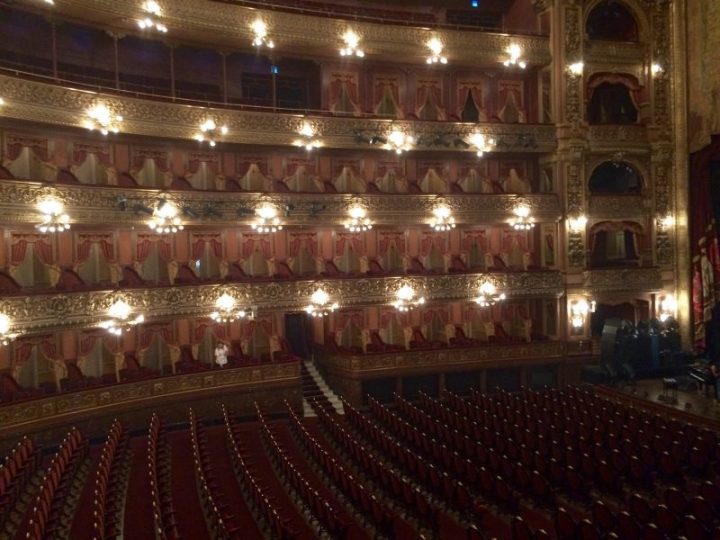
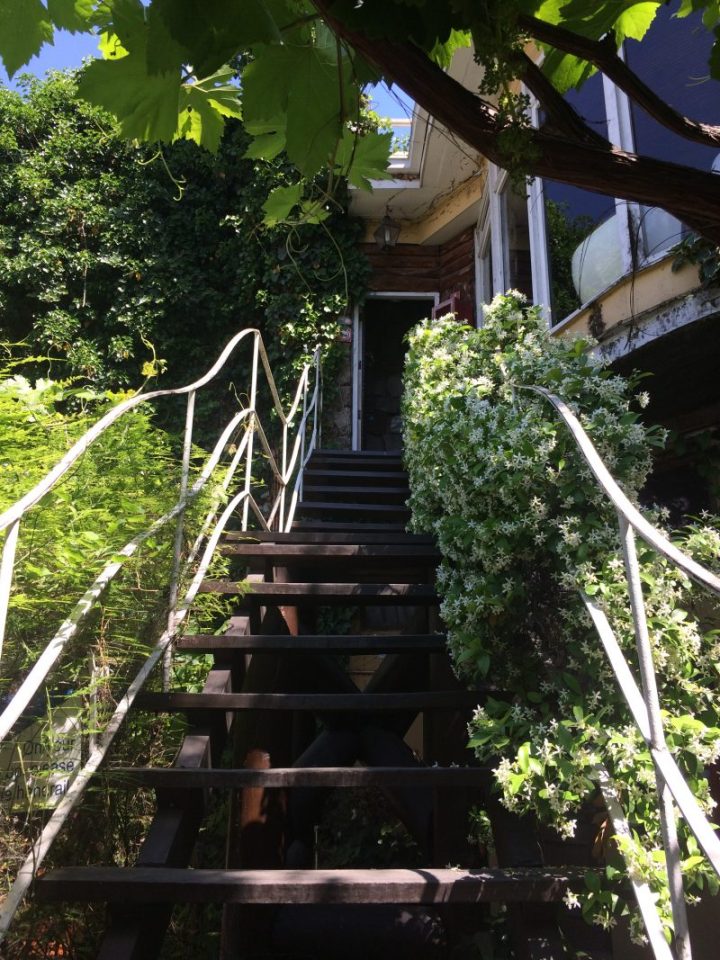
(Photo: “La Chascona,” the home of Pablo Neruda in Santiago, Chile)

I have been a working writer for over 30 years. I started as a 10 year old, keeping a journal and producing a little home newsletter. I have been writing religiously ever since. It is not only what I do, but who I am. As a member of the American Society of Journalists and Authors, The Authors Guild, and the National Federation of  Press Women, and with three books and hundreds of articles to my credit, I no longer need to prove that I can write. But I may, on occasion, need to prove, at least to myself, that I can still publish.

An important aspect of publishing is being active in the writing/publishing community vis-à-vis professional organizations, networking conferences, and academic workshops. Things change rapidly in this industry: magazines and newspapers come and go, as do their editors, along with freelance opportunities; the reading public’s preferences shift from print to on-line to social media; consumer trends create special interest groups and demands for new content information. Good writing and reliable reporting are constants, of course, but the marketing of that writing, and the way those “intellectual products” find their audience and get delivered, has changed dramatically.

For the first half of my career, everything centered in New York City. All the big publishing houses, the major national magazines, the best-known literary agents, the national writers’ organizations and, of course, The New York Times were all there. Lucky for me that I was too. Even as a relatively small player in the big city scene, I could easily pop in for editorial meetings, have lunch with my agent, or schmooze with fellow colleagues at big conferences. Yes, there were a few editors and agents in Chicago or on the West Coast, but only a few; mostly it was the literary and little publications that were out in the “hinterlands.”  If you wanted to play with the big boys in commercial publishing, you had to make those connections in New York, and you had to be around to sustain those relationships, or at least be willing to make regular trips East to do so.

Of course, those very early years were pre-computer — pre-everything except the telephone. I realize I’m dating myself here, but I actually wrote my first book on a Smith Corona typewriter, and then typed and retyped the edited rewrites. I considered myself on the cutting edge of technology because my typewriter had a an auto-correct feature! Queries for articles were typed up one-by-one and sent to individual editors in snail mail. The biggest controversy, given how much time the whole submission process took, was whether or not multiple submissions (pitching the same idea to several different publications) were ethical.

A few years ago I relocated down to Southwest Texas and out of the New York area. Since then,  I have not been pursuing national publication; rather, I have started this website and only done a couple print pieces in the local paper. While I am, so to speak, semi-retired, and not really angling for career advancement anymore, I still write. But when some younger members of the ASJA (American Society of Journalists and Authors) in the area started a Texas chapter last year, I was on board. Writing and publishing has, after all, expanded beyond New York, and we are, after all, one group, regardless of age and stage in our careers. Furthermore, there is some obligation for older members to lend their voice, experience, and support  to the development of a new generation of writers.

So, I signed up for the first Texas regional conference. And I singed up for the “Client Connections,” which is basically a speed dating round with editors to pitch story ideas and get assignments. My contacts were with editors of local publications, San Antonio Magazine and Texas Highways, because, well … this is where I am now and this is what I know. Even so, I didn’t have high expectations, mainly  because I didn’t have much confidence in my own abilities to still be competitive. Age and absence from the day-to-day hustle will do that to you.

Ironically, my “speed dating” sessions went well, so well in fact that I walked away with positive responses to several of my ideas. Now I have article assignments and longer-term proposals in the works. Suddenly I have more deadlines than I can handle. Now I have stress!This is what happens when your expectations underestimate your abilities.

It’s okay; it’s affirming. It’s even humorous. The one constant in my life, regardless of my other endeavors, has been my writing. It is my personal and professional identity, my mainstay, my salvation. I have been a teacher/college professor, a corporate employee, a fabric artist, a community activist and volunteer, a mother, a daughter, and a wife, but writing is what  I do, who I am.  As long as I am still doing it, publishing or not, I am me.

But I am glad to be publishing again.
comment 0

Fat Tuesday

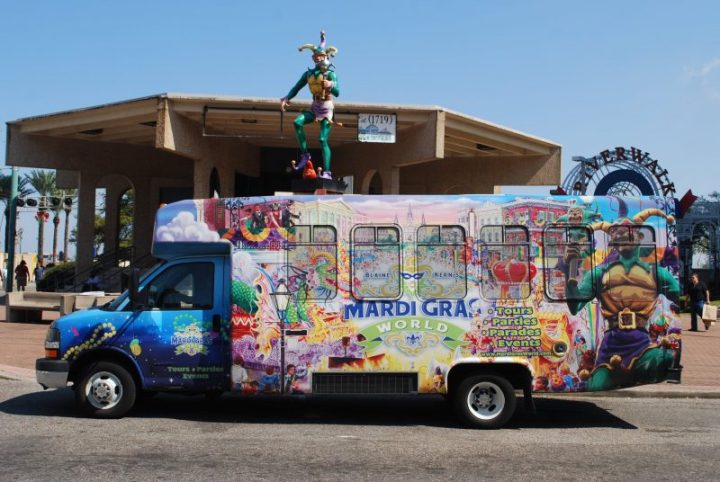
So here we are again, already at Fat Tuesday with another Lenten season of sacrifice upon us. Seems it rolls around faster and faster each year, faster than Christmas even, though mercifully, with less stress. Lent is a good time to stay home, be quiet and repent; nobody expects parties or gifts or cards, and the general mood everywhere, even among those who aren’t Catholic, is subdued. (Of course, the grey, cold days of February may account as much for the restrained demeanor as religious devotion.)

But all that seriousness starts tomorrow. For today, at least, “Laissez le bon temps rouler!  Let the good times roll!  New Orleans is at full throttle, as are all those other places that celebrate Mardi Gras (which is French for fat Tuesday). I love New Orleans. My husband and I met there fifty years ago, and we have returned often over the years; in fact, we plan to go back for a few days later next month. Every so often, I need to revisit those romantic highlights: a drink in the Carousel Bar in the Monteleon; dinner at Arnaud’s with a peak at the Mardi Gras gowns in their back-room museum; early morning café au lait and bignets  at Cafe du Monde; Sunday brunch at Commander’s Palace in the Garden District. I need to stroll the misty streets of the Vieux Carré, feel the spirits of voodoo in St. Louis Cemetery, and move to the rhythms of jazz at Preservation Hall. I need the timelessness and transport that only New Orleans among American cities can offer, the food, the music, the atmosphere. I need a break from the ordinary, perhaps these days more than ever; I need romance and glamour and relief!

Obviously, New Orleans is one of those places I’m passionate about, though I have to admit that I have never been there during Mardi Gras. I hear that the population of the city almost doubles during the few days before Ash Wednesday. Good for them and for tourism, but no thank you. The crush of crowds on Burbon Street on any routine Saturday night is enough for me. But I sure have given some fabulous Mardi Gras parties of my own at home, decorated in brassy gold, green and purple with sequined masks, ropes of beads, and French Creole menus including shrimp remoulade, Brennan’s veal grillades, King Cake and chicory coffee.

The first Mardi Gras type celebration is recorded to have been in Louisiana in 1699 a few miles from the mouth of the Mississippi River, about where New Orleans is today. These celebrations, arising out of a French Catholic tradition, were meant to mark the final days of food and drink before the fasting and austerity of Lent began.  The first Mardi Gras parade as we know it took place in 1837 in New Orleans, though the 18th and 19th centuries saw Mardi Gras festivities spread to other southern regions that shared a French colonial heritage, most notably to Galveston, Mobile, Lake Charles, and Pensacola. Mardi Gras parties, parades and balls are still time-honored traditions in many of these cities today.

This year is sort of odd, because Ash Wednesday coincides with Valentine’s Day, which is typically celebrated with champagne and chocolates, two things likely to be “given up” for Lent. Here in San Antonio, in a city that is heavily influenced by traditional Catholicism, the main focus is on the spiritual: statues in church are already covered, schedules for Lenten Masses and confessions have been posted, and re-enactments of passion plays for Good Friday are being planned. Here, the time and energy spent in “letting the good times roll” before the season of sacrifice begins is already being directed toward the bigger celebration of Easter. For the most part, Valentine’s Day is getting lost in the shuffle this year, although I have noticed that some places are advertising special Valentine’s dinners and activities for tonight.

As a matter of fact, we are attending just such “a heartfelt event” this evening at the assisted living home where my Mother lives. Given the ages of most of the residents (and of us!), this is not likely to be a very romantic, much less glittering or glamorous affair, but it marks an occasion, a holiday, another landmark in the year that a family has together. As we get older and our lives get smaller, the days blend one into the other and every day becomes just another day hardly distinguishable from the last. Unless we distinguish it.

So, whether you celebrate Valentine’s Day with hearts and flowers, or Mardi Gras with parades and doubloons, or yes, even Lent with ashes on your forehead, mark the day as special simply because you are still here to enjoy it. Laissez le bon temps rouler!

comment 1

Are We Having Fun Yet?

Here we are at the very end of January and I’m only now getting to the first journal entry of the new year. It’s been a full month since my last post, and I feel guilty. I hate missing a deadline, even if it is self-imposed. I could say that I don’t know where the time has gone, but that wouldn’t be entirely true. I know it’s been spent cleaning out, getting organized, doing paperwork, regrouping, and yes, at least preparing to “have fun.”

In a recent essay in The New York Times, writer Alan Burdick  (It’s Been a Year of This?  1/21//18)  talks about the fungibility of time, how it drags when you are bored or fearful or sad — such as in this era of the Trump administration — or how it flies when you are happy or engaged or productive —such as in this era of the Trump administration. Curiously, even involvement in fervid political activism can qualify as “fun” if you are really into it (depending, of course, on how you define fun).

Anyway, my personal description of the last few months has been that the days seemed long, but the weeks and months flew by. That description is not completely incompatible with the standard psychological trope: time slows down when you are agonizingly conscious of it, such as at a boring lecture or involved in a tedious conversation, but it “flies” when you are fully absorbed and occupied, even if you are not exactly “having fun.” Days full of stress and anxiety may feel excruciatingly long, but when those days add up in chores accomplished, objectives reached, and goals achieved (such as handling my Mother’s affairs, getting her relocated, and recovering from a hurricane), then you somehow feel that time has, indeed, flown by. “Fun” is beside the point.

But not always. This month I had dear friends here to visit for a week. It is a given that stressors can be both positive and negative, and that even happy occasions can create stress, especially when it comes to entertaining guests: the planning, the cleaning, the cooking, the work of preparation. An additional stressor for our week was the absolutely terrible weather that San Antonio experienced during their visit: snow, sleet, ice, rain, mist, and freezing temperatures. On the day one of my friends arrived at the airport, the entire city was shut down. (Good thing I am confident, even if stressed, about driving in snow and ice.) But, we had plenty of food and wine in the house, and our own good company, so even though some of our plans had to be adjusted, we did have fun.  We talked and laughed and enjoyed each other, rejuvenated our relationships and set a date for our next get-together.

During that week, time flew because I was not aware of it. I was happy and busy, “in the flow” of friendship, much as I am “in the flow” when working on my art quilts or my writing. The conscious suspension of time happens not only in creative pursuits, however, but also in moments of ordinary everyday pleasures. Something as simple as reading a book, hugging the dog, or walking in the sunshine can offer moments of pure contentment, even joy. We just have to be quiet long enough to let ourselves enjoy those moments, to be present in them and be grateful for them. The experience of time flying is generally an indicator of good mental health and emotional stability, though we may not always recognize it as such until it’s behind us.

Ultimately, time slows down because you are painfully aware of the waste of it; likewise, it speeds fast forward when you are NOT counting the minutes and hours. It may seem counterintuitive but, even when engaged in unpleasant activities, time will accelerate because you are totally occupied.  While that may not be remembered in retrospect as one of  life’s happier periods, it is still better and more productive to tackle difficulties head on than to sit and sulk and count each dreadful day.

Now that we are over the hump of January and all the feigned optimism and good wishes that a new year inevitably brings, I am looking ahead to 2018 with a more realistic attitude, even a somewhat selfish one. Yes, I still have to face some of those mundane chores of  another year, banking and taxes and medical appointments, all of which will fritter away time holding on the phone or sitting in doctors’ offices, but I am determined not to deliberately waste my own time — or to let others waste it —on anything that is not absolutely necessary.  I have stories to write, art to create, and trips to take. After all, whether it drags or it flies, time is a finite commodity; there are only 24 hours in a day and only so many days in a life. We need to spend what we have wisely, and well, in the interest of our own happiness.

So, are we having fun yet?

comment 0

Intermission/Intermezzo

The days between Christmas and New Year’s provide an intermission, I think, a necessary break in the drama of life between the big productions of the current year and the coming attractions of the year ahead. During this interlude, I slow the pace, even often having time for quiet conversation over a glass of champagne, just as theatre-goers do in the lobby between acts at a Broadway play.

Actually, I do more than have conversations and champagne, though my activities are generally quiet and contemplative, and mostly solitary. For instance, this is the time when I review last year’s New Year’s resolutions, evaluate how I did, and formulate new ones for next year. I review finances, close out year-end bookkeeping and revise the budget. I mark new dates on a new wall calendar (yes, in addition to the calendar on my smart-phone), noting what appointments and services I need to arrange. Oh and yes, I write real, hand-written thank-you notes for Christmas gifts.

And then I start cleaning out. For some reason, these days after Christmas find me especially intolerant of clutter; I guess it’s a prelude to wanting the tree down and all the decorations stored so I can have a clean start for the New Year. Anyway, as I try to put gifts away, I am irritated by already full-to-overflowing shelves and drawers; as I file away notes and cards, I am annoyed by the paper, pens and notebooks that spill from my library cabinets; as I put away holiday dishes and special china, I am bedeviled by the challenge of fitting things back into the cupboards from which they came. Finally, as I begin to corral holiday decorations, I am disgusted by the full bins of making-merry decor in my garage that haven’t seen the light of Christmas Past for years. This stuff really needs to go, a lot of it anyway.

Having just been through the chore of emptying out my Mother’s house and moving her up here, I am perhaps more aware than ever of the accumulation of “stuff” that comes to define our lives and the enormous culling process required to determine what is really special, much less necessary. For the most part, our stuff means little to anyone but us; it is an encumbrance while we live, and an overwhelming burden to those who live after us. The paper, the photos, the furniture, the knickknacks, the keepsakes, the collections, the artwork, the diaries, the books, the tools, the crafts, the clothing, even the fine wines — all need to be reevaluated regularly. If something has value or meaning to someone else, give it to them now; if not, turn it into cash or dispose of it yourself and save others the burden of the decision.

All this cleansing creates a rhythm of sorts, moves me into my own intermezzo, which is an operatic term for a short musical movement between acts.  The musical interlude may be calm, even light,  but it does not offer the full time-out of an intermission; rather, it becomes a bridge from one completed section to the beginning of another for which the crescendo can only be anticipated.

I try not to anticipate too much, but instead to slowly build the energy and momentum needed to sustain a productive, but not frenzied, New Year. Maybe the softer melodies of an intermezzo will stay in my mind’s ear for a while as soothing “background music” to my life.  Maybe if I turn off the news and tune out the noise and distractions, I’ll be able to hear it. Maybe this season of transition from drama to intermission to intermezzo will bring me a new resolve and peace of mind with which to face whatever comes in 2018.

Maybe.

comment 0

Christmas Comes But Once …

Christmas has come to my Mother’s residence. It doesn’t take much to evoke the beauty of the holidays here because this place is stunning all by itself. It could easily be mistaken for a Grand Hyatt or a Ritz-Carlton. Decorated as it is for the season with a designer’s eye in gold, silver, bronze and turquoise, every detail enhances the architectural style and sophisticated ambiance of this newly-opened facility. The place is gorgeous.

The opulence is a bit at odds with, if not the season, then certainly the situations of the residents, most of whom would probably much prefer to be spending Christmas in their own homes, however humble. But, as is so often the case, health and circumstances dictate and so residents find themselves on  “permanent holiday” here, with no worries, no chores — and few choices.

Traditional Christmas music is piped in throughout, subtly, but perceptibly; back in my Mother’s separate memory care wing, the big TV in the great room shows an endless stream of vintage Christmas movies: White Christmas, Miracle on 34th Street, Holiday Inn. Volunteers from churches and community — choral groups, pet therapies, musicians and children — come to share the yuletide spirit with the elderly and the infirmed. The activities director organizes holiday arts and crafts projects — stringing bells, making cards, fashioning paper decorations — to keep everyone busy and tuned in to the season. These activities seem juvenile to me, and calls to mind that sad canard about the elderly: “Once an adult, twice a child.”

I myself am invited do a dramatic reading of Christmas poems this week, hoping to evoke memories of old school days and Christmases past. I bring little gifts, notebooks and pens, in case anyone cares to write their own poems, or perhaps a Christmas list. (Every speaker knows that, regardless of the audience, you always bring some “take-away” to leave behind.) Choosing the poems for recitation has not been easy for me, a writer and English professor; poems by T.S. Eliot or Longfellow won’t quite do. Too academic. I researched my selections carefully, settling on mostly light verse and well-known lyrics, and have practiced my readings all week. I hope to offer a little more “adult” entertainment for those who might appreciate it.

Everyone is already gathered in the great room when I arrive and they are all wearing Santa hats, except for those who are asleep. My Mother smiles and makes a face as I point to her hat. She is weak and infirmed, and has difficulty speaking, hearing, seeing, and even eating, but she is not mentally impaired.  As always, she is proud of me and appreciates the fact that I will come here so often and try to support her in this community among her new-found friends, most of whom do not seem to have regular visitors or regular support themselves. It is an odd world, this — a world in suspension between reality and memory, or lack thereof. It is not easy to move into and out of this world. I do it every other day or so, but it takes an emotional toll.

As the week ensues, we plan for Christmas itself.  Unfortunately, I am unable to bring my Mother to my home (can’t navigate the transport, the wheelchair, the movement within my house). It makes me sad, though actually, she would probably be disappointed by the reduced decorations in my house and the absence of some of her favorites. I have cut back considerably this year, not even baking all the cookies and goodies I usually make, and certainly not buying all the gifts. There are no parties, no visitors, no reasons for a big production with just my husband, our son and me to celebrate; the requisite mood this year is quiet, the requisite need is rest. With the ready-made excuse of these last difficult months, I’ve given myself permission NOT to be Martha Stewart and, surprisingly, I have found myself to be calmer, more collected and, yes, perhaps even a bit more attuned to the true spirit of Christmas than I have been in a long while. This is a gift of welcome relief that I needed to give to myself, and it may become the gift that I “keep on giving” myself in years to come.

The only one with presents to open this year is my Mother, and we will take them out to her on Christmas Eve before we head downtown to Mass at the Cathedral and dinner on the Riverwalk, which has become our usual San Antonio tradition. I will roast a Thanksgiving turkey for  Christmas, since I wasn’t here to make it in November, and we will make the showy English trifle my Mother established as a must-have tradition years ago and take it out for her to share with everyone at lunch on Christmas Day.

I explain the plans for the week in advance, so that Mother knows what to expect and will not be disappointed. “I know,” she says. “I understand.”

And then, while looking at her little tree with all the dolls on it, she adds, “Whatever. I still love Christmas.”

comment 0

Mapuche Machi

My Mother collects dolls, mostly small, unusual dolls, with which she gradually began to decorate her Christmas tree each year. Over time, as I have travelled to far-away places, I have added to her collection with dolls representing those cultures. So now, her tree has become pretty much an international display of figures from all over Europe and Asia, Africa and the Middle East.

My husband and I just returned from a long-planned trip to South America, to Chile and Argentina with a brief foray into Brazil to Igauzu Falls. The original idea when we booked the trip, besides the fact that we hadn’t been to South America before, was that I would get to do the tango in Buenos Aires for my big birthday this year. By happy coincidence, Canadian friends of ours whom we had met years ago on a trip to Egypt, were looking at the exact same tour, so we decided to join them. That, of course, was six months ago, well before all hell broke loose in South Texas, and in my life. We were still debating about actually making this trip up until a week or so before departure, but by then my Mother was settled in at her new residence and our son was available to handle things. “Go,” my Mother said.  So we did.

Usually I start preparing for a big trip to a place I haven’t been before months in advance. The anticipation and planning, after all, are part of the joy of travel. For this trip, I had ordered some guidebooks and histories of the regions we would be visiting, along with a couple volumes of Latin American literature, and even downloaded some review exercises to “brush up” on my Spanish. Since I knew there would be treks through Patagonian forests and national parks in the Lake region, I also intended to double down on my morning walks and exercise regimen and to shop for travel clothes with “layering” in mind to handle the varying temperatures in South America in the spring. Most of all, I hoped to be rested, as well as ready.

But of course I wasn’t, rested or ready.  Just as my books began to arrive and I started working on my Spanish lessons, Mother got sick, Hurricane Harvey hit, her house had to be repaired, cleared out and sold, and I basically ended up spending four months living in Victoria, running home only on weekends.  As the departure date grew nearer, my hopes of making the trip at all diminished accordingly, along with my energy.  My back, neck, knees, legs, feet — everything —hurt; thoughts of the tango made me tired.

I’ll admit it: the trip was a challenge. The travel was arduous, with long flights down to Santiago and back from Buenos Aires, and trains and planes and busses from one region to another in between. The schedule was rigorous, with lots of early starts, long days, packing and unpacking, and yes, those four and five mile nature treks. But the landscapes were spectacular, the people warm and gracious, and the small group of ten of us with a Chilean guide proved amiable traveling companions. I learned so much, which I suppose is one advantage of being so poorly-prepared to begin with.

We began in Chile and our first stop was to visit La Chascona, the Santiago home of Pablo Neruda, well-known poet and diplomat and Chile’s only Nobel Prize winner for literature (1971). It made sense to start there since this was the only famous person/site I knew anything about in Chile, other than Allende, with whom Neruda was closely aligned. The house, like the man and his work, is colorful and varied in style, showcasing Neruda’s many hobbies, his flair for entertaining, his love of literature, and his passion for Matilde Urrita, his secret lover and third wife with whom he built the house.

Santiago is a huge city of 7 million people with broad plazas and traffic to match. Yet, no one honks their horns, no one shouts or curses, no one takes out a gun and shoots you in road rage. (What a pleasant change from life in the States these days!)  The Chileans, I later learned, are called the “Gentlemen [women] of South America,” and I see why. Everything is so civilized; inside in the shops and cafes, people are calm and generous, relaxed and unhurried. We take a long walk to visit the Fine Arts Museum, then find ourselves in need of a taxi back to the hotel. We stop into a lovely restaurant, in which we have not dined, to ask them to call a cab, which they gladly do, and offer us a place to sit and a free drink while we wait!

We continue on in Santiago, visiting the Museum of Pre-Columbian Art, the Plaza de Armas, and the Metropolitan Cathedral, before going on to the wine country and to learn about Chilean cuisine and the organic, biodynamic wines produced here. Then it’s the Lakes District and beautiful Puerto Montt. We discover history along with geography: the history of the Mapuche, the ancient indigenous people who date back to 500-600 BCE, who still maintain their culture and traditions and who claim roughly 9 percent of today’s Chilean population.  Mapuche means “people of the earth,” and that is an apt description of Chileans in general. Their dignity, their respect for nature and the environment, and for each other reflects their ancient heritage.

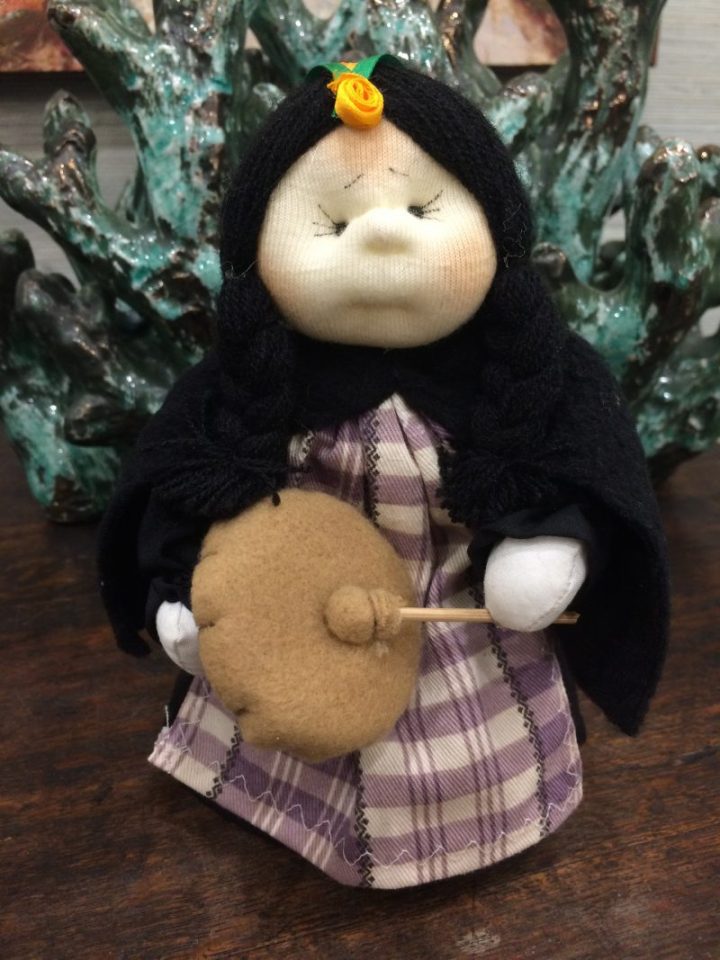
In short, who knew? Certainly not ill-prepared I, who promptly fell in love with Chile in five days, who found it restorative and healing and restful. I brought back a doll for my Mother’s tree, a machi (see above), a good witch doctor who is a woman of central importance as a healer in the Mapuche culture. She knows herbal medicine, can interpret the winds of weather, is a spiritual advisor and a social mediator. I hope the spirit of the machi stays with me, and I hope she will help my Mother feel better and enjoy her Christmas tree.

comment 1

Twilight Time

Fall weather comes to South Texas all of a sudden and late in the season, with a cold front from the north that we Texans call a norther. A norther blew in this week, with temperatures dropping form the 90s into the 50s virtually overnight. The few deciduous trees that grow here won’t drop their leaves until much later, so the small dust devils that erupt from the winds swirl only dust and debris in tantrums of defiant protest against those who resent them, like me, for not swirling the brilliant colors of fallen leaves found in other ares of the country. With the change to Central Standard Time and the sun now sitting lower in the sky, these days of late autumn in South Texas take on a “twilighty” feel, a grayish cast that slows the mood and portends the dark days of winter to come.

In literature study, when the natural setting mirrors the mood of the characters and the events of the plot, it is called “sympathetic nature.” And so it is now, I think, in real life here for us. We have entered the twilight of this season, and maybe of my Mother’s life, and certainly the setting reflects my mood and hers. It’s okay; we have talked; we’re good with all this. But as is so often the case in literature and in life, things have proven to be not quite as expected, not quite as they seem.

As originally planned, I went down to get my Mother and move her up to the assisted living place I had arranged, and decorated, in late October. The day I arrived, however, she had another stroke, which precipitated another hospital stay, which precipitated yet another facility decision, or range of decisions, upon her release. She could no longer navigate the assisted living facility I had previously arranged, nor could she return to the nursing/rehab center from which she had come. Panic. I had closed on her house the morning of her release! Best-laid plans thwarted once again. In a forced decision, I had her discharged to a memory care home in Victoria, knowing that it wouldn’t be a permanent solution, but not having much choice at the moment. The first night there she fell. And so it went…

Ultimately, after frenzied phone calls and kind interventions from Hospice and residential health professionals with connections, I finally picked my Mother up, put her in my car, and drove her up here myself to a lovely, new memory care home in San Antonio. She is happy,  or so she says, to be in a permanent situation and happy to be close to her family. And so we are, at last, the both of us, out of Victoria for good. We have survived it all, including the hurricane, we have recovered (sort of), and we have relocated and begun a new chapter. My Mother is, understandably, a bit sad, but resigned; I am now in something of a “twilight sleep” myself, being terribly sleep deprived, but also relieved that the decisions have been made and that there is simply nothing else to be done.

I have managed to use some of the pretty things I had purchased a while back with which to decorate her assister-living suite — a coverlet and sham and matching window valences, a petite lady’s electric recliner, matching sheets and towels — but many things have had to be returned because her room is smaller and the hospital equipment, oxygen, wheelchair, bath bench, special bed and such, take up space. Even so, the room is comfortable and we have set out family photos and brought in some of her favorite keepsakes. “Is this place permanent?” she asks me when we arrive.

“Yes,” I say. “This is your new home.”

Twilight time is perhaps a melancholy time, but oddly, it has always been my favorite time of day. After a long, exhausting schedule of work, chores, errands and obligations, the early evening hours offer a late-day respite, a wine-time break, some moments to reflect on the accomplishments of the day and in which to contemplate what may lay ahead.  Yes, as the Platters sang so long ago, the “heavenly shades of night are falling” and the uncertainties of tomorrow await the dawn, but there is time now for rest and recuperation, however brief, in the interlude.

It’s “Twilight Time.”

comments 2

Part 3: Recovery and Relocation

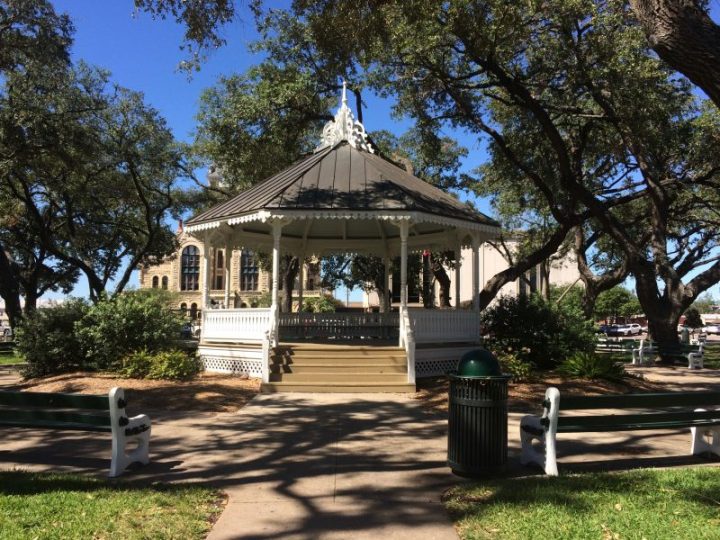
My family has been in Victoria, Texas, since the 1840s. (The gazebo above in downtown DeLeon Plaza on La Calle de los Diez Amigos commemorates the founding of the town by Don Martin DeLeon in 1824.)  This is a history of which my Mother is understandably proud, and about which I could care less. I have never been a person who is about the past, much less someone who is impressed with the whole “decaying Southern gentry” notion of fine old family lineage. I know my family history, and I appreciate it for the understanding of the social and cultural influences it has contributed to shaping who I am, but as they used to say  years ago in New York City, “that and 25 cents [it is $2.75 today] gets you on the subway.”

I knew from the time I was in high school that I would not continue the tradition of  a lifetime residence in my hometown. I was a reader and a writer and had already figured  out that there was a whole new, big world out there for me to experience and understand. Big fish in little ponds, so typical in smaller cities and towns, never held any allure for me. I always wanted out, wanted more, wanted a bigger venue, wanted anonymity.

I went off to college  — not far , only to San Antonio —  but then I really went off from there. Interestingly, I migrated to the Northeastern United States, to the land of my father, whose lineage is actually even older (by about 100 years) than the South Texas heritage my Mother’s family always venerated. But still, “that and ____ gets you on the subway.” In the end, who cares? In America, at least up until recently, you are judged by what you do, not by where you come from.

It seems to me that most people stay, or get stuck, where they happen to be born. Repeated studies of population migration over the years tend to confirm that those who are raised in rural areas are less likely to leave, and those who have been in a place for generations are even less than likely. Leaving, changing, and moving takes courage, and most people don’t have the guts or the gumption. They stay where they have been planted and they claim that they “love it.” Well, of course, they like to think so, but how can you know that you “love it” if you have never known anything else?

My Mother did, in fact, live for a time as a newlywed in Trenton, New Jersey, where my father was from, but she didn’t love it — not even close. She was always drawn back  to her family and her roots in Victoria. So she and my father eventually moved back to Texas after the War. His untimely death just a few years later caused her understandably, then a young widow with a daughter to raise, to stay on and stay put forever more.

Until now.

It occurs to me, now that I’ve been in the throes of intensive crisis management for three months, that recovery from disaster, both natural and personal, often results in relocation. People lose their homes and have neither the resources nor the resolve to rebuild, so they move. (California wildfires.) Local economies collapse under the devastation, people can’t find work, and so they migrate elsewhere. (Katrina.) A sudden healthcare crisis, a stroke or cancer, renders a person unable to resume the life as lived before, and so forces an adaptation to a different lifestyle, maybe even relocation to a different life situation altogether. It happens everyday.

And so this is how my Mother finds herself, after 94 years in her beloved Victoria, Texas, relocating to San Antonio. Through the combination of Providence and luck and sheer determination, I’ve managed to sell her house, clear out her belongings, and secure her a place in a lovely assisted living facility right around the corner from me. It will be a fresh start for her and good for both of us, I think. Now I won’t have to make that horrendous drive back and forth through oil fracking country all the time; now we’ll be able to enjoy our time together without having to run errands, sit in doctors’ offices, do grocery shopping, and perform other routine chores. Now we will be able to really visit and enjoy each other and she will be able to see more of us and her grandson. We probably should have made this move a long time ago, but as is so often the case, only crisis forces change that is difficult.

So I, too, will be making my last trip out of Victoria this week when we move my Mother up here. I have one dear friend from my childhood left there, whom I will see up our way since she has bought a condo on Canyon Lake and is thinking about retiring there.  As I keep telling my Mother, “It was a good run,” for all of us. But it’s enough.

Savor the memories, be glad to survive, and move on.

comments 3

Abilene, Abilene

Most people have never been to Abilene, Texas. I, myself, had probably been there, or through there, in my childhood, but who remembers? It is familiar to most people because of the song,  Abilene, Abilene, recorded  over the years by country greats since the 1960s by everyone from Buck Owens to Bobby Bare to George Hamilton IV.  “Abilene, Abilene, prettiest town I’ve ever seen …” Chet Atkins did a wonderful instrumental version of it at one point, and Willie Nelson and Sheryl Crow recorded a duet of a song called Abilene written by Crow in 2002; she said it was meant to be interpreted “not only as a place, but as a person or a state of mind.”

I don’t know if Abilene is the “prettiest town I’ve ever seen,” but it certainly became a welcome state of mind to me a couple weeks ago when I attended the opening  reception of the art quilt show, “Today’s Quilts: Art in Stitch,” at the Center for Contemporary Arts downtown. My piece, “Art Glass Quilted,” was included in this show (see above). The exhibition proudly displayed 33 pieces by 23 artists; 13 of us were present at the opening reception, which is quite remarkable, considering that Abilene is somewhat “out-of the-way,” even for people who live in Texas. But this exhibit was a juried show, and other exhibitors like me were pleased to be a part of it, and willing to drive long distances for the privilege. It was nice to meet other artist members of the Studio Art Quilt Associates, and to feel honored and celebrated as individuals for our work. (In case you’re in the neighborhood, the show runs through November 11, and then it travels to Texas Tech University Museum in Lubbock through February 18, 2018.)

The Center for Contemporary Arts is a beautiful two-story museum space downtown on Cypress Street; it has been there now for 27 years and is one of the major cultural scenes in Abilene, along with the Grace Museum (of Texas art) and the landmark Paramount Theatre (1930), one of America’s grand, historic theatres hosting live performances, concerts, and classic films. The Cypress Street Station Restaurant down the street is something of a beacon in itself, at least for the foodies among us. A railroad divides Abilene right down the center of town, and that downtown area is typical old West Texas, with long, low brick buildings flanking streets with angled, front-end parking. No skyscrapers here, though this is a city of about 110,000 people.

Those who know Texas history know Abilene as an early stock shipping point, established by cattlemen on the Texas and Pacific Railway in 1881 and named after Abilene, Kansas, the endpoint of the Chisholm Trail. Today it has become the commercial, retail, medical and transportation hub of a 19 county area known as “The Big Country” or the “Texas Midwest.”  The people here have, in fact, something of that flat, mid-western nasal accent (think Matthew McConaughey — all right …all right)  and that calm, unassuming demeanor so characteristic of the hospitality and modesty of those in the central United States.

Regardless of how it is described,  to the people of West Texas, residents and visitors alike, “Abilene has it going on!” Certainly, my stay there, however brief, provided a much-needed respite from these long and difficult weeks I continue to endure here in South Texas post Harvey, and a gentle reminder that I, too, have to keep “it going on.”

Postscript: No, I have not been hired by the Chamber of Commerce for Abilene, Texas, to promote their city.

comments 4

Part 2: The Debris

The storm hits and the drama of it all dominates the media: wind-blown newscasters hold fast to the nearest pole as they report on nature’s fury; rescue workers wade through waist-high water as they search for those refusing to leave; ravaged evacuees huddle in make-shift shelters, too tired and too terrorized to even think about what they’ve left behind.

Then, after the storm hits, the reality of what has happened settles in: friends and relatives call to see “if you’re okay;” relief organizations and FEMA set up headquarters in parking lots; the National Guard rolls in and politicians land in helicopters. Promises are made, damages are estimated, and recovery gets underway.

Except that recovery is not immediate; it is long and hard and sad and dull, and soon there are other crises, other “storms” of one sort or another, that will deflect attention and divert resources. The drama is over, as is the media coverage, and once again, people are left on their own to help themselves, to pick up the pieces and clear the debris of their uprooted lives.

So I returned to Victoria after my Mother was returned there from evacuation, to a town with power lines down, trees uprooted, roofs ripped off and piles of debris in the streets. The scene was dire, like something out of a sci-fi novel. Schools, businesses and most restaurants were closed; motels, the ones that were open, were full of evacuees from the Coast and relief workers from all over. And yes, there were those long lines for gasoline and long lines using up that precious gasoline waiting for entry into the circus-tent collection of relief agencies dispensing food and water, diapers and baby formula. I went there myself one day, in my Cadillac, to Samaritan’s Purse, to get help in clearing the giant limbs from a downed tree in my Mother’s yard which prevented me from getting electrical lines restored; the ladies at the sign-up table thought I was there to volunteer.

They must have forgotten that Mother Nature is nothing if not an “equal opportunity destroyer.” My Mother’s house had no electricity and no clean water. I spent the week mostly in my car, where I had air conditioning and wi-fi, sleeping at a benevolent neighbor’s house at night. The temperatures were in the 90s and the mosquitoes were the size of dive bombers; I washed my face with Evian and didn’t take a shower for a week. A most humbling week, certainly; gives you a whole new appreciation for the basics in life, like water and electricity.

As it happened, this was also the week when the hospital discharged my Mother, so I had to hustle to get her into a local nursing/rehab facility; of the two the case worker had recommended, only one was still standing, so the choice was easy. The day of her transfer was the longest of my life. They allowed me to drive her, so I was able to take her by her house and to let her neighbors come out to greet her. I knew that she thought , we both thought, that she might not ever see her home again. I wanted to give her a chance to say good-bye. Later that evening, after she was settled across town, I found myself back at her house rummaging through the closets and drawers with a flashlight trying to assemble the long list of required necessities the facility had given me.

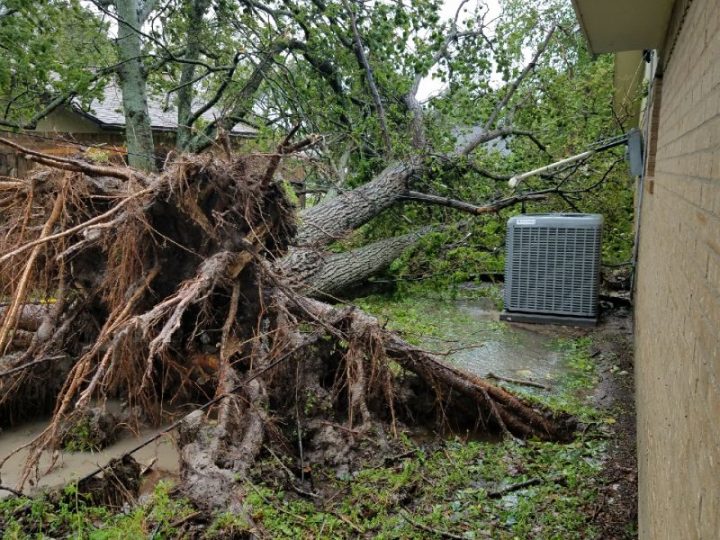
So this is how our recovery goes. My Mother’s house was without electricity for almost two weeks. Her damage, while considerable, is not catastrophic, and not enough to meet the large deductible on her homeowner’s insurance: a huge tree came down and took the fence and some cables and lines with it, some shingles are shorn, debris still litters (though the goodness of neighbors helped clean most of that up), and a huge stump with roots has to be removed (see photo above).  It could be worse, a lot worse. Except for the fact that we personally have experienced the “trifecta” of health, home and hurricane events all at once, I guess I shouldn’t complain. It’s just “deja vu all over again.”

We have now entered the calm after the storm, except it isn’t calm for me. I am going to be living between two places for a while, until all this gets taken care of and my Mother gets well enough to go … where? The physical debris of Hurricane Harvey will eventually get cleared, but the emotional debris of this whole episode, happening again as it did almost 20 years ago, may remain forever. And I am not as young as I used to be.

And neither is she.