

The fawns were late this year. This little guy appeared in our front yard only last week. Because he was not yet scampering about, but still being safely deposited while his mother foraged for food, we figured he was only a couple weeks old. Was it the extreme drought of last summer that curtailed mating, or was a lower birthrate due to the local community’s “thinning of the herd” last fall, or did the terrible winter freeze/snow storm in February have some adverse effect? We had begun to worry because the appearance of newborn fawns is always an anticipated sign of nature’s renewal.
Here in Texas, we are blessed (some say cursed) with an abundance of white-tailed deer. Indigenous to North America, these animals are everywhere: in the forests and on remote rangelands, on country ranches and along busy highways, even in urban communities and residential neighborhoods like mine. In fact, Texas has the largest population of white-tailed deer (about 5.3 million) of any North American state or province including Canada. Called the white tail because of the large, white underside of the tail when raised, the bucks are medium-sized (about 150 lbs.), stately and charismatic, especially when they sport an impressive rack of multi-pointed antlers; the does are smaller (about 110 lbs.), graceful and almost delicate. The fawns, which weigh 4-8 pounds at birth, are reddish brown with white spots that fade as they mature. They are a joy to watch as they frolic and explore, a reminder that life scampers on.
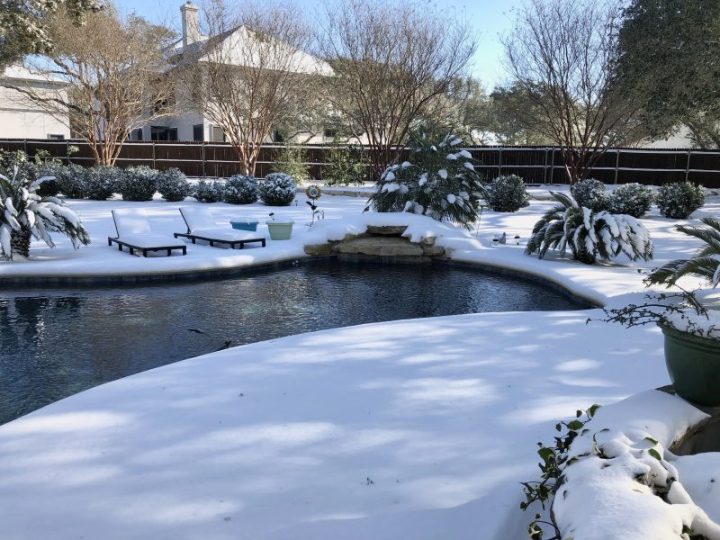
Everything this year seems to be about searching for signs of renewal, and not just from the long, dark months of Covid. My husband, bless him, has been tirelessly working to remove, replace, and restore some of the many plants, shrubs, and trees we lost during our devastating February storm. Almost all of our tropicals (palms, hibiscus, banana trees, Meyer lemon tree, and cacti) literally froze to death, and even some of our heartier roses and Oleanders finally had to be dug up and discarded. Even now, months later, we are hoping that small signs of regrowth on the sago palms and climbing jasmine mean that they will ultimately revive with patience and time. You can’t rush Mother Nature, you know.
And you can’t mess with her either, as we are finding out already this summer with unprecedented (there’s that word again…) heat waves, drought, wildfires, rains, flooding, and the early emergence of hurricane season. Scientists say that climate change is to blame and that this is what its arrival looks like. Even if we act right now, it might already be too late to reverse the onslaught of greater environmental disasters to come, much less to correct the damage already done to our land, air and waters.
On the other hand, Mother Nature is nothing if not resilient. The etymology of “resilience”comes from the 17th century Latin verb resilire meaning leaping back or rebounding, but Mother Nature’s definition is hardly what we would describe as “bouncing back.”Rather, she takes her time, working through the immutable cycle of birth, life, death and rebirth at her own steady pace, forever absorbing the shifts and vicissitudes of an ever-changing set of circumstances. Sometimes, after a tragedy or disaster, she lays low for a while, dormant, slow to revive but nevertheless determined to do so when the time is right. Sometimes, with love and care and perhaps a stroke of serendipity, she bursts forth suddenly in such renewed health and vigor that we can hardly believe there was ever any doubt about her robust return.
I’m seeing lots of articles and essays these days about resilience, about how the long months of the Covid pandemic brought out a new sense of resilience in some people even as it thrust others into loneliness and despair. With hindsight and, hopefully, some perspective, the question we would all do well to consider now is what accounts for the difference? Is it a matter of age and experience, of personality type, or is resilience just in one’s DNA?
Any trauma, personal or public, elicits a range of responses, though it doesn’t always produce any post-traumatic growth among those who have undergone it. Just look at all the people right now, vaccinated or not, who are racing out with abandon to join maskless crowds in restaurants and malls, at amusement parks and concerts, and yes, even on cruises. Their carefree, careless behaviors don’t indicate any reflective growth at all; rather, like school kids on spring break, they are simply “glad that it’s over” — if it ever really existed at all — and are determined to “bounce back” to their pre-pandemic life regardless of new realities.
That is not resilience; that is stupidity. Perhaps what we really need is a better definition of resilience, a more nuanced definition that references patience, gratitude, and reflection, a definition that mirrors Mother Nature. As my husband always says about his painstaking efforts in the garden, “Slow and steady wins the race.”
Perseverance is the better word, I think. After all, “She persists.”




 the narrative thread