comment 0

Lazy, Hazy Days

 When I was a kid, summer seemed to go on forever. In South Texas, we got out of school in mid-May and didn’t return in the fall until right around Labor Day, so we had a full, three-month vacation. (Of course, we didn’t have all sorts of federal and religious holidays, except for Christmas and Easter, and we never even heard of winter or spring breaks or year-round staggered school terms.) For youngsters with no pre-scheduled activities, such as sleep-away camp, summer school, or youth organizations, June, July and August meant endless days of lazy freedom, sometimes boredom, often serendipitous fun.

     “Back in the day,” as they say (the 1950s and ‘60s), parents didn’t over-subscribe their children, believing instead that it was best to leave them to their own devices — even if those “devices” got them into trouble now and then. Kids were encouraged to amuse themselves, to play outside and explore their neighborhoods, and to settle their own squabbles with their playmates. Now I don’t mean to imply that this laissez-faire parental policy was ideal: after all, being outdoors meant bothersome chiggers, mosquitoes, and wasps; few houses were air-conditioned for relief from the relentless summer heat; and there were no video games or cell phones or reliable TV reception available even if you were allowed indoors. (On rainy days, you could stay inside and color in your coloring book, but it was still awfully hot and waxy crayons often smeared.)

     This summer feels like one of those summers from long ago: it is without direction, without any scheduled plans, and feeling endlessly lazy and hazy, each day like the one before: Groundhog Day. Instead of the scorching heat and drought, so far we have had hot but wet, with tropical showers and downpours each day that afterward send steam rising from the asphalt. My ready description for this climate is “sultry,” but without the sexy literary connotations of the word. Nevertheless, the mood reminds me of a Tennessee Williams play or a William Faulkner novel, the “eternal now” of a long, hot summer in which some things never change.

     Part of that mood is no doubt due to the resurgence of Covid cases being exacerbated by the Delta variant and the unvaccinated among us — not an insignificant number here in Texas, by the way (49%  of the State have gotten one vaccine, 42 % are fully vaccinated). The more virulent Lambda variant has now also been detected here and in 41 other states. Overall, Covid is dominating the news once again, breakthrough cases among the vaccinated are starting to occur, and many areas are bracing for yet another critical surge, especially as school begins in the fall. Former Covid measures such as masking and social distancing are already being implemented in some states and communities, but as usual, some politicians (the Texas governor among them) are forcefully resisting any suggestion of the need for reinstating such protocols. After but a brief, some say prematurely heralded, spirit of optimism and direction for the future, we now find ourselves continuously mired in cloudy uncertainty about the days ahead.

     Speaking of a cloudy haze, Texas is now experiencing what local weather stations are calling “the Saharan dust,” named more precisely the khamsin. Derived from the Arabic word for fifty, the dry, sandy wind creates a dust storm that blows from the Sahara over parts of North Africa, the Arabian peninsula, and the Mediterranean basin sporadically over a period of fifty days each spring. High winds move great quantities of sand and dust throughout the Middle East, across oceans, and around the world. And they arrive here in the summertime up from the Gulf of Mexico bringing low visibility and high allergy alerts with them.

     In Egypt, these desert storms are more commonly called khamaseen, as they are throughout the southern Levant (Israel, Palestine and Jordan). A few years ago, my husband and I landed in Cairo during the khamaseen. The air was so thick and hot with dust that you could hardly see a car length ahead. Everything was blanketed in a yellowish haze. I thought it was extreme air pollution and remarked about it to our cab driver. “Oh no, no,” he said, “don’t worry. It’s only the khamaseen. By tomorrow, it will be sunny and clear again.” And so it was the very next day — but it was still hot. And that bright, white dry heat reminded me of my childhood in Texas.

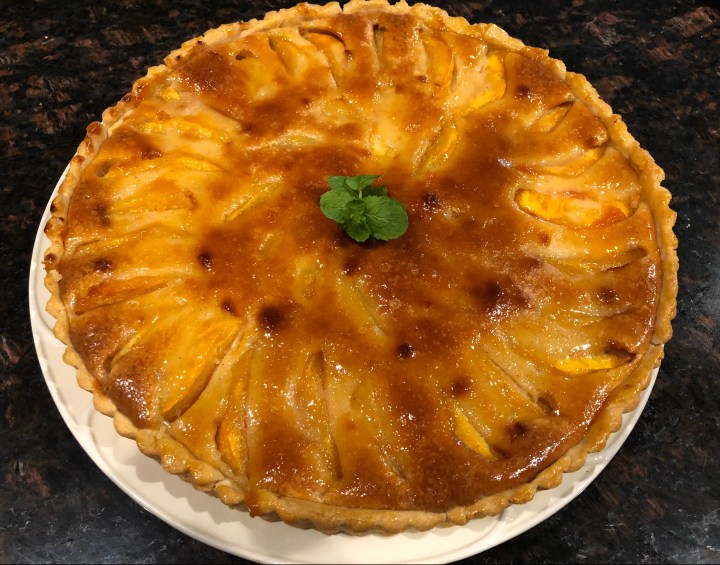
     The good news here, amid my summer ennui, is that peaches are now in season, albeit not many Texas peaches because of the winter storm we had earlier. Even so, the fruits available are big, blushingly beautiful, and just at the cusp of ripeness. A day or so in a paper bag on the kitchen counter will ensure perfect, juicy delectability.

     So, to celebrate these lazy, hazy days of summer, I made my tried-and-true peach torte today (above). It’s one of the few things in life that is actually as good as it looks, and that makes me feel better about everything else.

comment 1

Resilience

  The fawns were late this year. This little guy appeared in our front yard only last week.  Because he was not yet scampering about, but still being safely deposited while his mother foraged for food, we figured he was only a couple weeks old. Was it the extreme drought of last summer that curtailed mating, or was a lower birthrate due to the local community’s “thinning of the herd” last fall, or did the terrible winter freeze/snow storm in February have some adverse effect? We had begun to worry because the appearance of newborn fawns is always an anticipated sign of nature’s renewal.

     Here in Texas, we are blessed (some say cursed) with an abundance of white-tailed deer. Indigenous to North America, these animals are everywhere: in the forests and on remote rangelands, on country ranches and along busy highways, even in urban communities and residential neighborhoods like mine. In fact, Texas has the largest population of white-tailed deer (about 5.3 million) of any North American state or province including Canada. Called the white tail because of the large, white underside of the tail when raised, the bucks are medium-sized (about 150 lbs.), stately and charismatic, especially when they sport an impressive rack of multi-pointed antlers; the does are smaller (about 110 lbs.), graceful and almost delicate. The fawns, which weigh 4-8 pounds at birth, are reddish brown with white spots that fade as they mature. They are a joy to watch as they frolic and explore, a reminder that life scampers on.  

     Everything this year seems to be about searching for signs of renewal, and not just from the long, dark months of Covid. My husband, bless him, has been tirelessly working to remove, replace, and restore some of the many plants, shrubs, and trees we lost during our devastating February storm. Almost all of our tropicals (palms, hibiscus, banana trees, Meyer lemon tree, and cacti) literally froze to death, and even some of our heartier roses and Oleanders finally had to be dug up and discarded. Even now, months later, we are hoping that small signs of regrowth on the sago palms and climbing jasmine mean that they will ultimately revive with patience and time. You can’t rush Mother Nature, you know.

     And you can’t mess with her either, as we are finding out already this summer with unprecedented (there’s that word again…) heat waves, drought, wildfires, rains, flooding, and the early emergence of  hurricane season. Scientists say that climate change is to blame and that this is what its arrival looks like. Even if we act right now, it might already be too late to reverse the onslaught of greater environmental disasters to come, much less to correct the damage already done to our land, air and waters. 

     On the other hand, Mother Nature is nothing if not resilient. The etymology of “resilience”comes from the 17th century Latin verb resilire  meaning leaping back or rebounding, but Mother Nature’s definition is hardly what we would describe as “bouncing back.”Rather, she takes her time, working through the immutable cycle of birth, life, death and rebirth at her own steady pace, forever absorbing the shifts and vicissitudes of an ever-changing set of circumstances. Sometimes, after a tragedy or disaster, she lays low for a while, dormant, slow to revive but nevertheless determined to do so when the time is right. Sometimes, with love and care and perhaps a stroke of serendipity, she bursts forth suddenly in such renewed health and vigor that we can hardly believe there was ever any doubt about her robust return. 

     I’m seeing lots of articles and essays these days about resilience, about how the long months of the Covid pandemic brought out a new sense of resilience in some people even as it thrust others into loneliness and despair.  With hindsight and, hopefully, some perspective, the question we would all do well to consider now is what accounts for the difference? Is it a matter of age and experience, of personality type, or is resilience just in one’s DNA? 

     Any trauma, personal or public, elicits a range of responses, though it doesn’t always produce any post-traumatic growth among those who have undergone it. Just look at all the people right now, vaccinated or not, who are racing out with abandon to join maskless crowds in restaurants and malls, at amusement parks and concerts, and yes, even on cruises. Their carefree, careless behaviors don’t indicate any reflective growth at all; rather, like school kids on spring break, they are simply “glad that it’s over” — if it ever really existed at all — and are determined to “bounce back” to their pre-pandemic life regardless of new realities. 

     That is not resilience; that is stupidity. Perhaps what we really need is a better definition of resilience, a more nuanced definition that references patience, gratitude, and reflection, a definition that mirrors Mother Nature. As my husband always says about his painstaking efforts in the garden, “Slow and steady wins the race.”

     Perseverance is the better word, I think. After all, “She persists.”

comment 0

Your Move

   So, here we are: summer has come, the restaurants are serving, the cruise ships are sailing, and people are gathering in large numbers indoors and out. It seems Americans have decided that they’ve had enough and that the Covid pandemic is over — at least for them. As the threat of outbreaks of the Delta variant looms on the horizon, the Country is still only 46% fully vaccinated, with rates ranging from a high of 65% in Vermont to a low of 20% in Mississippi. (Here in Texas, we are at 41%.)  Not surprisingly, the greatest resistance to getting vaccines is now among the young. Having been told for so long that they were the least vulnerable, little wonder that they are now skeptical about the need for a vaccination at all. 

     And we all know that the younger you are, the more invincible you feel.      

     In the last decade or so, a new field has emerged called Enterprise Risk Management (ERM). ERM is grounded in future projections that seek to identify adverse conditions and events that may not have not happened before, but that could have disastrous consequences if they do (think of  “Acts of God,” which are not usually insurable). In contrast, Traditional Risk Management (TRM) is based on predictable patterns of adverse events in the past in order to minimize the loss should those events happen again (think traditional insurance for common occurrences such as illness, accidents, etc.).  The ERM approach incorporates both ordinary, predictable risk planning, as well as the anticipation of unforeseen risks going forward and how they might be handled should they occur.

     You can now obtain an MBA with a specialization in ERM. All sorts of industries employ formalized risk management professionals and techniques, including aviation, construction, finance, insurance, energy, environmental protection,  AND public health. With all due respect to Dr. Fauci and the CDC, perhaps we each should have had our own personal ERM risk manager for dealing with Covid, sort of like a personal investment advisor or a cybersecurity analyst. The problem with pandemic management over the last year has been that politicians became our risk managers, calculating good and bad results not always on the physical welfare of the general public, but on the economic impacts in their local communities and the odds of their own chances for re-election. Even the decision to fast track vaccine development, while ultimately a good one, was largely motivated, and thus tainted, by the politics of the 2020 election.

     It occurred to me recently that living long and living well is all about risk assessment, and not just during a pandemic. Certainly, these many months of confusing, often conflicting advice about spreading infections and mitigation techniques have given us a crash course in the challenges of trying to calculate health risks for ourselves and our families. But if we stop to think about it, we realize that most of us have been calculating risks and making educated decisions about gains and losses for the better part of our lives. Welcome to adulthood. Granted, some choices, such as moving across the country for a new job or deciding to start a family, are weightier because they have major long-term consequences, but if we consistently avoid all risky decisions in life, we soon find ourselves in a permanent state of inertia. Making no choice at all becomes a choice in itself.

     From the foods we eat to the friends we cultivate to the places we go to the activities we pursue, almost every choice in life involves some risk, however small.  But, as they say about the lottery, “You can’t win if you don’t play.”  Young people often make foolish, impetuous choices precisely because they are young and inexperienced in the world, but over time and with the wisdom to learn from past mistakes, most of us manage to become comfortable, even confident in calculating the odds and making the right moves.

    Except in extreme circumstances like a global pandemic when collective anxiety, isolation and fear take us over and immobilize us to the point that every move, every day, including even the most mundane decisions like grocery shopping, become weighted with seemingly outsized  consequences. Rational or not, these concerns are born out of unusual situations; when everything is unpredictable and uncertain, withdrawal inevitably follows. And risk avoidance is not the same as risk management. 

     I learned all about that last year. I sailed through the early months of lockdown by avoiding any and all unnecessary risk as I stayed inside, worked on my art and my writing, cooked fabulous meals, read through piles of neglected books and magazines, and tackled long-overdue home projects. It was a collective “time out” for the whole country and I found, as did many, that I was surprisingly content to stay at home and be relieved of all social obligations. Yes, I missed my closest friends, and yes, certainly I missed our lifestyle of constant travel and adventure, but I also found the solitude and slower pace restive, even welcome. Without all the outside noise and distraction, I could focus my attention and immerse myself in the “creative flow” of my artistic pursuits. The single biggest decision I had to make most days was what was for dinner; the single biggest risk I took most days was braving the grocery store to prepare my ambitious menus. 

     Funny how easily one can become acclimated to an entirely new set of circumstances and how soon a new reality becomes the norm. Many people started to burn out on isolation a few months into Covid, but not me. I stayed productive and stayed hopeful and was determined to persevere at every stage with mask-wearing, social distancing, crowd avoidance, hand washing, and of course, the vaccines. And now I find myself calculating the risk of abandoning all those mitigation techniques among an increasingly carefree society of the unmasked and the unvaccinated.

     With recurring outbreaks of virus variants causing cities and countries around the world to suddenly retrench into shut-downs, and with many areas of our own Country woefully short of any kind of herd immunity through vaccines, the Delta and other emerging variants threaten a new wave of outbreaks come fall. (As of this writing, it has now shown up in all 50 states.) The World Health Organization recently recommended that even those who are vaccinated should continue Covid protocols, including mask wearing, especially as flu season approaches and the need for a vaccine booster becomes a bigger issue. Some community leaders in America where vaccination rates are low are now starting to recommend the same.

     So here’s the thing: life is unpredictable and even an expert in ERM can’t foresee the truly unforeseeable. Conditions, even science, continue to evolve. Ultimately, we each do the best we can with the knowledge we have to calculate the risks and then make our next move. 

     It’s sort of like a game of chess, except that you’re mostly playing it by yourself.
 

comments 3

Now What?

 Okay, I’ll admit it: I am one of those people who is wary, even anxious, about this rush to return to normal. Yes, I have been vaccinated, and yes, I am encouraged by the declining Covid numbers, and yes, I am hopeful that we will reach some sort of  reliable “herd immunity”threshold.  But you know, old habits die hard, especially those forged in an extended state of emergency.  After some 15 months of seclusion and a successful adjustment to a more isolated way of living, my transition back to the “old normal” or into the “new normal” — whatever you want to call it — is bound to come with some hesitancy and trepidation.

     And, frankly, with some resistance. I don’t necessarily want to return to my pre-pandemic self, nor do I necessarily want to engage in my pre-pandemic activities. I have, over these many months, thought otherwise about that life and that self. As so many others have discovered during this time, I too have found other ways of doing things (getting groceries, staying in touch, finding creative expression, etc.) and other priorities (how to spend my time and with whom to spend it). I am thinking that many of these discoveries will permanently alter my way going forward. 

     First off, the big basics: online shopping and grocery delivery/curbside pickup are here to stay for me and everybody else. I have it on inside information that major grocery retailers are expanding their online order and pick-up services by actually reducing their in-store sales space for the sake of bigger,  more efficient, even robotic, fulfillment centers. This idea was percolating among some major chains even before the pandemic, but Covid provided the impetus to make it happen. Not only was online/store pick-up a successful pandemic health strategy, but it proved to be both convenient and sensible considering the ever-expanding size of most supermarkets and ever-aging consumers (like me) who find it increasingly difficult to navigate mega stores. 

     Likewise for take-out meals from restaurants. In an effort to survive, the full-service restaurant industry, major chains and even some high-end establishments devised online ordering platforms and menus that could accommodate being picked up and enjoyed at home. Some even delivered to that home. For people who aren’t accomplished home cooks, and even for those of us who are but missed some of our favorite restaurant meals, this has been a godsend — and it is not going away. Especially when it is also being accompanied by take-out alcoholic drinks.  So whether it’s the joy of cooking or the ease of ordering in,  the whole “hunting and gathering” chore has, I believe, been forever simplified. 

     As have the way people are sharing their meals and other occasions. For example, even with all the stresses and strains of kids out of school and adults working at home, families nevertheless enjoyed their reacquaintance with each other by sitting down to have dinner together instead of running hither and yon and leaving post-it notes on the fridge. Friends, especially far-away friends, have found ways to have lunch or meet for a drink on Zoom and many have even been able to enjoy really special occasions that they might not have otherwise been able to share. I personally have “attended” two bar mitzvahs, one graduation, and Mass every week through Zoom or live streaming, all of which I found to be more intimate, more personal, and more satisfying than if I had been physically present in a crowd of strangers.

     Speaking of crowds, business professionals aren’t the only ones who have found relief from endless meetings and constant travel through remote connections. Those of us who are involved in various groups and organizations (professional associations, charities, churches, etc.)  have also found it liberating to “meet” at home via Zoom without having to get dressed and drive somewhere (which can be quite far here in Texas). With a set date and time and a specific agenda geared to a limited Zoom session, meetings seem to be more productive and freed from endless delays and idle chit-chat. Plus, there are no pot-lucks or bag lunches to deal with!

     Since I am already beginning to sound like a misanthrope, I may as well admit that I have also reevaluated the people in my life and those with whom I spend time. Now I realize that human beings are social animals and no one has ever accused me of being an introvert, but strangely enough, during the pandemic, I have also rediscovered the solitude of my childhood, the centeredness of my creative self, and the luxury of just being quiet.  Of course I miss my closest friends (whom I haven’t seen in two years or more because they all live far away), but I do not miss at all the inane conversations so common in groups of casual acquaintances and sort-of friends. I don’t want to discuss the weather, and I really don’t want to hear about illnesses and ailments, children and grandchildren, and other people whom I don’t even know. What’s more, I have happily discovered that a big bonus of more limited social interaction is a noticeable reduction in encounters with the truly obnoxious! 

     Simplify and sustain— those seem to be the new attitudes of post-Covid life and, already, they are in evidence across society. Witness the recent boom in used-car sales, for example. I just read that the average age of a car on the road today is 12.1 years. (My own much loved vehicle is 10 years old and just shy of 100K miles; I have neither reason, nor desire, to replace it.) Witness all the purging of closets and de-cluttering of houses that took place while we were homebound and finally able to consider all “the stuff” that we didn’t want, didn’t need, or would never use again. The effects of this reevaluation are especially striking in the fashion industry, now that its biannual shows in Milan, Paris and New York have been relegated to pre-pandemic history. No longer the arbiters of tastes and trends, even major designers (those who are left) recognize that people’s social and professional lives have fundamentally changed, and that in this age of diversity and inclusion, we don’t have to all dress alike any more than we all have to look alike.

     Obviously, there are many other more general changes in the ways people will live and work that are likely to become permanent, and some of those changes may not entirely be matters of personal choice. But for those who used the forced “time out” since March of last year to reflect and reassess the decisions we make and the choices we can control, individual attitudinal adjustments and a greater awareness of ourselves among others may hold the only collective promise of healing a fractured, divided society. 

     “How we spend our days is, of course, how we spend our lives,” Pulitzer Prize winner Annie Dillard wrote in The Writing Life  (Harper Perennial, 1989). Those of us who have survived Covid now have 15 months fewer days left in our lives since the pandemic began. Let’s spend those days wisely.

comments 2

Memorial Day

 Memorial Day is an American holiday observed each year on the last Monday of May. It is a remembrance holiday in honor of the men and women who served, and died, in the U.S. military. Established in 1868 following the Civil War by General John A. Logan, leader of an organization for the Northern Civil War Veterans, the day was originally known as Decoration Day; the official date was set as May 30. 

     Though the Civil War claimed more lives than any conflict in U.S. history and thus prompted the establishment of the country’s first national cemeteries, there were already different commemorations honoring the war dead around the country. Some records show that the earliest commemoration was organized by enslaved people in Charleston, South Carolina, less than three months after the Confederacy surrendered in 1865. By 1890, most Northern states had made Decoration Day an official state holiday; Southern states continued to honor their war dead on different days until after WWI.

     Decoration Day became known as Memorial Day after WWI and gradually evolved to commemorate American military members who died in all wars, ultimately WWII, the Korean War, the Vietnam War, and now the wars in Iraq and Afghanistan. In 1968, Congress established the Uniform Monday Holiday Act, which then placed Memorial Day on the last Monday in May regardless of the date. The Monday was declared a federal holiday, thus giving federal employees a three-day weekend; the formal change went into effect in 1971.

     Whether called Decoration Day or Memorial Day, this holiday was framed as a patriotic occasion from the very beginning. Unlike Veterans’ Day, which remembers all who served with honor in the military, Memorial Day remembers those who died in that service. Consequently, it is inappropriate to wish someone a “Happy Memorial Day.” Instead, people visit local cemeteries and place flags on the graves of the fallen vets, and formal wreath-laying events occur at the Tomb of the Unknown Soldier and other national burial sites.  Though most Americans aren’t aware of it, a National Moment of Remembrance is supposed to be observed, nation-wide, at 3 p.m. local time all across the Country.

     Nor are people generally aware of the original history and meaning of Memorial Day. So today, while cities and towns all across America still employ patriotic themes with their flag-waving parades, military concerts, and civic events involving various veterans’ organizations,  Memorial Day has also taken on a more seasonal, celebratory character. The establishment of the three-day federal holiday was probably the impetus to that. Suddenly, people had a workday off  and a long weekend to enjoy picnics and cook-outs, family gatherings and a day at the beach.  With most schools out and public pools and summer camps opening, the three-day weekend came to mark Memorial Day as the “unofficial” beginning of summer. 

     It also became the unofficial weekend of shopping.  At first, with “blue laws” prohibiting commercial activity on the Sabbath in almost all areas of the United States (a holdover from Colonial days), a Monday family shopping day was a real boon to retailers everywhere. Some historians have suggested that this was how the emphasis on mattress sales developed, because families, especially couples, were able to shop together for a significant purchase. From there, promotional sales of other housewares, outdoor grills and patio furniture expanded.

     Blue Laws endured in the US until the mid-70’s, but the Monday Holiday Act hastened their demise. Big retail chains, J.C. Penney among the first, began to be open on Sundays during the Christmas holiday season in 1969 and soon other big retail department stores and national chains followed suit. Coming after winter and tax season, May has traditionally marked a rise in consumer spending, so it was inevitable that retailers would want to take advantage of some of that disposable income. Sunday shopping, and then long weekend shopping became a functional and recreational way of life for Americans. Today, consumer spending comprises 70% of the GDP (Gross Domestic Product), a critical component of the national economy.

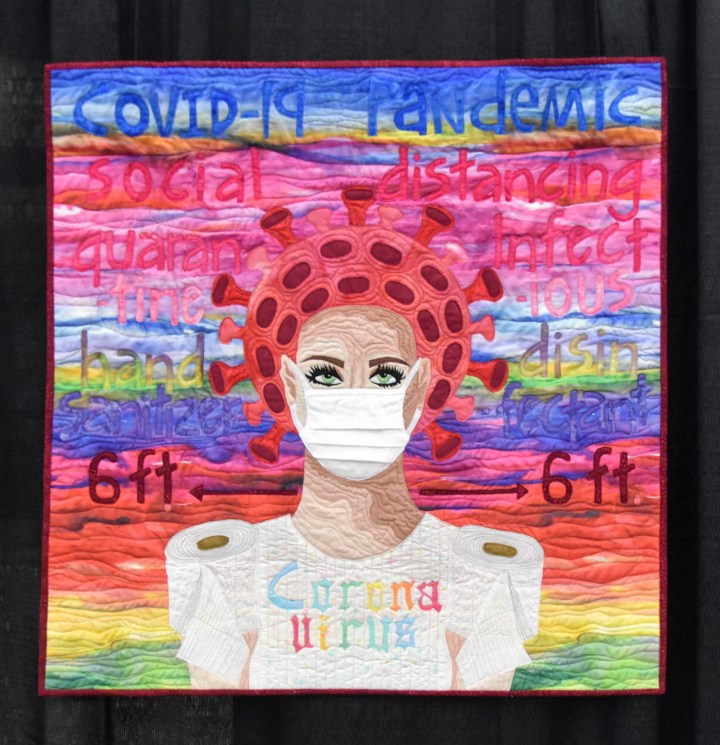
     This year, after the long Covid lockdown, people are understandably ready to break out and retailers are eager to recoup last year’s financial losses. While we were foraging for toilet paper and hand sanitizer at this time last May, everyone is now eager to not only to shop in brick-and-mortar stores, but also to get away and shop on vacation. After a disastrous 2020, the travel industry is seeing a welcome Memorial Day surge this year. According to AAA, about 40 million Americans will travel 50 or more miles away from home over this long weekend, 37 million of whom will literally “hit the rode” and another 2.5 million will take to the air. Memorial Day travel is not entirely back, but it is running about 60 percent above last year.

     We are neither shopping nor traveling this weekend — just having a cook-out of hamburgers and hot dogs with our little family. Never did like dealing with crowds and traffic on holidays anyway. For us, Memorial Day was always a time to visit family gravesites and maybe gather for family picnics, so I’m pretty much being true to form. Went down to Victoria this week to the cemetery where my parents are buried. After all the rain and winds and violent weather we’ve had in South Texas this spring, I wanted to clean things up a bit and put a flag on my Father’s grave (he was actually a WWII vet). Didn’t put a flag on Mother’s grave of course, even though she was a hero in her own right.

     That’s how I’ve come to see Memorial Day over the years, not to be unduly somber and sad, but to honor and remember all those among my closest friends and loved ones — and there are many — who are no longer here with me, but who fought battles large and small. From them I gained valuable lessons in living, and dying. From them, I learned what heroism is. 

comments 2

Solitude

   So much has been written about the loneliness and anxiety caused by Covid restrictions over the last 14 months. A recent study published in The Journal of the American Medical Association  from  Boston University School of Public Health found that the rate of depression among the general population has more than tripled, to 27.8%, from the pre-pandemic rate of 8.5%. A Center for Disease Control and Prevention survey found that 42% of Americans were experiencing symptoms of anxiety and depression today vs.11% before. (Both examples in a report by Thor Benson for NBC News, May 20, 2021.)  Suddenly, the biggest health news is not about fighting Covid infection, but about living with the psychological effects of having survived the fight.

     Human beings are social animals and even the most anti-social among us crave some sort of interaction with others, however deviant or negative that might be. From the very beginning of the pandemic, the biggest concerns about closing schools for in-person learning were not only about the loss of academic progress, but also about the toll that separation from friends and families would have on children’s emotional well-being. Now we see that extended periods of loneliness, isolation and fear, not to mention the everyday stress of living in a chaotic society, adversely affect everybody.

     The arrival of the virus was so sudden and the shut downs across the Country so extensive that no one had time to think, much less to prepare. Unlike a hurricane bearing down on the coast or even a fire raging in the hills, there were just no established precautions and no time to implement them if they existed. Everyone was caught  off-guard by no solutions, no time frame —  only questions. It took months for any acceptable Covid protocols to be established, and even when the science afforded some guidance, many people refused to accept not only the protocols, but the very existence of the threat itself. The whole pandemic became politicized and people simply retreated from all the fuss. I know I did. 

    The new word and the dominant emotion of 2021 is “languishing.” With depression and suicide on the rise, you’re lucky if you only find yourself unmotivated, unfocused and “languishing.” It is described as the blahs, a state of ennui and disconnection that endures, even as the euphoria over available vaccines and the prospect of a “return to normal” engulfs the entire country in a frenzy of moving on. (“There’s a Name for the Blah You’re Feeling: It’s Called Languishing,” Adam Grant, The New York Times, April 19, 2021.)  Once again, everything is sudden: vaccine rollouts gain momentum, CDC relaxes guidelines, and governors abandon (even ban, as in Texas) any mandates for masks or distancing requirements of any kind. 

Yea!!!! We are back to normal!!! Let’s break out and go to those restaurants, attend those huge concerts and sporting events, gather for parties and graduations, plan those cruises and vacations once again, and embrace not only those close to us, but any and all who are vaccinated, even as as we rely on the honor system of identifying who exactly that is. 

     Except we aren’t quite back to normal, not yet anyway.

     The irony for me is that the whole shut down and solitude of this last year has actually been beneficial and not unwelcome at all. Of course, I have the luxury of being retired and having an income and not being stressed about my kids or my job or my living expenses. Nevertheless, I came to appreciate this hiatus from my usual, busy routine of organizations and obligations and travel as a time out for reflection. I have written here before about the creative benefits, the art quilt projects I have completed and the writing I have done during this sort of “extended snow day” of exemptions from activity. Yes, the Covid vaccines have brought me some encouragement and hope, but I still am not ready to throw off the cloak of caution and resume previous routines. 

     Texas is only about 35% vaccinated at this point, and my husband and I long since decided that international travel, even domestic travel, for this year was out of the question. Maybe we would take a day trip or two, maybe even hazard a driving trip overnight later in the year, but we are not ready to jump right in, so to speak. We haven’t minded being cautious, after all, and so continuing our Covid lifestyle for a while longer is no real hardship. In a way, it is even a luxury.

     We actually went out to eat indoors in a favorite restaurant recently for the first time since March 13 of last year. The hostess who seated us (at a remote table I chose myself) couldn’t believe that it had been that long since we had been out. Ah, the invincible optimism of the young… Anyway, I was anxious, but I got over it. Last week, after the CDC announcement of no masks for those who are vaccinated, we went to another local favorite restaurant and found, to our dismay, that while most of the customers coming in were still wearing masks, the waitstaff was not! I’m sorry, but this is not going to do for me. Message to the CDC: reliance on the honor system for vaccination freedom doesn’t work when so many of our fellow citizens have no good sense, much less any honor.

     So, this is where I am now. Conflicted. I want to be hopeful, but I don’t want to be foolish and blow all my caution to the wind. I plan to keep to my Covid routine for quite a while longer, thank you, if for no other reason than my own peace of mind. Besides, a certain amount of solitude suits me.

comments 2

Stepping Out

     Spring has sprung, albeit a bit late, even in South Texas. Finally, trees are leafing, vegetables are sprouting, and wildflowers are blooming along remote country roads. Homeowners like us are clearing out the bushes and shrubs and trees that didn’t survive last month’s devastating winter freeze, and people are swarming local garden centers and nurseries in search of replacement plants. I’m told that flats of flowers and ground covers are snatched from the beds of delivery trucks before they can even be unloaded and priced. It’s not toilet paper anymore, but plants and shrubs that are in short supply.

     Which is why we made a “family field trip” almost three hours away up to The Antique Rose Emporium in Brenham, TX, to celebrate my husband’s birthday on Sunday. I love my herbs and orchids, but he is the real gardener among us, and he has been mourning the loss several of his prized, heirloom roses since the freeze. For all the convenience of ordering rose bushes through the mail, nothing beats selecting them from a nursery that specializes in heritage varieties and has them in bloom. So away we went for the birthday day.

     I should add, by the way, that even though we have all been vaccinated, this was the first time my husband and I were out and about to anywhere other than a grocery store, a drug store, or a doctor’s office since March of last year.  Furthermore, I have to admit to more than a little personal anxiety about making a day trip through the rural areas of Texas where masks and Covid precautions have mostly been dismissed all along. But that’s another issue.

     In spite of its rather out-of-the way location, The Antique Rose Emporium has been a destination for lovers of heirloom or “old” roses for 35 years. The eight acres of cultivated gardens and landscapes full of trailing vines and artfully arranged plantings, including sections of potted roses for sale, seems more like a botanical garden than a retail nursery. People come from all over just to wander the paths, hauling their plant selections in shopper wagons and taking advantage of photo ops at every turn. (See above.) Sunday was no different; it was crowded and there were few masks in sight, but at least we were all outdoors. Sadly, the ravages of the recent winter freeze were in evidence even here in many of the garden plantings, and certainly in the lower inventory of available rose varieties. Even so, it was nice to be out on a beautiful sunny day and my husband did find some selections.

     Our son, who drove us in his big Ford F150 (expecting, no doubt, a bigger garden haul than we ended up buying), had suggested that we celebrate with dinner out on the way home. Once again, having not eaten out in a restaurant since March 13 of last year, I hesitated. “Mom, it’s okay. We’re all vaccinated. You’re going to have to loosen up a little,” he said. After talking about that for a bit, we compromised. One of our favorite restaurants, The Gristmill located in the Gruene Historic District of New Braunfels, was close to home and offered multi-level outdoor dining overlooking the Guadalupe River. Though Gruene is a quaint touristy town (home of Gruene Hall, the oldest dancehall in Texas), late afternoon on a Sunday evening wouldn’t ordinarily be too crowded.

     Or so we thought until we got there. The throngs of (maskless) people were so massive that we could hardly maneuver our pick-up down the main street without hitting somebody, never mind finding a place to park. When we reached the Gristmill at the end of the strip and saw that lines of eager diners stretched all the way out from the river to the curb,  I said, “Nope. Sorry. I can’t do this.”

     “So, do you have a plan B?” my son asked, stepping on the gas.

     Actually, it didn’t take too long to come up with one, since we also have a favorite, smaller restaurant in downtown New Braunfels, with a lovely menu and a great wine selection. Being located on a hard to reach side street, it is not known to tourists and so offered the possibility of fewer crowds, especially in late afternoon. We headed there and found it peacefully calm. There is not much outdoor dining available (not terribly enticing anyway on a 90 degree afternoon), but the young hostess was willing to walk me through the entire restaurant in order to select a reasonably isolated place for the three of us to have dinner. “Forgive me,” I said to her, “but I haven’t been in an indoor restaurant for well over a year, and I’m a little anxious.”

     “Oh my god, are you kidding?” she, who was about 12 years old, exclaimed. Ah, the uninhibited invincibility of the young. 

     We finally settled ourselves into a corner table in an airy room and found familiar favorites on the menu. Though I still had some anxiety about dining in, and certainly wasn’t inclined to linger for after-dinner drinks, we did have a nice meal, and it was welcome after these many, many months. And it was a major step, for me anyway, in our initial emergence from Covid isolation.

     So you might wonder why I am narrating this personal tale of stepping out for the first time, but then again, you might be one of the many, many people like me who share a reluctance and trepidation about simply jumping right back into supposed “normalcy” simply because we are vaccinated. It is common knowledge that habits don’t take long to form, and while the habits of Covid mitigation evolved in fits and starts until they standardized themselves, they have, nonetheless, become deriguer among the mainstream reasonable population.  And for the most part, these mitigation techniques have worked. Masks and social distance and disinfectants and crowd aversion have become, not restrictions of freedom, but pillars of comfort in our daily lives, proactive choices we could each make to protect ourselves and others against the illness and death of a ravaging pandemic.  

     I want to share the optimism of the vaccines and I dare to hope that we can conquer the devastation of this pandemic, but I am also conflicted about what a return to normal might look like and whether I really even want that. Some habits are just too hard to break.

comments 4

The Covid Show, Part II

 We got our second Covid vaccination on March 10 and were thrilled to have done so, even though I was sick for a couple days after. But, okay… to be expected. Now that we and our son are all vaccinated, there is a new comfort level in our being together and out in the general population. Not invincible, mind you, but a little more protected.

     Texas, of course, has opened up like a beach long closed after shark attacks; people here are crazy wild with what they think are new-found freedoms from both the increase in vaccinations and the actions of an irresponsible governor. So, I still feel the need to balance the confidence gained from my own vaccine with the unreasonable and careless behavior of others around us who seem hell-bent on returning to the “old normal.” 

     One of the “old normal” things that I had foregone last year (happily, I might add) was the round of all those yearly medical tests/check-ups/diagnostics/visits that are such a part of life, especially of the lives of older people. All those doctors with their lists of recommendations by the American Academies of whatever that one should have or do by virtue of one’s age — please! Well-care is one thing, but unnecessary tests (for non-specific reasons) and redundant referrals (to tell you what you already know) have always rankled me. At the risk of sounding like Trump about Covid testing, the more tests you do, the more cases you’ll find. 

    However, now fully vaccinated and with established safety protocols in place in labs and offices, I did decide that my first nod to normalcy after a year’s hiatus should be the resumption of some well-care routines. I went on and scheduled a mammogram and a subsequent gynecological exam this month.  When I called the breast center to schedule, the person on the phone asked if I had been vaccinated for Covid and then said that I needed to schedule four weeks out from the last shot — no details, no reasons, just that it was recommended. Okay, so that’s what I did. Went earlier this week, four weeks to the day from my last inoculation.

   When I arrived at the center to sign in, the woman at the desk asked whether I had been vaccinated for Covid (didn’t they already know?) and, if so, what was the date of my second shot. When I told her, she hesitated, then consulted a colleague, and then proceeded to tell me that the new recommendations from the radiological association of whatever was that the procedure needed to be scheduled at least six weeks out. (Note: I have now read that some major medical centers are recommending six to ten weeks out, but never mind …) I explained to her that the scheduler had told me four weeks. She shrugged, and said it was my choice to reschedule for later or to go on with the procedure at the time.

     “So, what happens if I have it now?” I asked. “Will I shrivel up and keel over dead?”

     “I doubt it, but you will probably have to come back for another test, and that will take more time,” she replied. “But then maybe not.”

     Having just spent an hour of my time in traffic getting over there and already feeling my blood pressure rise, I decided to go on and have the mammogram.  Of course, late the very next day, I got a call from my gynecologist’s office that “they” (the ubiquitous “they”) needed me to come back for a sonogram to investigate a mass.

     “What do they suspect?” I asked this receptionist. “Is it urgent?” Of course she didn’t know, but went on to tell me that she had already scheduled me for the sonogram two weeks hence.

     I got off the phone and freaked out. And then I got on line, as we all do, and found that a false reading due to inflamed lymph glands are not unusual after the second doses of a Covid vaccine. Furthermore, radiologists reading the results should be informed of when and into which arm the last vaccine was administered. No one had asked me about that. My mass is in the right breast, and sure enough, my last Covid does was in the right arm. A little bit of knowledge can be a dangerous thing, but that little bit calmed me down.

      I will navigate this latest issue with the vaccine, stress and all, and will see my doctor next week. Even after the hassles of getting a vaccine appointment, the odd occurrence of “Covid arm” after my first does (which I also, in alarm, had to research on the internet), the couple days of flu and discomfort after the second dose, and now this, I am still thankful that I have gotten vaccinated, both for myself and for everyone else. But here’s the thing: there are still so many unknowns and so many variables that to act as though the vaccine is the be-all and end-all to any threats from the pandemic is more than foolish, it’s stupid. Questions linger and advice changes from day-to-day: one injection or two; how far apart; how long until immunity is achieved; how long will that immunity last; will we need booster shots come fall; can a vaccinated person still get Covid or be a carrier; how effective are any of these against new variants; how about vaccinating children; and, finally, are there any other as yet unknown, unreported side effects? 

     I have two dear friends who are reluctant to get vaccinated right now. They are not conspiracy crazies or political nuts; they are sophisticated, well-educated, rational people who are nevertheless wary because they want to wait and see what happens among the general population and what the projections are for long-term immunity. Given that research on the vaccines continues even as they are being widely used, that caution doesn’t sound totally unreasonable to me. Let’s face it: we are still in the “emergency use” phase of the FDA. In effect, all of us who are getting vaccinated have become participants in a grand national test trial, much of which might have been done prior to dissemination were it not for the “emergency” of Covid.  

     I reported my earlier vaccine reactions to the CDC and have been getting regular text inquiries about my post-vaccine health ever since. I haven’t yet reported the mammogram incident, because I want to be sure that it is, in fact, just a false reading. Meanwhile, I know the CDC cares even if they don’t have all the answers. That’s something, I guess.    

comments 2

What to Wear?

 I got my first pair of high heels right before Easter — “high” being a descriptor relative only to ballet flats, but never mind. I must have been about 10 or 11 years old and I felt sooo grown up. I can still remember how pretty they looked on my feet: the off-white pearlescent pumps with a short stacked heel (the kind of heel I continued to prefer for most of the rest of my life, though of course at a little higher elevation.) While my other friends were still wearing those stupid Mary Janes buckled so tight that they made your feet look like sausages, I was sauntering down the runway of my front walk in my new high-heeled pumps, practicing before Easter Sunday so I wouldn’t stumble or wobble while walking down the center aisle in church.

     For as long as I can remember, my Mother and I got new outfits for Easter. It was a tradition. As I got older and moved into adulthood, the new outfits became slightly less of a complete ensemble, adding maybe only new shoes or a new blazer or yes, even, a new hat to an outfit I already had. (Even though I am short, I have always loved hats.) Yet, whatever new pieces I chose to add, I always felt I had a fresh presentation for spring. 

     The “new outfit” relied on another tradition which evolved once I was living in Connecticut: the transition of the fall/winter closet to the spring wardrobe. With such distinct seasons up East, that transition was a necessary, if sometimes a laborious chore, but I came to actually enjoy the rituals of trying on and discarding and reevaluating what I had in order to make a list of what I needed to add or replace going forward. It became sort of a “pre-shopping in my closet,” if you will, that inspired me to incorporate some new fashion trends into my classic tailored staples.  

     Once I moved back to Texas, I had to adjust my seasonal approach, considering that there are really only two season here: hot and cold (or seriously cool). But still, I have kept up this basic routine, even though I have long since eliminated digging those heavy wool sweaters and winter jackets out of the cedar chest while expanding more poolside and casual attire. Since I have been retired, my clothing choices and purchases have been more dictated by our upcoming travel destinations than by any professional needs. Still, I think I would characterize my overall style as classic and tailored, preferring solids over prints, slacks over skirts, and jackets and shirts over tank tops and sleeveless dresses.  

    I have been a “clothes horse” my whole life, and my Lord & Taylor account was a line item in our budget for years. I even had a student ask me once if English teachers made more money than other teachers because they dressed so much better than anyone else. (The answer was “no” of course, even as I smiled with secret pride.) But now that I have not been shopping in a traditional department store for well over a year, I have begun to rethink what I need for how I live. Do I really need to be the best-dressed person on the cruise ship or the most fashion-forward tourist on the Riviera? Not hardly. Dressing up used to be part of the fun of travel, but not anymore; just getting there if we ever do again, will be thrill enough.

     Covid has upended all my routines, not to mention my wardrobe needs and my personal sense of style. I have not done a change-over of my closet since the early fall of 2019. Then, in anticipation of a fall trip to New England and a spring trip to Australia in March (when it would have been fall there), I had purchased some new items to see me through both the winter at home and the trip down under to come. And that’s where my closet has been left ever since.

     Why would I bother to change it? All I wear anymore are my yoga pants, T shirts, a couple hoodies when the weather gets colder, and sneakers. Even though my husband and I have both been vaccinated now, we are not yet comfortable going out to restaurants or theatres or museum openings (with largely maskless crowds), much less planning big trips abroad. Simply put, I have nowhere to go except the supermarket or a medical appointment, and those are hardly high-fashion destinations.

     At this point, I don’t know how I would plan needed wardrobe updates even if I could identify what they are. It has been so long since I have dressed, really dressed, that I no longer remember what my own style is: what scarves go with what, what handbags match what outfits, what jewelry complements what tops— and forget the hats! 

     Actually, I think my wardrobe conundrums are a result of a growing agoraphobia. I don’t need to go out, I don’t want to go out, and I don’t care about going out — much less what I wear when I do. This is not a good sign for Lord & Taylor.

      But then again, they are out of business. 

The Ziggurat temple in the city or Ur in Southern Iraq
comments 2

The Good Ole’ Days

Lent is once again upon us. For Christians, Catholics especially, these six weeks are a time for prayer and penance, a period of quiet spiritual reflection in anticipation of the joyous celebration of Easter and the renewed sense of optimism that spring inevitably brings. For many of us, however, it feels as though the Lenten season of 2020 never ended, coinciding as it did almost exactly with the initial outbreak of the coronavirus pandemic in the United States, which then thrust us into an ascetic existence of sacrifice and deprivation that has lasted for over a year now. Yes, the Covid vaccine offers the promise of salvation, but we must be cautious about premature expectations of resurrecting life as we once knew it, particularly since some versions of that life may no longer be possible, or even preferred.  Time has a way of a way of distorting memories of the good ole’ days. 

     Pope Francis spent part of this third week of Lent in Iraq on a mission to forge closer bonds between the Catholic Church and the Muslim world and to support the remaining Christian and Jewish minorities, in fact all minorities, left in the population. He met with civil and religious leaders, gave speeches and interviews, offered Mass with the faithful, and generally made an unabashed plea for peace and brotherly love in a country that has been torn by religious, ethnic, and sectarian strife for decades. The biblical and emotional symbolism of his visit at this time and in this place was inescapable: Ur in Souther Iraq is believed to have been the birthplace of the Prophet Abraham, the common patriarch of the Jewish, Christian and Muslim faiths; this year, the holy days of Passover begin on March 27, Lent culminates in Easter on April 4, and the holy month of Ramadan starts on April 12. 

     Iraq, located between the Tigris and Euphrates Rivers, was known in ancient times as Mesopotamia. This was where the wheel was invented in the Bronze Age, where cuneiform writing and the legal Code of Hammaruabi were developed, and where the wondrous Hanging Gardens of Babylon were built.  The city of Ur, founded by the Sumerians about 3500 BCE, became THE commercial trading center of the ancient world and was a sophisticated metropolis of affluent citizens using modern irrigation systems and burning oil for energy. Science, medicine, business, literature and architecture flourished here. The Ziggurat Temple in Ur, a World Heritage site (pictured above), is said to have been an early precursor of the step pyramid at Djoser, which is the oldest pyramid in Egypt (built in 2670 BCE).

     No other nation except Israel has more biblical history and prophecy associated with it than Iraq. From the Garden of Eden, to Noah and the flood, to the Tower of Babel, to Daniel in the lion’s den, archeological support for familiar Old Testament stories continue to be unearthed and identified by modern scholars. No wonder Iraq is often called the Cradle of Civilization, an acknowledgment Pope Francis obviously shares. “This blessed place brings us back to our origins,” he said when he arrived. “We seem to have come home.” (“Pope Meets With Iraqi Cleric…,” Horowitz and Arraf, The New York Times,  3/7/21.) 

     Over the years as I have been fortunate to visit Egypt, Jordan, Israel, Palestine, and Turkey, I have to admit that I, too, always felt as though I was “coming home” to the familiar, to the reality of  those biblical stories in the Old and New Testament that I have been reading and hearing forever. What those Holy Land tour brochures promise really is true: history, certainly our shared history of Western civilization, does actually come alive when you experience these places first-hand. I am magnetically drawn to this part of the world and I still have personal hopes of completing my own tour of the Fertile Crescent in Lebanon, Syria and Iraq one day. 

    Unfortunately, a whole generation of younger people know Iraq only as the site of an endless war based on a false premise that began in March, 2003. The 17 years of US involvement there, which has cost us thousands of lives and trillions of dollars, has hardly made the country enticing to visitors, and the continuing sectarian violence and on-going humanitarian crisis created by the displacement of over 9 million people in the region does little to encourage an appreciation for the storied history of a great culture. Which is too bad.

     And which is why the Pope’s visit to Iraq has an even greater message than just an ecumenical one from the leader of the world’s 1.3 billion Catholics to religious leaders in the Muslim world. He didn’t go there to placate anyone, much less convert anyone; rather, he was there to preach unity, humanity, and mutual respect, which have become the hallmarks of his papacy. As arguably the most influential non-governmental leader in the world, his presence bears witness to the suffering and persecution of all minorities, “the others” in every society, and confirms his solidarity with all of God’s people, of every caste, every nation, and every god. It is worth noting that a highlight of his visit was his meeting the Shiite Ayotollah Sistani who, like Francis, believes that religion should not govern a state (as it does in Iran under the Shia Ayotollah Ali Khomenei). 

     As Americans anticipate a release from the travails of the coronavirus, we would do well to revisit our memories of the old normal and reflect on the past injustices, hostilities and persecutions of “the others” in our own society. What have we learned from our year-long Lent  of forced reflection? Do we really want to return to the “old normal” of bickering and bullying and hatred of anyone who differs in political opinion, race, class, religion, gender, region, nationality, of the toxic divisions that have almost done us in? 

     Time has a way of distorting the memory of the good ole’ days. Maybe the Pope could make a visit to America to remind us of that.