comments 3

Viva Fiesta!

It’s that time of year again in San Antonio: Fiesta! The City stops — at least the downtown traffic does — to clear the way for ten days of parades, food, flowers, special events and celebrations all the way down Broadway and along the famed Riverwalk. It is exuberant, colorful, joyful, and fun. And after three years of Covid restrictions and cancellations, this year’s fully back-to-normal celebration is especially welcomed (even if the weather is proving uncooperative and concerns about Covid among the crowds are already being voiced). But in San Antonio, Fiesta is a sign of spring and summer and the rejuvenation of hope in the Alamo City. Hence this year’s motto: Viva Fiesta!

     This will be the 132nd year of Fiesta, founded in 1891 by a group of citizens to honor heroes of the Alamo and the Battle of San Jacinto. Over the years, Fiesta has only been cancelled a few times, due to WWI (1918) and WWII (1942-45). It was postponed in 2020 because Covid, and ultimately cancelled that year, brought back somewhat but moved to June in 2021, and then resumed, but still scaled back in 2022. So this year is a big deal for Fiesta. The City and the sponsoring Texas Cavaliers are hoping that the projected 2.5 million visitors for the events will show up.

     The celebration culminates with the Battle of Flowers parade, this year on April 28. Back in 1891, that parade originated with having two lines of carriages decorated with flowers parading in front of the Alamo as their occupants pelted each other with flowers. That was the idea of a woman named Ellen Sladen, the wife of a congressman, in a salute to the heroes of the battles of the Alamo and San Jacinto. Hence, the Battle of Flowers Parade. It is still the only one in the country to be planned and directed completely by women and is second in size only to the Tournament of Roses Parade in California.

     Fresh flowers are no longer used in San Antonio, however, having been replaced with handmade flowers crafted by a group of local women whose relatives began making them for the event back in 1923. Colorful blossoms of crepe paper, tissue paper, netting and foils have become a mainstay, not only during the days of Fiesta, but year round as joyful symbols of TexMex culture. They adorn front doors in wreaths, form centerpieces on buffet tables, get strung overhead for picnics and barbecues, and even grace more formal occasions like high-school proms and quinceañeras (the traditional rite-of-passage of a young Latina on her15th birthday). 

     Back when I was an undergrad at a university here in San Antonio, Fiesta was an exciting, eagerly-anticipated event for everyone on campus, but especially for those students who came from far away and had only vaguely heard of the Alamo and the tall tales about everything being big in Texas. Fiesta offered a fun-filled, ten-day crash course not only in the history and culture of San Antonio, but in all the enduring influences of Seis banderas sobre Tejas, the “six flags” of nations that at one time claimed sovereignty over Texas: Spain, France, Mexico, the Texas Republic, the Confederacy, and the United States. 

     Yes, Fiesta highlights Mexican traditions and Mexico’s central role in Texas, but the true Tex-Mex culture is actually a composite of  the State’s indigenous people (various tribes of Native American Indians) and the influences from all those early Spanish, French and Mexican residents. Then, in the early 19th century as the war for Texas independence was brewing, settlers came swarming in from Germany, Poland, Czechoslovakia, Ireland, England, and other parts of Eastern Europe, as well as Americans relocating from the Confederacy and, after June Teenth in 1965, freed slaves. (My own ancestors came from Alsace Lorraine into the port of Indianola in the 1840s and settled in Victoria.) Between 1830 and 1840, the population in Texas territory grew from roughly 20,000 people to over 140,000. Seems everyone heeded Tennesseean Davy Crockett’s famous challenge of 1835: “You can all go to hell and I will go to Texas!” 

     You can find elements of all these cultures and histories in the food, floats, music and pageants of Fiesta. For example, Conjunto music has the unmistakable rhythms of the German polka and cumbia Norteña, a two-step dance style done to the beat of a 12 string bajo sexto guitar, began in the late 1800s in Texas dance halls. It is the clear forerunner of today’s cowboy two-step. There’s the Charro Queen and the Charreada, a Mexican-style rodeo emphasizing the elegant style and unparalleled skill of the riders, the charros y charras, who ride in the Battle of Flowers parade. There’s the Queen of Soul pageant, the Miss San Antonio and the Miss Fiesta pageants, all representing local young women and college students, and the Order of the Alamo coronation with the spectacularly-designed court gowns with ten-foot trains (not representing anything but wealth, but certainly a showcase for the skills of the seven local seamstresses who work almost all year to create these fabulous garments). All Fiesta events and pageants underwrite significant contributions to local charities, which is a source of local pride.

     Meanwhile, down at NIOSA (meaning Night in Old San Antonio and pronounced nee-osa) in La Villita (Little Village), you’ll find foods and music and celebrations of every kind, including a good, old-fashioned beer garden. Nearby in Market Square there will be Mariachi music and performances of dancers, some with fans and castanets, some in regional Mexican folkloric costume, some more contemporary.  There’s even Tejano rap. From Cajun cuisine to Gulf Bay oysters to tamales and Southern soul food, there really is something for everyone and every culinary and musical taste at Fiesta.

     When I was in college, we would take the bus downtown to attend NIOSA, where big-name bands often appeared. I remember one night dancing and singing along to “My Girl” with the Temptations  — but I’m dating myself. I also performed on one of the River Parade floats one year: don’t ask me the theme, but I was one of the dancers from my modern dance class on the float representing my college (or some reason), and and I remember being in fear of falling off the side of the barge into the River.

     In my memory, Fiesta was  a fabulous, free, innocent time, at least compared to these days. No one worried about arrests or shootings or being drugged. The biggest offense was drinking beer with a fake ID and the shame of being kicked out of NIOSA. Let’s hope that this year’s Fiesta ends without incident — and that the South Texas weather holds through the weekend.

comments 3

Just Too Cute

I don’t really like Easter.  Now before anybody starts screaming “sacrilege,” let me clarify that it’s not the life-death-rebirth spiritual message celebrated by Christians in churches, nor is it the metaphor of the cycle of nature celebrated by solstice revelers that bothers me so much as it is the way we in America have come to acknowledge all this in the holiday we call Easter.  As usual, we have commercialized belief and wonder with stories and stuff that stretch the imagination. Bunnies and chicks, chocolates and peeps, baskets and eggs — it’s all just too cute. And I don’t do cute.

     The word “Easter,” and the notion of an Easter Bunny, have their origins in myths and legends celebrating the renewal of life presided over by an ancient goddess of spring during the vernal equinox. In Scandinavian culture, she was called Ostra; the Anglo-Saxons called her Eostre, and later in Germany, she was known as Eastre. This might reasonably explain the origin of the word “Easter.” The hare was long seen as a symbol of fertility and, therefore, associated with spring, even in pre-Christian times. Putting the goddess and the rabbit together, however, is where myth and legend get fuzzy.

     Some stories say that Ostra was usually represented by a rabbit or an egg, both obvious signs of fertility. Other versions claim Ostra turned a bird into a hare and that the hare showed his gratitude by returning to his bird function and laying colored eggs for her annual festival. Other accounts propose that the hare was actually Ostra’s consort. Good luck explaining any of this to little kids when they ask where the Easter Bunny comes from. 

     Conflicting, confusing accounts of ancient history cost me a couple hours down the Google rabbit hole of research on the origins of Easter, but I have come to some basic conclusions: first, all of this is mostly folklore, tweaked and fine-tuned throughout centuries of European cultural and religious hearsay and appropriation.  There are no documented pre-Christian records of any goddess named Eostre, and only a brief mention of her name as the likely source of the word “April” by the Medieval cleric known as the Venerable Bede (672-735). Secondly, the Easter Bunny appears to have only arrived in America in the 1700s with German immigrants who brought with them their traditions of an egg-laying hare called “Osterhaus.” Eventually, the custom of an Easter Bunny who left colored eggs, candy, and other small items in decorated baskets or Easter nests spread across the country. Lastly,  if Easter is related to celebrations of the vernal equinox and the arrival of spring, then how does the holiday make sense in parts of the world that are NOT in the Northern Hemisphere?  

     The search for rhyme or reason within cultural practices in America these days increasingly makes me tired, but as long I have uncovered some trivia about Easter traditions, let me share some with you. Did you know, for instance, that Easter is second only to Halloween for candy sales? The egg-shaped jelly bean became associated with Easter back in the 1930s, although its history can be traced back to Biblical times in an ancient confection called a Turkish Delight. Over 16 billion jelly beans are made in the U.S. each year just for Easter (National Confectioners Association). But still, the top selling candies associated with Easter are chocolate eggs, milk or dark, solid or hollow, filled or not. Over the last few years, the top-selling non-chocolate treat has been the marshmallow Peep, the sugary, yellow or pastel colored chicks that are sweet enough to make your teeth ache. Even my favorite year-round Junior Mints came out this year with pastel Junior Mints for Easter. Give me a break! I’m not a pastel person either — just too cute.

     If anything rivals the Easter Bunny as an identifiable holiday motif it’s the egg. Decorated, painted, dyed, or just the shells filled with confetti (cascarones) for springtime festivals, Easter egg hunts and egg rolls have been delighting children for decades. The annual White House Egg Roll, a race in which children push decorated eggs across the White House lawn, is held the Monday after Easter. The first event occurred in 1878 when Rutherford B. Hayes was president and it has only been cancelled a few times since then due to war (WWII) and national illness (Covid 19). 

     One tradition that is actually quite interesting and not entirely commercialized is the idea of a new outfit for Easter. At one time during the penitential period of Lent that precedes Easter, the faithful were supposed to wear the same set of clothing for six weeks as a sacrifice and then discard that clothing for a new, fresh outfit for celebrating the holyday itself. Though most people don’t know where the tradition of an Easter outfit comes from, the custom continues. When I was growing up, my Mother and I always got new outfits for Easter, or at least some new item of apparel though not usually hats. It is that tradition that begat the idea of an Easter parade, particularly to show off new, fancy hats. 

     In the mid-1800s, the elite of New York society would attend Easter services on Fifth Avenue and then stroll down the street afterwards to display their new outfits, especially their hats. In 1948, the popular film Easter Parade starring Fred Astaire and Judy Garland featured the song “In Your Easter Bonnet …” The parade tradition lives on today in Manhattan, with Fifth Avenue from 49th to 57th Streets shut down to traffic on Easter Sunday for parading pedestrians sporting elaborate Easter bonnets. In recent years, the parade has become more of a spoof of Fifth Avenue style, a tongue-in-cheek event with outrageously-decorated hats and everyone, elite or not, old or young, gay or straight, women or men welcome to participate. 

     Only in New York, where it’s always beyond just too cute.

comment 0

Seasonal Affective Disorder

Spring begins today, or so they say, but you couldn’t prove that by me. Supposedly, the vernal or spring equinox is one of two days in the year on which the sun is directly above the equator. That means the hours of day and night are equal. I haven’t yet witnessed anything close to that, since the start of Daylight Savings Time pushed sunrise up to almost 8 o’clock in the morning. Of course, I haven’t really seen a sunrise either, given that recent days in South Texas have been consistently cold, windy, cloudy, and even rainy (surprise). It was 39 degrees here last night, barely 40 when I hauled myself out of bed to do my daily walk. This is definitely not spring weather. 

     I’m not depressed by any of this (SAD), mind you, just affected and confused, which I have been ever since our return from Australia at the end of February. The 19 hour time difference from where I was, plus crossing two different time zones while I was there, didn’t help my situation. Sleep patterns were in turmoil for almost two full weeks after I returned, and I wasn’t quite back to normal when the Daylight Savings change occurred last week. Honestly, I’m still not entirely sure what time, or even what day, it is.

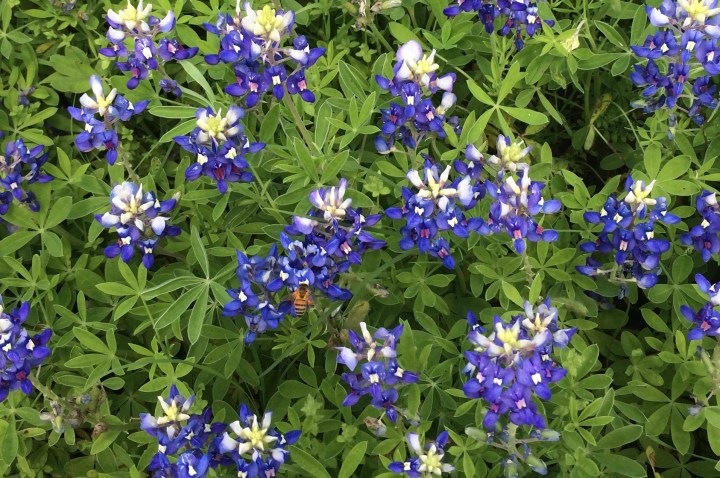
     Much less what season. Three days after our return from overseas, I had to go down to Corpus Christi to retrieve my work from the art gallery there (my contract was up). Imagine my surprise when, through my bleary eyes, I beheld carpets of  brilliantly-colored Texas bluebonnets, Indian pinks and buttercups all along the highway. Now wildflowers have always bloomed earlier in the southern regions of the State, but in February!!?? Even that doesn’t usually happen until later in March, a sure sign of spring just in time to celebrate Easter. I always count on having a small bowl of bluebonnets for my Easter table, but not this year. Unfortunately, wildflowers never became plentiful in the San Antonio area this month, and the few small patches of bluebonnets near my house have already faded away. 

     Continued drought and bedraggling 90 degree heat in late February/early March threatened to fade more than just the wildflowers. Even in Texas where the old joke “If you don’t like the weather, wait five minutes” still holds true, such extreme spikes in temperatures that early in the year were unusual, as is this sudden wet, wintery cold spell we are experiencing now. Winds, rains, tornadoes, hurricanes, fires, floods, landslides, earthquakes, drought, glacial melt — it’s all so unusual, so un-settling, so unprecedented — just like our politics. As Mark Twain famously said,” Everybody talks about the weather, but nobody does anything about it.” Hmmm… could he have been talking about climate change?

     Remember when the weather used to be a safe topic of conversation under the old polite dinner-table dictum of avoiding controversial subjects such as politics or religion? Well, seems there is no safe topic of discussion anywhere with anyone anymore. Of course, people don’t really give dinner parties anymore either, and rules of basic etiquette and polite behavior were abandoned long ago. 

     But talking about the weather is still boring, even when the real topic is that the seasons are disordered. So I’ll stop.

comment 1

The Story of a Journey

Anyone who writes or crafts speeches or otherwise wrestles with words knows that all synonyms are not created equal. Dip into almost any thesaurus and you will find numerous entries for words that mean the same, or nearly the same, as the one you are researching, plus the etymology of the word and every part-of-speech variation of it —noun, verb, adjective, adverb— along with tips for usage and modifiers. For language lovers, a thesaurus presents one of those down-the-rabbit-hole opportunities guaranteed to cause you to miss your article deadline or to make your term paper late!

     As any native speaker and reader knows, however, vocabulary words in every language have nuances of meaning all their own. Take, for instance, the word journey. A decent thesaurus on line lists the following as synonyms: trip, tour, passage, expedition, trek, cruise, voyage, flight, roam, wander, meander, odyssey, pilgrimage, excursion, and here’s a good one — peregrination. With further research and contemplation, you find that journey implies a process of travel over distance and time, generally 2,000 miles or more and weeks, months or even years in duration. A journey is not a quick trip, nor is it generally without setbacks along the way. Hence, the common use of “journey” as a metaphor, such as in a life journey, a spiritual journey, a creative journey, or as one TV commercial puts it, even a “hair journey.” Puleeze!

     We finally made our long-planned journey to New Zealand and Australia last month. As you might recall from earlier posts, this was the trip that was cancelled three days away from our departure in 2020 when Covid hit. It was a big trip then. We were going with friends and were full of excitement and anticipation; Australia was the last continent on our “bucket list.” Needless to say, the cancellation of all our plans at the last minute and the six months of haggling it took to get all our refunds back, not to mention the three solid years of Covid isolation that followed at home without any travel whatsoever, all sort of diminished our enthusiasm — mine anyway.

     2020 — 2021 — 2022  Every year that Covid lingered and international travel seemed unwise, my Dear Husband moaned that by the time we were able to go abroad again, we’d be too old to go. And every year that I settled into a quieter, slower lifestyle and concentrated on my creative pursuits, the more the mere thought of all the planning and preparation and energy a really “big trip” demanded just exhausted me. Heck, I was still getting worn out by a trek to the local grocery store!

     But the conversation about the when and where of our next “big trip” continued as travel brochures began appearing in the mail again, and thoughts of Australia lingered (even though both New Zealand and Australia were completely shut down for a very long time).  In a moment of weakness and under the spell of a “by invitation only” video of a brand new cruise ship being launched in 2023, we put a deposit on an 8 day maiden voyage in the North Atlantic for this fall.  It promised to be fabulous, if expensive.

     As we got closer to various deposit deadlines late last year, the mounting costs became clear. About that time we also got notice of availability and discounts from another line for a 15 day cruise to New Zealand and Australia with lots of inclusions, exceptional cabin accommodations, and air fare upgrades all at about the same total cost as the 8 day excursion in the North Atlantic. And this trip would be sooner — in February.  Dear Husband was happy and I was wary, though I did see the choice of the longer, “bigger trip” as more reasonable. So we booked it, paid for it, and were on our way in early February with a 14+ hour flight from Dallas to Auckland, from whence the cruise would embark.

     It was at that point, I think, that this became not a trip, but a journey — long (about 7500 miles each way over a period of 20-30 hours), arduous, and full of setbacks large and small. The flight, on a domestic US airline (I should know better than to EVER take a domestic US airline for a long-haul flight) was awful. I commented before the flight even took off, while everyone around us was talking, laughing, coughing and not wearing any masks at all, that if we didn’t get Covid from this, we never would. Prescient. 

     We arrived in Auckland in early morning to find, as we hauled our luggage over sandbags in the elegant entrance to our hotel, that it was closed due to damage from the recent floods in Auckland, but no one had notified us. After some hassles, they relocated us; okay, only one night. We boarded the ship the next day and did enjoy a couple days in Auckland before sailing on to the next port. At least we got to a Maori community and cultural center before my husband started coughing and complaining of not feeling well. He thought he might have Covid. Sure enough, we tested (on tests I had brought along), and he was positive. Though I had not yet shown any symptoms, I knew I would test positive as well. And I did.

     We went to the doctor on board, tested again, and yes, we had Covid. I feared we might be put ashore, but no, it seemed there was a whole Covid protocol in place on. (Obviously this wasn’t their first rodeo, as they say.) We were quarantined in our elegant, comfortable (thank goodness) stateroom for five days, meals served through room service, laundry done, bar/refrigerator fully stocked, doctor checking in every day, guest services calling, and men in hazmat suits totally cleaning and disinfecting the room while we sat out on our balcony watching the world go by and sipping our wine. The staff was great, the accommodations were beyond great, and if you have to have Covid anywhere, this was the place to be. But it did eat up roughly ⅓ of the total cruise and my husband, who had wanted so badly to make this trip, was disappointed that he didn’t get to photograph those botanical gardens and historic homes in the five New Zealand ports we missed.

     We were released from quarantine just in time for a couple days at sea, during which we encountered extremely rough waters in the Tasmanian Sea, due perhaps to the cyclone that hit Auckland the day after we left, and the 6.2 earthquake that hit off shore two days after that. Everyone the the ship was seasick, but not us. We were up and ready to go when we hit Tasmania and enjoyed the Bonorong Wildlife Sanctuary, where we could freely roam among the animals, pet kangaroos and see little Tasmania devils up close. (They are not as mean as their reputations.) Then it was another day at sea before docking in Melbourne, truly a beautiful city, and then another day at sea before Sydney. Altogether, out of a 15 day cruise, five days were at sea and five were in quarantine. Bottom line, a cruise is probably not the best way to see Australia and New Zealand, even without a quarantine, unless you just want to say that you’ve been there. So now that’s what we can say.

     Though we probably wouldn’t do this again, we have no regrets. We both needed the rest and relaxation that the cruise and the quarantine afforded and, ironically, we have both felt considerably better physically ever since recovery. The curative powers of Covid? There’s a topic for research. Certainly we have rediscovered the curative powers of travel, in that when you choose to venture far from the familiar, you have to let go and be ready for anything. Finding that we could still do that and laugh about all the mishaps was invigorating.  

     So yes, this Australia voyage became not just a trip, but a journey, a reawakening of a broader perspective and a confirmation of our own resilience. And, in the odd way that random events in life often form “cosmic bookends,” you could even say this entire episode became our Covid journey: the cancellation of Australia in February, 2020, marked the beginning of our experience, and actually having Covid almost three years later to the day on a cruise to Australia marked the ending.

     What a story!

comment 1

Baby Boomers in the Bush

We are getting ready to go away — away, away — really away, overseas and into another hemisphere. Those of you who have been reading this blog for a while might remember that in 2020 we were about to embark on a trip to Australia and New Zealand when, three days before departure, Covid intervened. And that was that. (“Doubling Down Under,” Feb. 29, 2020, and “Doubling Down, Part II, Mar. 13, 2020)

     As I wrote back then, Australia and New Zealand were the last big entries on our “bucket list” of international travel. Now, three years later almost to the day, it is still a BIG trip, perhaps even more so because we are three years older and inevitably changed by three years of Covid isolation. Having been almost nowhere since 2019, at this point I hardly remember how to plan and pack, much less prepare for the new realities of traveling anywhere today.

     We started planning this trip a few months ago, though it seems like we’ve been planning it since the beginning of time; we’ve talked about it, thought about it, read about it and researched it so much that I almost feel as though I’ve already been! During this time, Covid regulations were constantly changing and up until just recently, I have refused to go anywhere by plane that wasn’t a non-stop. (As though Covid germs only frequent airports and fly on multi-leg journeys — a conspiracy theory of my own making.)  

     All this planning has proven to be anxiety inducing in itself, however, even as our departure date nears. Every change in protocol, every modification to the itinerary, and every State Department directive precipitates text alerts and e-mails requiring some action on our part. There are, of course, still various Covid requirements and proofs, plus visas for both New Zealand and Australia, and multiple cross-referencing identifications, documents, registrations and app downloads. Pity the international traveler who is not computer literate and does not own a smart phone.

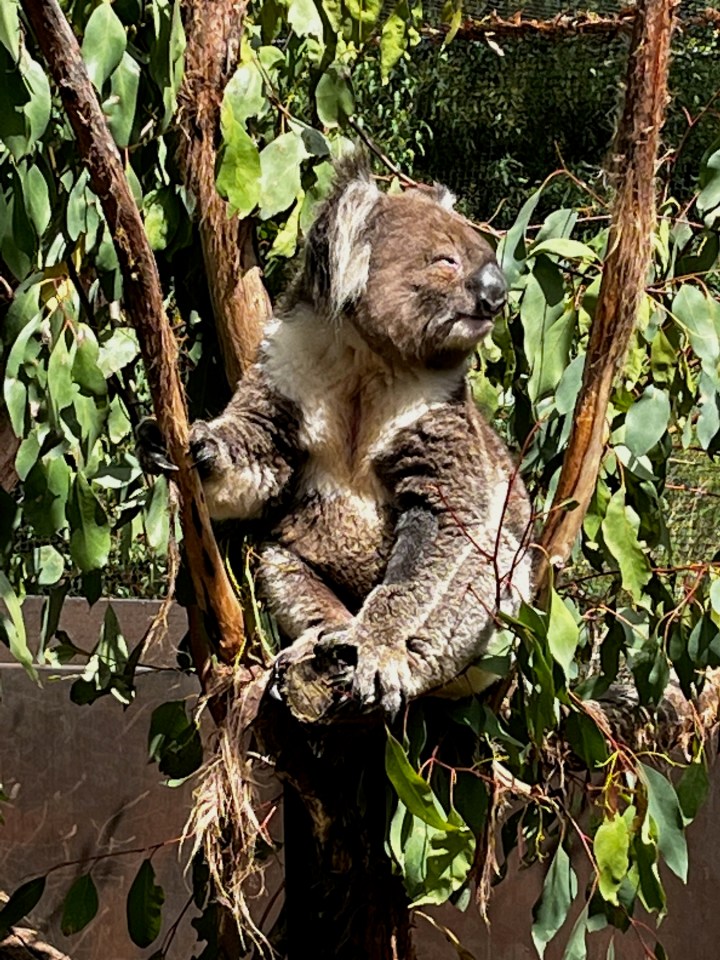
      We are flying non-stop from Dallas (16+ hours) to Auckland, then boarding a cruise going round that country and on to major ports in Southeastern Australia. It’s a long trip, but then we are talking about a whole continent here. Yes, I will get to see my long-desired Tasmanian devils, along with kangaroos, koala bears, wombats, Kiwi and Emu. And yes, we will have our treks into the outback, or bush as it is sometimes called. (I’m “bushed” already, and we haven’t even gotten there yet!)

    Bush: A forest or scrubland on the edges of civilization; from the Dutch word “boslbosch” meaning forest. It was a term used by the early Dutch settlers in South Africa, which we experienced first-hand on photo-safaris out into the bush in Kruger National Park years ago. In South Africa, bush traditionally indicates green as in the veldt; in Australia, the term has been adapted to mean the edges of the continent away from larger cities, colloquially called the outback, which is usually red or brown given the climate. Sounds like South Texas.

     One of the best trips we’ve ever taken was to South Africa and the bush. The other bests were  into the Sahara, Egypt and Jordan and the Middle East. I loved these vast landscapes and the flora and fauna (or absence thereof) of such remote and beautiful places. So I am looking forward to the trip “down under,” to the beauty of the earth as well as the beauty of the people and their cultures. Travel has been our life and inspiration for so many years, and for all the aggravations and anxieties, it is still absolutely worth the trouble. There is no other way to more immediately broaden one’s horizons and gain a better perspective on life than getting out of one’s comfort zone (or in Americans’ case right now, our “discomfort” zone). 

     Beyond that, I am simply looking forward to getting away to a place where I don’t have to do anything, literally. I don’t have to shop, or plan dinners, or cook three meals a day; I don’t have to clean or tidy up, or do the laundry. I can go on shore excursions, or not. I can read all day or go to the spa. I can simply, maybe, hopefully, relax. And I can do all that with my Honey.

     My husband and I said all through the pandemic isolations that, by the time we were able to travel again due to Covid, we would be too old to do so. Given the rigors of this trip, we may be on the cusp of that prediction. Nevertheless, we persevere,  knowing that there is no better way to feel alive and experience the beauty of other worlds than to do it with someone you love. 

     Happy Valentine’s Day.

comment 0

It’s the Little Things …

Now that all the hullabaloo of the holidays is over and the cold grey days of winter are upon most of us, I realize, once again, that it’s the little things that matter most every day: a quiet, calm place to sit and read; a doggie nose nuzzling mine to wake me in the morning; a stunning red and gold sunset to inspire gratitude at day’s end. 

     Many of the things that matter to the quality of our lives are free, or of nominal cost at most: a letter or a phone call from a far-way friend, a compliment from a complete stranger, or a spontaneous hug from someone you love. Besides emotional satisfactions, some material things are oddly satisfying, as well. For example, I got several nice gifts for Christmas, including a lovely bracelet and a new phone, but the one simple little gift that has just delighted me and keeps me smiling is a silicon six-cube ice tray that makes those 2 inch square cubes that you see professional bartenders using for bourbon drinks. I first saw these cubes at a bar in the Omni Hotel in Corpus Christi a couple months ago. Not being a bourbon drinker myself, I was nevertheless captivated by the advantages of their perfect size and slower melt. You see, I routinely put ice in my white wine, and now I have a 2 inch ice cube maker of my own! Still cold, less dilution. Little things ….

     To a long-lasting thing… Decades ago when we were living in Connecticut and had three large show dogs, we used to buy Purina dog food in 50 lb. bags. The company had a promotion wherein you could send in the weight circle proofs of purchase for redemption for various items offered in a Purina catalog. Having moved to Connecticut from the South, I was always cold, and one of the items in that catalog was a long-sleeve, waffle-weave henley which my husband ordered for me. Along with proofs of purchase, the pullover cost all of 19 cents and it is STILL in use today. It is worn and warm and comforting, with a slightly raveling Purina “Chosen by Champions” label on the upper left. I have worn this shirt over tees and pajamas, in sickness and in health, and it appears over and over in years of family photographs. Though it is now quite threadbare and I don’t wear it out of the house anymore, it is still my favorite “schmata.” Most people would have cut it up into rags by now (which is what that Yiddish word means), but not me. Nineteen cents — you can’t beat that! Little things …

     But there are some material things that are totally free. As you may recall, I am a writer, and a writer is a person who writes, a lot, all the time, and not just for publication and renumeration. I hand write cards and letters, keep all sorts of specialized notebooks, and maintain several different types of journals (travels, holidays, events, etc.) Of course, I also keep a  daily personal journal (not to be confused with a diary or a calendar), which I have written in religiously every evening of my life for about as long as I can remember.   

     What with all this hand writing and scribbling, it goes without saying that papers and pens are of paramount importance in my daily life. While I  have quite a selection of tablets, stationery, and journals, I am especially particular about my writing instruments. A pen must sit well in the hand, being neither too fat nor too thin nor too top-heavy, sort of like the perfect balance of a fine dinner fork. Except for the occasional necessity of a felt-tip, I routinely write with ballpoints, always in black and alway in medium point. And I always have a favorite pen, which goes with me from place to place every day (and which causes me to spend far too much time searching for where I left it). My favorite pen for the last several years has been one that was absolutely free!

     It is a beautiful, perfectly weighted, ballpoint pen in Cape Cod blue from the Chatham Bars Inn. When we were last there, they simply gave them to guests, gratis. Of course, the pen did run out of ink after I got it home, but I found that Cross refills fit it perfectly. (Okay, so they aren’t free, but still …) I have some other preferred pens in a pinch, but this one remains my absolute favorite, not only because it was free, but because it reminds me of all those loving, lovely Thanksgiving holidays at the Chatham Bars Inn in Chatham, MA. “Big” little things …

     In a world obsessed with acquisitions and measured by net worth, it has become a quaint cliché to say that the best things in life are free. Certainly, some of the best things are decidedly NOT free, things like a week in Paris in a five-star hotel.  For that matter, even things most of us might consider necessities, such as comprehensive healthcare or a good education, aren’t exactly free either. We probably pay for everything one way or another, but price and value don’t always equate. Nor do you always get what you pay for. 

     But in our quieter moments when we take the time to really consider what shapes and enhances our lives day-to-day, it is often the little things that count the most. Think about it.

comments 2

The Epiphany

In the Christian tradition, both Eastern Orthodox and Western, January 6 is celebrated as the Epiphany, or Feast of the Three Kings. The word “epiphany” comes from the Greek word “epipháneia” meaning the appearance or manifestation of the real — in the Biblical sense,  the recognition by the three kings of the Christ Child as the promised Messiah. In secular usage, the word epiphany has come to mean a moment of awareness or revelation, the a-ha moment when all becomes clear and the truth that was there all along finally emerges. 

     We often talk about moments of epiphany in literature, when a character discovers the key to the crime, or in life, when someone experiences a pivotal event and thus reaches a personal moment of truth. Epiphany is a powerful concept, at once both liberating but also elusive, especially when the truth is in short supply as it is these days. We live in a time of fake news, rampant misinformation, and willful refusal to accept the truth even when it stares us in the face.

     I, like many of you at this time of year, have been reading all the essays and advice columns on New Year’s resolutions, about what we should and should not commit ourselves to in the coming months. Having lived through a number of new years myself, and having made and abandoned my own share of resolutions, I now find most of the advice to be vaguely amusing, but totally beside the point. Certainly, self-improvement requires assessment and discipline to lead to growth, but that presupposes that you know where you are to begin with. So many people are so clueless about not only where they are, but who they are. They are simply driving along in an EV on a lonely road somewhere without a map and without any idea of the range of their vehicle.

     I, like everyone else, have also been reading about the scandals surrounding the newly-elected New York Congressman George Santos who seems to have what might be charitably described as a loose relationship with the truth, much less any clue about where all his life’s “embellishments” have led him. I guess he’s just happy not to be in jail while trying out a new identity as a politician. (Sound familiar?) Let’s face it: Santos is a pathological liar who doesn’t know who he is, or like it, and that’s sad, very sad. It is also indicative of our times.

     Most of us are not downright pathological in embellishing our truth, but we do kid ourselves about who we are and what we want. We often rationalize some of our worst impulses and delude ourselves into thinking that our way is the only way, that our values and goals must be shared and supported by everyone around us — our friends, our families, our co-workers. We veil weakness and vulnerability in order to project a profile of strength and happiness. The cruel reality of trying to be someone you are not, however, is that you end up being no one at all. Eventually, you become irrelevant and invisible.

     One of the “epiphanies” of growing older is realizing that we all have a “best used by” date. Whether we’re celebrities or just ordinary people, we all reach a time of peak performance. Then, by virtue of age and health if nothing else, we begin to decline in both physical prowess and personal influence. Women find that they no longer turn heads when walking into a room; men find that they are no longer alpha males at the conference table; athletes lose their edge and public figures fade into history. Ultimately, everyone dies. This is the hard truth. The only bulwark we have against premature invisibility is to know who we are and to listen to that voice inside that tells us when, where and how best to be seen at whatever age and stage of life we find ourselves. This isn’t easy in a media-obsessed culture like ours where being seen and heard is all important.

     Even when we know who we are and what we value most, it still takes courage to face the reality of change and to adapt accordingly. So, rather than making New Year’s resolutions grounded in our past lives and roles, we might be better advised to do a metaphysical reality check of who we are in order to determine how best to continue a life of purpose. Americans, particularly those who have been successful, tend to adopt a “beat-a-horse-to-death” approach to work and self-image, but you can’t be an effective CEO, or a glamorous movie star, or a busy soccer mom, forever. Our talents and strengths can be adapted to new situations, but that demands knowing who we are and what we’re about. Epiphany.

     I have decided to take the next few weeks, maybe even a month or two, to just step back and contemplate, to find my truth once again. I have been surprisingly busy and often stressed during these last Covid years and yes, while I have produced some good creative work, I have also gotten somewhat away from myself. A time out is not a time wasted.  A time out can create a private space for a personal epiphany, and that has a lot more staying power than a mundane list of New Year’s resolutions. 

comment 1

Shut the Door

Okay, so Christmas is over, some of us are already starting to put away decorations, and the New Year is at hand. Thank goodness. I don’t know about you, but this third year of our national nightmare has about done me in: 2020 was a show-stopper, 2021 was a lesson in reduced expectations, and 2022 … well… let’s just say that this was year of high hopes, lowered expectations, and continued anxieties.

     The year began with a new fad, Wordle, introduced in The New York Times in January. How apropos, since the word puzzle is only five letters long and the key is simply eliminating vowels (if you know what a vowel is), which is a perfect place to start for any politician who doesn’t know what a pronoun is. It’s also the perfect diversion for those of us who continue to stay, and play, at home. 

     February saw the invasion of Ukraine by Russia, and the subsequent destruction, world instability, and crimes against humanity that have dragged on all year long. Shifting national alliances, economic upheaval, supply-chain interruptions, and looming arguments over “blank check” arms support raises the question of whether this is now the 21st Century’s “Churchill vs. Hitler” moment for the West.

     Early spring saw the groundswell of Covid fatigue that forced the end of masking, distancing, and almost all other Covid restrictions, including mandated vaccines. People cheered on airplanes and became bold enough to venture out to stores and restaurants again, some returning to an actual workplace. Travel resumed; even the most cautious among us took a plane trip (non-stop, of course) for the first time in almost three years. The ever-optimistic Joe Biden proclaimed that the pandemic was over on 60 Minutes in September — while the new Omicron variants were gaining momentum  and cases of the tripledemic, Covid, the flu and RSV, began to overwhelm hospitals and emergency rooms. All this just in time for our upcoming, long-awaited  holiday get-togethers

     We had another landmark school shooting at Robb Elementary in Uvalde, TX, in May, in advance of the tenth anniversary of the Sandy Hook tragedy in December. Firearms now rate as the number one cause of death for children in the United States, but still there is no reasonable attempt at gun legislation to protect them. The Supreme Court overturned Roe vs. Wade  in June, however, and so now many State legislatures have gone to great legislative lengths to protect children before they’re born.

     Politics continue to be loud and ugly, devoted almost entirely this year to the mid-term elections and its “quality candidates,” spending millions of dollars on mudslinging and misinformation that might have been more worthily spent elsewhere —like maybe on the migrant crisis. (Could certainly use some bi-partisan legislation there!) And we end the year with the January 6 Committee Report, which recommends criminal indictments not only of Donald Trump, but of other intimates complicit in the whole Save the Steal debacle. What a sad legacy for a president, and what an embarrassment for the nation.

     As long as I’m counting down 2022’s greatest hits, let us not forget the natural and man-made disasters that occurred regularly all year long: floods, wildfires, tornadoes, hurricanes, earthquakes, contaminated water, diminishing rivers and lakes, melting glaciers, and record heat and drought that caused famine and food insecurity around the world. Hawaii’s Mauna Loa volcano erupted in November for the first time since 1984, a perfect antithesis to the blizzard and freezing temperatures that have plagued our holiday season this year across most of the mainland United States (and made that much touted return to pre-pandemic flight levels a nightmare). Climate change? What climate change? Ho, ho, ho…

     Forgive me for not delivering an upbeat, “health and happiness “New Year’s message for my last blog post of 2022, but this litany of disasters and disappointments is offered in support of my ultimate point: I, we, are exhausted. As a nation, we have been bullied, beleaguered, and held hostage to false promises and ridiculous conspiracies.  As a people, we are all suffering from acute PTSD, and that accounts for our collective anger, ugliness, rage, impatience, selfishness, and outbursts of violence. Events outside of our control — disease, war, economics, weather, politics — make us fearful and uncertain, and fear produces trauma. Americans are traumatized. We have been at war with the elements, and alas, we now find ourselves at war with ourselves. 

     During times of great hardship,  I often recall a quote on human suffering and sadness by the great American poet Robert Frost: “…there is no way out but through.” Let us shut the door on 2022 then, and let us just get through.

comment 0

The 12 Days till Christmas

 On the twelfth day till Christmas, my true love said to me: “When are we doing the tree?”

     We finally got the tree up last night. Gave up our usual 10 foot Nordman Pine and bought a 9 foot Balsam Hill “authentic looking” artificial one. It was time. As we’ve gotten older, we’ve had a harder and harder time lifting a real tree; got our last one stuck in the patio door and had to get a neighbor to come help us get it dislodged. That wasn’t our first clue that it was time, but it was our last. (Note to those who are considering the purchase of an “authentic” artificial tree: the Balsam Hill spring-up tree in three sections isn’t exactly a one-person job either, unless you choose a  tabletop model.)

     On the eleventh day till Christmas, my true love said to me: “We have to get the outside wreath up. What’s the weather supposed to be?”

     We have a huge, lighted 6 foot wreath that we put up under the gable over the garage. This, too, is a two-person job, considering that you have to have a very long extension ladder to get up high to hang the wreath, and that you need a pulley of sorts to hoist it up. Our son has helped us do this for years, but it never fails: no matter how warm and sunny the weather has been for days, invariably, on the weekend we decide to get the big wreath up, temperatures drop, the wind picks up, and rain and/or sleet appear. It has become a standing holiday joke. This year, we were  going to get the wreath up a couple weeks ago, but our son said, “Oh no, it’s way too nice out. We have to wait till the rain and winds come.” Sure enough, we waited another week, the wind picked up and it started to rain just as he was climbing the ladder.  

     On the tenth day till Christmas, my true love said to me: “When are we making Christmas cookies? They would be good with tea.”

     Over the years, we have had a fixed set of “traditional” Christmas dishes during the holidays: chocolate fudge, apple cake, cherry trifle, Texas Trash (also known as Chex mix, but with a spicy twist), tamales (homemade), and of course, about six dozen cut-out and decorated sugar cookies. My Mother used to be the the chief chef for all these delectables, since she loved sweets and loved to bake. She also loved hosting a “tamalada” during the holidays with her friends in Victoria to make those delicious tamales required on Christmas Eve. For years, she cooked and baked and then hauled all this up on the plane to our house in Connecticut (and made everyone on board hungry with the odors). But, as she got older, she couldn’t do all this anymore, and so I took over most of the recipes —except for making tamales. Hey! I live in San Antonio, Texas. I don’t need to make my own tamales!    

     On the ninth day till Christmas, my true love said to me: “Please, we have to get the cards out, especially those overseas.”

     Yes, folks, we still send out snail-mail holiday cars, about 110 of them, all hand-written, many with lengthy messages. At this point, none are “business” cards; almost all recipients are people who have been friends of ours for 50 years or more, and writing each card conjures happy memories of our shared pasts. Hearing back from them, even if only once a year, is an eagerly anticipated delight. But at the rate of addressing 10-15 cards a day, getting them written takes a good week to ten days while allowing time for them to arrive before Christmas/Hanukkah.

     On the eighth day till Christmas, my true love said to me: “I just did all the outside lights. Go out front and see.”

     Sorry, but no cheesy blow-ups from Walmart in our front yard, or anything else “cutsie.” Everything is done with double strings of tiny white lights, all along the fences on either side of the house, threaded through a garland all around the front door frame, and strung on small artificial trees on either side of the front walk. We don’t wrap our tree trunks in lights, by the way (which always seems to me to indicate the height of the residents); if lights can’t go all the way up and thread through all the branches like those on the trees at the Tavern on the Green in New York City, then I don’t want them. 

     On the seventh day till Christmas, my true love said to me: “Why are we still doing all this,  just for us three?”

     It’s a valid question, I suppose, but traditions die hard. And without them —without the tree, the cookies, the wreaths, the lights, the carols and all those other little symbols that represent what Christmas really means, then December 25 becomes just another day. “An occasion is only special if you make it so,” my Mother used to say. 

     The bigger question to me is how did we do all this, and even more, years ago when we were both working full-time, when our son was young, when we were active in church, school, and community, and when we all had very busy social lives with numerous family and friends living nearby and visiting from afar? Maybe everyone asks themselves that as they get older and have to adjust their standards and activities to match their limitations, but I still find the gap between the length of my to-do list and the amount of time it takes to do it to be extremely frustrating. After all, I’m a retired person (at least sort of). I shouldn’t be late for Christmas!!!

     Forget this riff on The 12 Days of Christmas. You get the point, and I don’t have the time to continue anyway. I’ve got to get back on schedule with this holiday, lest my true love find this ruffle-feathered partridge in a heap in that pear tree. 

comments 2

Thanks for the Memories …

 Many of you will recognize the above phrase as being the opening of Bob Hope’s special theme song sung at the end of every performance, no matter where it was, on stage, on television, or on a USO tour in Viet Nam in the ‘60s. A comedian, actor, singer, dancer and famous emcee of the Academy Awards, Hope died at the age of 100 in 2003. Having led a truly rich and full life, he no doubt had plenty of memories to be thankful for.

     As we get older, memories seem to dominate our gratitude list at Thanksgiving. I know they do mine. Sure, we’re thankful for our health and our families and our friends, even our bank accounts and personal successes, but with decades of experience behind us we begin to see more than just particular blessings. Age brings with it the ability to take “the long view,” to see how the patterns of our lives have brought us to who and where we are and, yes, even to appreciate the enlightening gifts of tragedy and loss along the way. 

     When I was a kid growing up in South Texas, Thanksgiving wasn’t an especially big deal. First of all, my family was just the three of us in our house, my Mother, my Grandmother and I, and so we hardly mirrored a Norman Rockwell painting. We had no other relatives nearby, so we never traveled to see them or had a groaning-board of food surrounded by hoards of diners. Also, my Mother worked in retail (at J.C. Penney, so you know what that meant!); back then when department stores were open later hours during the holidays but before they were open on the holiday itself, she felt lucky just to have Thanksgiving Day off. No matter how late she had gotten home the night before, she would still get up at daybreak to put the turkey in the oven, (why did our mothers all do that???). We would spend the morning not watching the turkey, but watching the Macy’s Thanksgiving Day parade on TV. By noon, the turkey was beyond done, but the pies, usually chocolate and lemon meringue, were destined to be the stars of the show anyway. My Mother, bless her, was not much of a cook, but she was an avid baker.

     A few years later after I married and moved to New York, I was suddenly faced with more relatives, and more command appearances, than I knew what to do with. My Father, who was originally from New Jersey, had been one of six siblings, and my husband’s Mother, originally from Brooklyn, was also one of six. You can just imagine how many aunts, uncles, cousins, children, and significant others made up these families and traditions.

     As newlyweds, we lived in New York City. Since all my husband’s relatives were on Long Island, Thanksgiving meant schlepping out to Nassau County for Thanksgiving dinner, in what is even today crippling, gridlock-inching traffic on the Long Island Expressway. No matter how well we planned or how early we left, we usually arrived just before dessert, to my mother-in-law’s eternal chagrin. Of course, we never got to watch the Macy’s parade on television, much less actually go into Manhattan to see it. The brutal introduction to traffic congestion in the Northeast is perhaps my most vivid memory of those early Thanksgiving holidays.

     That, and the food. On the rare occasion that we actually arrived in time for dinner, I also faced a totally unexpected, and often un-recognizable, menu: pickled herring, creamed onions, sausage dressing that could have been mortar for a stonemason, mashed potatoes with turnips, and yes, another over-cooked turkey. The star desert was mincemeat pie!  Lots of people, loud kids, tables extended into other rooms to accommodate everyone — it all seemed to me to be as crowded and chaotic as the traffic on the Expressway. 

     We moved to another state for five years and, when we returned East with our small son, it somehow became our turn to host family get-togethers. We had lost some of the older patriarchs and matriarchs by that time, and since we lived in a house in Connecticut and had the room, we took on holidays. Naturally, everyone brought something for Thanksgiving — even the creamed onions and the pickled herring. However, I had become something of a cook myself by then, and so I integrated my cornbread dressing and Gulf shrimp platters and mashed potatoes without the turnips into the traditional menu. Our gatherings were still as loud and chaotic as ever, but by then I loved these people and enjoyed them all. Even with all the clutter of dishes, complaints about the traffic, and bouts of bad weather, we made our own version of a Rockwell poster.

     But Thanksgiving dinner was work — a lot of work. I was teaching, our son was in school, and our holiday break only began at noon on Wednesday. Time passed, family members relocated elsewhere or moved to Florida, and the three of us began regularly celebrating holidays with friends. Of course, we still fought the traffic. For several years, we went up to a shared condominium in Sugar Bush, VT. where everyone brought dishes for the dinner. But the drive, about 8 hours often in snow and ice, became arduous — and we weren’t even skiers.

     Next we began to join friends who owned a house on Cape Cod. I-95 could still be a beast if you didn’t time it right, but our friends were also teachers and they knew the driving tips and shortcuts. The first year we did that, we stayed at The Chatham Bars Inn in Chatham. Cape Cod at Thanksgiving became our “family tradition” for years, enduring long after our friends no longer had a home there. We three even spent the last Thanksgiving in 2019 at The Chatham Bars before the Covid pandemic. Maybe it wasn’t exactly our own Rockwell portrait, but we certainly inserted ourselves into one. There is simply nothing like New England at Thanksgiving.

     Now, three years later, it’s back to just the three of us around the dining table here in Texas, my husband, our son, and I. My Mother passed away in 2018, actually over the Thanksgiving weekend, which has left me with a lingering memory of a different sort, but I try to remember the joy and the laughter and the love, and even the grumpiness, I experienced through all those Thanksgivings over all the years. I try to say “thanks for the memories.”

     And I don’t cook. I purchase the entire dinner from a specialty market because whether you’re cooking for three or thirty, a holiday dinner is still a lot of work.