comments 2

More About Beer

  In Texas, especially in the summer, it’s all about beer and tequila. Decades of commercial advertising featuring rugged cowboys or wealthy patróns, along with memories (both real and imagined) of throwing back tequila shots with beer chasers in Border-town bars have enshrined both beverages in the popular culture. These days, the latest innovative coupling of the two is what is called the “beer-rita.” This concoction is the gravity-defying delivery of a 7 ounce mini or “pony” bottle of beer (Mexican brands creatively labeled with the diminutive Spanish suffix “ita” or “ito” as in Coronita and Modelito), with the bottle turned upside down into a frozen margarita and served in a large goblet. The beer-rita is the perfect tribute to our dual heritage from native Mexicans and early German immigrants here in South Texas — and trust me, it is delicioso!

     But the real subject here is beer, specifically Lone Star Beer or “The National Beer of Texas” as it has historically been called. The Lone Star Brewing Company was founded right here in San Antonio back in 1883 by a group of local German-American businessmen and “one other,” a silent partner. This turned out to be none other than  Adolphus Busch, the beer magnate of Anheuser-Busch in St. Louis. 

     According to a brief history that appeared in the San Antonio Express-News, before the wave of German immigrants came into Texas in the 1840s, most beer was made at home. These were heavier ales and stouts that didn’t need aging.  In 1855, hotelier William Menger opened the first commercial brewery in the State in San Antonio, the Western Brewery, that produced a lighter, lager beer German settlers preferred, but it closed in 1878 just as the railroads were arriving. By then, Northern breweries were already taking advantage of the growing Texas market by shipping beer by rail. Thus, the Busch operation, The Lone Star Brewing Company, saw a competitive opportunity by opening a local brewery bottling lagers, thereby cutting down on shipping costs and catering to local tastes. (“Lone Star Brewing Co. brought mass-produced beer to San Antonio,” SA Express-News, Paula Allen, 1/3/2018)

     The Lone Star Brewing Company opened in a wooden structure on the San Antonio River down on Jones Avenue in 1884. It didn’t take long, however, for success to require expansion. A new four-story building designed in an Italianate Romanesque style with towers and parapets was completed on the site in 1885. The original building is still located there. As the operation continued to expand,  the 20 acre campus on the banks of the San Antonio River became a model of the “science of brewing,” and a private rail spur right at the front door made Lone Star a model of shipping efficiency!

     The brand’s heyday came to an abrupt end, however, with the enactment of Prohibition in 1919. Over the next several years, the brewery complex had many non-alcoholic reincarnations,  but it gradually fell into disrepair until it was rediscovered in 1972. The brewery was purchased by the San Antonio Museum Association, added to the National Register of Historic Places, and eventually transformed into the San Antonio Museum of Art, which is what it is today. When it was christened in 1977 by then Mayor Lila Cockrell, a bottle of beer rather than a bottle of champagne was used for the ceremony. When the Museum officially opened to the public in 1981, its advertising announcement was “We’re Brewing Art.”

     Today, the San Antonio Museum of Art is the only accredited museum of art in the United States that originally served as a brewery. Examples of adaptive reuse among art museums in Europe are fairly common — the Louvre, formerly a palace of the kings; the Musée d’Orsay from a Paris train station; and the Tate Modern in London from a power plant — but SAMA is a notably rare example of such reuse in America. 

     Acquisitions and expansions since its opening has made SAMA a world-class museum that the City points to with pride. It houses the outstanding Nelson Rockefeller/Robert Winn Latin American folk art collection; stunning works from the ancient Mediterranean World including Egyptian, Greek and Roman art; an extensive collection of Asian art and Chinese ceramics; extensive European and American paintings from classic to contemporary; and a 7,000 square foot special exhibition space (where I was first encountered the fabulous art glass of Dale Chihuly many years ago). There is even a lovely restaurant serving Tuscan fare called Tre Tratttoria across the courtyard right on the River..”

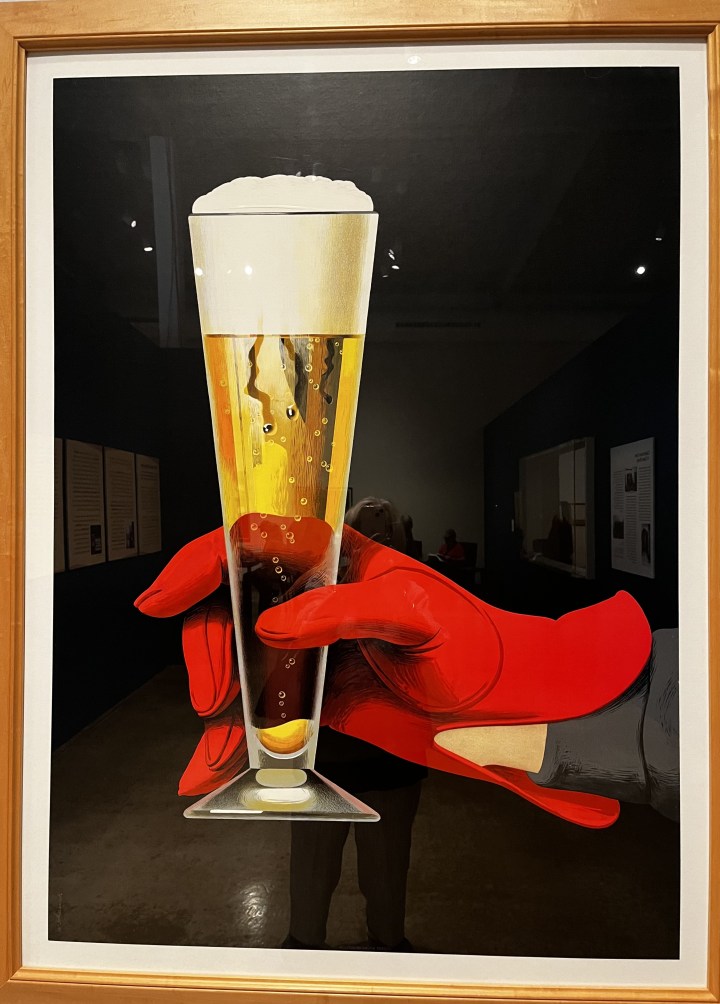
     Just recently, in honor of the Lone Star Brewery’s original inception 140 years ago, a new exhibit opened at SAMA dedicated to the history, art and architecture of the museum facility itself (see poster above) Not surprisingly, the slogan for this special exhibit is “Still Brewing Art,” which is consistent with the Museum’s stated mission to “… preserve, exhibit, and interpret significant works of art representing a broad range of history and world cultures, which will strengthen our shared understanding of humanity.”

     I am proud to be a member of this Museum community, but I also must admit to a personal memory of Lone Star. You see, after Prohibition closed the Jones Avenue facility, the Muchlenbach Brewing Co. of Kansas City bought the name and began producing Lone Star beer down on what is now 600 Lone Star Blvd. on the South side of San Antonio. Lone Star beer was made there from 1940 to 1996. When I was an undergraduate student here in San Antonio years ago, my friends and I used to go over to that Lone Star brewery on Saturdays to enjoy the free (and liberal) tastings offered there — no questions asked about ID. 

     Lone Star Beer is still produced here in Texas (by Miller Brewing in Ft. Worth, I believe), but it isn’t always easy to find, and almost impossible to find in other states. But, to my nostalgic delight, at the opening of “Still Brewing Art” a couple weeks ago, they served — what else? — Lone Star beer! And they didn’t ask me for my ID this time either.

comments 3

Chill!

 I am amused by the new Bud Light™ commercial. “Chill like you’re retired,” it proclaims just in time for summer. Sure thing. My husband and I are retired, but it’s 103º here in San Antonio and even our pool is at 92º! Now we like beer as much as the next Texan, but who are we kidding… Chill, really???

     When I first heard the commercial, it was sort of funny, but then the more I thought about it, the more I wondered what kind of stereotype was at work. Okay, so I get the gist of the chill claim that a “cold one” always helps to cool someone off  in the heat (though actually a non-alcoholic drink is far preferable for hydration). I also get the subliminal image of relaxing around a pool or on a beach in permanent-vacation mode (though I personally don’t know any retirees, including us, who are totally carefree and spend their lives on a permanent vacation — even if that is what the realtor promised them about that place Florida). 

     Then I thought that perhaps this slogan was a sort of double entendre alluding to the recent boycott of Bud Light™ by anti-trans groups that began back in April when a transgender woman and TicTok influencer, Dylan Mulvaney, promoted the brand on her Instagram account during March Madness. Now I seriously doubt that this meaning was the original intent of the ad, but “chill” seems to be especially good advice for everyone in these hot-headed days of hyper sensitivity and “woke” indignation.

     But I digress… Maybe I’m just being too analytical about a beer ad. After all, the whole notion of “retirement” does have a valid aspirational connotation, an element of hope and a dream of an easier existence, especially among those who are younger and struggling to get a leg up, to pay their bills and raise their kids. Most people who are under fifty seriously doubt that there will be any social security left by the time they are in their “golden years,” and we all know that defined-benefit employee pension plans have pretty much gone the way of the dodo bird.  According to the Survey of Consumer Finances (usafacts.org) about half of American households had no retirement savings accounts at all as of 2019.

     The more I think about this ad slogan, the more I realize that it is the stereotype of the retired person that I’m really questioning. Even though we Baby Boomers are the wealthiest generational cohort alive today, we aren’t all wearing plaid pants and riding around in golf carts. Come to think of it, none of my friends fit that image and only a few of them even play golf at all. We were the activist generation, after all; golf (and golf carts) are too slow and too much the “Mad Men” era.

     No, retired Boomers are much more likely to be found walking their neighborhoods for exercise and/or purpose, or out canvassing opinions for their HOAs, or running for local office. Some are still working, though probably not for pay, as artists, writers, educators, librarians, musicians, counselors, consultants or executive board members dedicated to philanthropic organizations. Since three-quarters of all prime-age women (ages 25-54) are in the paid workforce today, with 84 percent of them working full-time, all those activities in the community that used to be done by women at home and available during the day — at garden clubs, at church, in civic organizations, in hospitals, in soup kitchens, as  literacy volunteers and school tutors, and anywhere else free labor was necessary — are now shouldered almost exclusively by retired women. Volunteer activities can easily turn into more work and more stress than any full-time job, especially if you’re good in those roles. Believe me, I know.

     Some of my retired friends are grandparents, of course, and  every one of them has expressed, at one time or another, genuine worry about the future quality of life for their grandchildren. Their worries are rooted not in the current culture wars, but in very real fears about the economy, the climate, the international tensions, and the political disfunction and stability of our country.  Today’s retirees, especially the Baby Boomers, far from being worry-free and totally chill, seem especially concerned about their adult children and committed to helping them and their families.  Over seven million grandparents live in households with their grandchildren, and another 2.3 million grandparents are totally responsible for raising their grandchildren, often legally adopting them. These are senior citizens who are taking care of kids, driving carpools, cooking meals, doing household chores and contributing financially to their well-being. They are hardly retired.

    Every time I use “We’ve been busy” as a reason for why we haven’t done something or been available, our son responds, “You two are the busiest retired people I ever heard of.” Now I don’t know about the busiest — not a title I really want to pursue —  but I do admit that we aren’t sedentary, aren’t low-key and certainly not “chill” about ceasing to learn and grow and being committed to the things and people we care about.  Sometimes, in fact, like this week while trying to get this blog written and up on a posting schedule I impose on myself, I get downright stressed out!

     I need to go have a beer and chill.

comment 1

It’s Summertime

…and the livin’ is easy. So goes the song, and so goes life here in South Texas. June has come, but so far, the extreme heat has been delayed and drought has been mitigated. Instead, we’ve developed a rather sultry, somewhat tropical climate — exactly what the famous song always brings to mind. Regular rains and daily showers have replenished the acquifer, rolled back some watering restrictions, and rendered lawns and gardens lush for the first time in recent memory. It is wonderful.

     Our grass is green, our garden is producing, and summertime crops are already coming in: tomatoes, onions, green beans, potatoes, and of course, all the herbs right outside my patio doors. I have beautiful flowers — wildflowers, roses, and sunflowers — in the house all the time, and the bougainvillea are an explosion around the pool. If it weren’t for the chiggers and the mosquitoes, we’d have it made in the shade! Bless my husband, the Johnny Appleseed of all this beauty and abundance. The garden in full bloom lifts my spirits and makes me smile.

     It also makes me feel like “livin’ easy” and enjoying a time out, and I’m doing exactly that. I’m taking these June days slowly, recuperating from the very busy last few months of travel, houseguests, home repairs, and more houseguests. We aren’t planning anymore big trips this year, only perhaps a couple days in “the Big Easy” in July for our anniversary. It is so nice to wake up in the morning and realize that the day is mine more or less to do as I please. That is what I really call livin’ easy.

     As Melissa Kirsch wrote recently in The New York Times (“The Morning,” June 3, 2023), “Setting intentions for summer is the low-stress, seasonal version of New Year’s Resolutions.” In her article, Kirsch introduces the term “JOMO” (the joy of missing out) as the perfect antidote to the anxiety-inducing “FOMO” (fear of missing out). I happily learned about the joy of missing out during the pandemic, and so now, employing those same skills of carefree carelessness, I am determined to use this summer to sit and ruminate rather than run myself ragged.

     I do have a few things to think about, especially regarding my art quilting. I had already decided earlier after an exceptionally busy 2022, filled with exhibitions and a gallery representation, to take some time off to explore where I might be headed next in my creative life. This entails not only contemplation, but also a good bit of research about techniques and some serious self-criticism of my own work. My goal going forward is to do projects that challenge and excite me, not just those geared toward entry into specific shows and exhibitions. I want to establish my own distinctive style building on the skills and abilities that I recognize as my strengths, while also finding new inspirations to propel me into an expanded creative zone. 

     Closely related to all this is my website, where I also have some re-imagining to do. www.thenarrativethread.com is important to me, because it intertwines the “threads” of my art with the “threads” of my life, as stated on the Home page. I am a writer, first and foremost — have been for almost all my life — and I am committed to the discipline of posting regular essays (twice a month) in the Journal. But I really need to update the website as a whole, particularly the Gallery of my art quilts, to better showcase my recent fabric arts to which I devote so much time and attention. That means I have to do some “studying up” to improve my technical site management skills. Time and patience, peace and quiet — more contemplation.

     I have a few other “meditative projects” underway for the summer, as well. I’m also in the process of updating and reorganizing all my hundreds (yes, literally hundreds) of favorite recipes. My son had begun collecting family favorites into a small cookbook years ago and he even put out a couple new editions over time. But since that last “new edition” so long ago, I have attended the CIA in San Antonio, taken specialty cooking classes under the tutelage of some famous chefs, and come a long way myself as a home cook. Our family tastes have changed, and so have modern attitudes toward fresh ingredients and home entertaining. Even recipes get out-of-date, you know, and I now have stacks of new favorites in a messy pile at the end of my kitchen counter. They have to be organized and collected into a new, current version of our cookbook, and that entails editing the old versions in a data base while also adding new entries. Time and patience, peace and quiet …

     Finally, I am also currently bringing our travel scrapbook up to date. Since we hardly went anywhere at all during the pandemic, you would think I would have had plenty of time to catch up through all the pre-Covid trips foreign and domestic, but somehow all my attention shifted to daily activities at home rather than memories of excursions far away. Happily, we are now going out and about again, and I am allowing myself the luxury of reliving the joys of past destinations while also contemplating new ones. Scrapbooking is a fun hobby, and a travel scrapbook is an especially appealing diversion in an “easy-livin’” summer.

     Hope you find some projects you can tackle this summer without having to break a sweat. After all, the livin’ is supposed to be easy.

comment 0

Que Semana!

[The photo above is of Tlaloc, the god of rain and earthly fertility; it is from the Mexica/Aztec period (1325-1327 AD) in the Museo de National de Antropología.] 

     We just returned from a week in Mexico City, and what a week it was! As the biggest city in North America and one of the top ten largest in the world (with over 22 million people spread over almost 500 square miles), Cuidad de México is everything you’d expect an “alpha” city to be: chaotic, noisy, congested, crazy, gridlocked, and often incredibly frustrating. But it is also exciting, diverse, cultured, historic, good-natured, beautiful and hospitable. There’s so much to see and do and experience in this major metropolis that the attempt to tackle it all in just a few days leaves you breathless — especially since it all sits at an altitude of 7,350 feet.

     My husband and I hadn’t been there in decades, so we returned with a fresh perspective as experienced travelers who have since visited many, many major cities of the world on six different continents. I think Mexico City is largely overshadowed as a tourist destination by the more famous European capitals, and even by the smaller coastal resorts in Mexico such as Cancún frequented by cruise ships. Yes, you can drink margaritas and dance to salsa music in Mexico City, but this capital city is hardly a “Margaritaville” — not by a long shot. 

     The City is the oldest capital city in the Americas and one of two founded by Indigenous people, the Mexica (Aztecs) in1325. It was called Tenochtitlan until the Spanish almost completely destroyed it in 1521. Under the Spanish, the City became Cuidad de Mexico and was redesigned according to Spanish urban standards. Today, much of its stately architecture and city layout bears a remarkable resemblance to Madrid, though the wide, elegant, Jacaranda tree-lined thoroughfare running through the center of the City, the Paseo de la Reforma, was built in 1865 at the direction of Emperor Maximilian to mirror the Champs-Élysées in Paris.

     The Mexico City inhabitants, or the capitalinos as they are formally called, are incredibly proud of their long and fascinating history; in fact, each of the gleaming monuments of marble and gold punctuating the grand traffic circles (the glorietas) on Reforma Avenue give honor to some important hero or event in the nation’s history. The Central Historic District and the Plaza de la Constitución (also known as the Zócala) has been the center of culture, religion and politics since the days of the Aztecs. In fact, in 1978 while city workers were digging near the Metropolitan Cathedral, the remains of a carved stone disc were uncovered, which in turn led to a major archeological dig over several city blocks which uncovered an ancient Aztec site, the Templo Major. Today it is a popular tourist attraction where visitors can wander among the ruins and explore the excellent museum nearby.

     Reputedly, Mexico City has more museums than any other city in the world. It certainly seemed that way to me in our breathless attempt to see so many of them in five days!  Really, there are too many incredibly important cultural collections to even begin listing them all, and when you add the magnificent art galleries and studios of artists Diego Rivera and Frida Kahlo …well… you’re thoroughly worn out even before you’ve explored any of the markets, eaten in any of the fine restaurants, or experienced the inspiration of the Basilicas (old and new) of Our Lady of Guadalupe. And then you still have the trips out to the pyramids of Teotihuacán and the canals of Xochimilco. Oh my!

     If I have to name one museum, however, that really is not to be missed even if you only have a weekend, it would have to be the Museo Nacional de Antropologia, surely one of the most important of its kind in the world and one that puts the history and the character of Mexico and its people in context and sequential order. Through a series of separate halls surrounding a beautiful courtyard and fountain, anthropology begins in the first exhibit hall in with the pre-historic peopling of the Americas around 30,000 BCE, and continues on into the Pre-Classic period  of Central Mexico (2500 BCE). Art and archeology then move through adjacent halls and historic eras: Teotihuacan, Toltec, Mexica (Aztec), Oaxaca, Gulf Coast, Mayan, and the regions of Western and Northern Mexico. 

   Now I have been to huge, awe-inspiring museums before, some that lay claim to exhaustive collections, but never, never have I been to one that so clarifies and contextualizes all the information I have accumulated over the years about Mesoamericans and the history of the place that I actually live in today, which was once part of Northern Mexico. (My own ancestors got land grants  here in Texas from the Mexican government back in the early 1840s.) We see bits of the art (Mayan, pre-Columbian) in other museums and we learn bits of cultural heritage here and there in South Texas, but never has any single place or any single exhibit put it all together for me the way that the Museo Nacional de Antropologia did. It was a real highlight of the trip because I learned so much.

     Mexico City, as I said earlier, is often overlooked by tourists in favor of other major capital cities, but I also think it is particularly overlooked, and much maligned, by Americans. The negative press about the border, the wall, the gangs, the drugs, and the whole immigration problem is constant; moreover, for Texans, even the long-ago memories of sleazy border towns full of cheap goods and high crime linger and have given Mexico, as a country, a bad rap. Shame on us. Mexico has a long and storied history well beyond the Alamo and Santa Anna, and in so many ways, theirs is our collective history.

     We shared this trip with our son, who had never been to Mexico City before, and we let him set the itinerary of sites to see and things to do. Boy! His tour direction would make Tauck or Abercrombie proud! But then we had the unexpected: a weekend spent in the Benito Juarez International Airport for two days standing in line and trying to get home after hundreds of flights were cancelled due to Popocatépetl’s eruption that spewed heavy volcanic ash into the atmosphere. Here we were having been immersed in the history of Mexico and now we were being immersed in the atmospheric thick of it. 

     “El Popo,” as the volcano is called by the locals, awoke in 1994 after sleeping for 70 years, and it has been giving off modest levels of fumes and ash ever since. This time, though, the eruption was more than modest, spewing sufficient lava and ash to cause havoc and threaten the well-being of some 30 million people living within a 50 mile radius. We are talking about a “stratovolcano,” capable of the kind of destruction that Mt. Vesuvius wrought (in 79AD), and it was enough to close the airport and cancel hundreds of flights. (We did get out two days later, albeit to Austin, not San Antonio.)

     And so, that is the end of my travelogue for Mexico City. I’m glad we went and I loved it, and I would urge others to go. And no, I am not being paid by Mexico tourism to say that. 

     But, still, estoy cansada. Que Semana!

comment 0

Bustin’ Out

Unruly weather notwithstanding, spring has finally sprung: flowers are blooming and Mother’s Day is upon us, graduations have already begun in some areas of the country, the Memorial Day summer send-off is not far away, and travel prediction numbers are approaching pre-2019 levels. June may not be “bustin’ out all over” yet, but everything and everybody else sure seems to be. 

     We had company from Connecticut last week, our first houseguest in three years. Had to really clean out and spruce up that guest suite, which we had been using for extra wine storage during the pandemic. (So we drank the wine and that solved that problem.) Interesting, though, to gear up for a guest once again — sort of like trying to remember what goes with what in your wardrobe after having not worn anything but yoga pants and t-shirts for so long. And then there was the planning for things to do while our friend was here, while still avoiding the lingering crowds of Fiesta. 

     The week ended up well and we all enjoyed each other’s company, which was the main thing after not being together since 2019. I’ve missed my friends, of course, but am still not entirely without Covid apprehensions regarding wearing masks and social distancing. I know, I know … everyone has long-since moved on from even the most basic precautions and, ironically, after being so cautious for so long, we got Covid anyway on the long flight to New Zealand in February. Maybe it really is that I’ve simply come to not like crowds of strangers anywhere anytime, Covid threats or not.

     The World Health Organization recently declared the Covid crisis over, and the CDC lifted the emergency Covid declaration in the United States this week (even though there are still more than 1,000 people dying of Covid each week here.)  But, as Dr. Ashish Jha, former Covid response coordinator for the CDC has emphasized, the virus hasn’t gone away; it’s still a threat, but no longer an emergency. Covid will now be treated like any other respiratory ailment, though the U.S. may not be fully prepared for a different future variant or a new pandemic. Okay, so we’ll all worry about that later.

     Declarations or not, most Americans seem to have begun to “worry about it later” a long time ago, as though wishing it were not a real threat would make it so. This is especially true in states like mine, where some businesses and schools were reopened as early as May of 2020, in spite or record numbers of Covid cases. Ultimately, lawsuits were waged and bans on masks and crowd sizes were abolished, and life began to resume in most places for the sake of the economy. Some of us, though, didn’t buy into all that premature normalcy, and we were grateful that we didn’t have to try.

     Yet now here we are, finding ourselves reluctantly sliding into “normalcy” in spite of any personal misgivings. I’m going out to restaurants at regular mealtimes now, instead of at off hours; I’m going shopping and removing my mask when the store really isn’t crowded; I’m taking trips and short flights (we will be flying to Mexico in a few days);  and I’m no longer concerned about repairmen, service people — or even guests — coming to my house without being masked up. Maybe since I had a mild case of Covid after all, I feel more confident about surviving if I get it again. Or maybe, like everyone else, I am just tired of being so vigilant and so isolated and so paranoid about this pandemic that I’ve come to the conclusion that life is short and that something will get you in the end anyway. 

     But the joy of friendship is, in itself, enlivening. Had friends from New York come in for their grandson’s graduation this week, have a former student/friend coming in from Florida later in the month, and just last night we penciled in a visit from an old friend in Minneapolis for a couple days in July. The guest suite is open for reservations and it feels good. My husband and I are even making some reservations of our own for a couple short trips later this year.

     To date, 1.1 million people have died of Covid-19 in America, more than all who were killed in both World Wars. America has had more lives lost in this pandemic than any other country in the world, and that’s even considering that our figures are likely under-reported. But the time has come to “bust out,” pandemic be damned. After all, there are so many other more imminent threats to fear, as our politicians keep reminding us.

comments 3

Viva Fiesta!

It’s that time of year again in San Antonio: Fiesta! The City stops — at least the downtown traffic does — to clear the way for ten days of parades, food, flowers, special events and celebrations all the way down Broadway and along the famed Riverwalk. It is exuberant, colorful, joyful, and fun. And after three years of Covid restrictions and cancellations, this year’s fully back-to-normal celebration is especially welcomed (even if the weather is proving uncooperative and concerns about Covid among the crowds are already being voiced). But in San Antonio, Fiesta is a sign of spring and summer and the rejuvenation of hope in the Alamo City. Hence this year’s motto: Viva Fiesta!

     This will be the 132nd year of Fiesta, founded in 1891 by a group of citizens to honor heroes of the Alamo and the Battle of San Jacinto. Over the years, Fiesta has only been cancelled a few times, due to WWI (1918) and WWII (1942-45). It was postponed in 2020 because Covid, and ultimately cancelled that year, brought back somewhat but moved to June in 2021, and then resumed, but still scaled back in 2022. So this year is a big deal for Fiesta. The City and the sponsoring Texas Cavaliers are hoping that the projected 2.5 million visitors for the events will show up.

     The celebration culminates with the Battle of Flowers parade, this year on April 28. Back in 1891, that parade originated with having two lines of carriages decorated with flowers parading in front of the Alamo as their occupants pelted each other with flowers. That was the idea of a woman named Ellen Sladen, the wife of a congressman, in a salute to the heroes of the battles of the Alamo and San Jacinto. Hence, the Battle of Flowers Parade. It is still the only one in the country to be planned and directed completely by women and is second in size only to the Tournament of Roses Parade in California.

     Fresh flowers are no longer used in San Antonio, however, having been replaced with handmade flowers crafted by a group of local women whose relatives began making them for the event back in 1923. Colorful blossoms of crepe paper, tissue paper, netting and foils have become a mainstay, not only during the days of Fiesta, but year round as joyful symbols of TexMex culture. They adorn front doors in wreaths, form centerpieces on buffet tables, get strung overhead for picnics and barbecues, and even grace more formal occasions like high-school proms and quinceañeras (the traditional rite-of-passage of a young Latina on her15th birthday). 

     Back when I was an undergrad at a university here in San Antonio, Fiesta was an exciting, eagerly-anticipated event for everyone on campus, but especially for those students who came from far away and had only vaguely heard of the Alamo and the tall tales about everything being big in Texas. Fiesta offered a fun-filled, ten-day crash course not only in the history and culture of San Antonio, but in all the enduring influences of Seis banderas sobre Tejas, the “six flags” of nations that at one time claimed sovereignty over Texas: Spain, France, Mexico, the Texas Republic, the Confederacy, and the United States. 

     Yes, Fiesta highlights Mexican traditions and Mexico’s central role in Texas, but the true Tex-Mex culture is actually a composite of  the State’s indigenous people (various tribes of Native American Indians) and the influences from all those early Spanish, French and Mexican residents. Then, in the early 19th century as the war for Texas independence was brewing, settlers came swarming in from Germany, Poland, Czechoslovakia, Ireland, England, and other parts of Eastern Europe, as well as Americans relocating from the Confederacy and, after June Teenth in 1965, freed slaves. (My own ancestors came from Alsace Lorraine into the port of Indianola in the 1840s and settled in Victoria.) Between 1830 and 1840, the population in Texas territory grew from roughly 20,000 people to over 140,000. Seems everyone heeded Tennesseean Davy Crockett’s famous challenge of 1835: “You can all go to hell and I will go to Texas!” 

     You can find elements of all these cultures and histories in the food, floats, music and pageants of Fiesta. For example, Conjunto music has the unmistakable rhythms of the German polka and cumbia Norteña, a two-step dance style done to the beat of a 12 string bajo sexto guitar, began in the late 1800s in Texas dance halls. It is the clear forerunner of today’s cowboy two-step. There’s the Charro Queen and the Charreada, a Mexican-style rodeo emphasizing the elegant style and unparalleled skill of the riders, the charros y charras, who ride in the Battle of Flowers parade. There’s the Queen of Soul pageant, the Miss San Antonio and the Miss Fiesta pageants, all representing local young women and college students, and the Order of the Alamo coronation with the spectacularly-designed court gowns with ten-foot trains (not representing anything but wealth, but certainly a showcase for the skills of the seven local seamstresses who work almost all year to create these fabulous garments). All Fiesta events and pageants underwrite significant contributions to local charities, which is a source of local pride.

     Meanwhile, down at NIOSA (meaning Night in Old San Antonio and pronounced nee-osa) in La Villita (Little Village), you’ll find foods and music and celebrations of every kind, including a good, old-fashioned beer garden. Nearby in Market Square there will be Mariachi music and performances of dancers, some with fans and castanets, some in regional Mexican folkloric costume, some more contemporary.  There’s even Tejano rap. From Cajun cuisine to Gulf Bay oysters to tamales and Southern soul food, there really is something for everyone and every culinary and musical taste at Fiesta.

     When I was in college, we would take the bus downtown to attend NIOSA, where big-name bands often appeared. I remember one night dancing and singing along to “My Girl” with the Temptations  — but I’m dating myself. I also performed on one of the River Parade floats one year: don’t ask me the theme, but I was one of the dancers from my modern dance class on the float representing my college (or some reason), and and I remember being in fear of falling off the side of the barge into the River.

     In my memory, Fiesta was  a fabulous, free, innocent time, at least compared to these days. No one worried about arrests or shootings or being drugged. The biggest offense was drinking beer with a fake ID and the shame of being kicked out of NIOSA. Let’s hope that this year’s Fiesta ends without incident — and that the South Texas weather holds through the weekend.

comments 3

Just Too Cute

I don’t really like Easter.  Now before anybody starts screaming “sacrilege,” let me clarify that it’s not the life-death-rebirth spiritual message celebrated by Christians in churches, nor is it the metaphor of the cycle of nature celebrated by solstice revelers that bothers me so much as it is the way we in America have come to acknowledge all this in the holiday we call Easter.  As usual, we have commercialized belief and wonder with stories and stuff that stretch the imagination. Bunnies and chicks, chocolates and peeps, baskets and eggs — it’s all just too cute. And I don’t do cute.

     The word “Easter,” and the notion of an Easter Bunny, have their origins in myths and legends celebrating the renewal of life presided over by an ancient goddess of spring during the vernal equinox. In Scandinavian culture, she was called Ostra; the Anglo-Saxons called her Eostre, and later in Germany, she was known as Eastre. This might reasonably explain the origin of the word “Easter.” The hare was long seen as a symbol of fertility and, therefore, associated with spring, even in pre-Christian times. Putting the goddess and the rabbit together, however, is where myth and legend get fuzzy.

     Some stories say that Ostra was usually represented by a rabbit or an egg, both obvious signs of fertility. Other versions claim Ostra turned a bird into a hare and that the hare showed his gratitude by returning to his bird function and laying colored eggs for her annual festival. Other accounts propose that the hare was actually Ostra’s consort. Good luck explaining any of this to little kids when they ask where the Easter Bunny comes from. 

     Conflicting, confusing accounts of ancient history cost me a couple hours down the Google rabbit hole of research on the origins of Easter, but I have come to some basic conclusions: first, all of this is mostly folklore, tweaked and fine-tuned throughout centuries of European cultural and religious hearsay and appropriation.  There are no documented pre-Christian records of any goddess named Eostre, and only a brief mention of her name as the likely source of the word “April” by the Medieval cleric known as the Venerable Bede (672-735). Secondly, the Easter Bunny appears to have only arrived in America in the 1700s with German immigrants who brought with them their traditions of an egg-laying hare called “Osterhaus.” Eventually, the custom of an Easter Bunny who left colored eggs, candy, and other small items in decorated baskets or Easter nests spread across the country. Lastly,  if Easter is related to celebrations of the vernal equinox and the arrival of spring, then how does the holiday make sense in parts of the world that are NOT in the Northern Hemisphere?  

     The search for rhyme or reason within cultural practices in America these days increasingly makes me tired, but as long I have uncovered some trivia about Easter traditions, let me share some with you. Did you know, for instance, that Easter is second only to Halloween for candy sales? The egg-shaped jelly bean became associated with Easter back in the 1930s, although its history can be traced back to Biblical times in an ancient confection called a Turkish Delight. Over 16 billion jelly beans are made in the U.S. each year just for Easter (National Confectioners Association). But still, the top selling candies associated with Easter are chocolate eggs, milk or dark, solid or hollow, filled or not. Over the last few years, the top-selling non-chocolate treat has been the marshmallow Peep, the sugary, yellow or pastel colored chicks that are sweet enough to make your teeth ache. Even my favorite year-round Junior Mints came out this year with pastel Junior Mints for Easter. Give me a break! I’m not a pastel person either — just too cute.

     If anything rivals the Easter Bunny as an identifiable holiday motif it’s the egg. Decorated, painted, dyed, or just the shells filled with confetti (cascarones) for springtime festivals, Easter egg hunts and egg rolls have been delighting children for decades. The annual White House Egg Roll, a race in which children push decorated eggs across the White House lawn, is held the Monday after Easter. The first event occurred in 1878 when Rutherford B. Hayes was president and it has only been cancelled a few times since then due to war (WWII) and national illness (Covid 19). 

     One tradition that is actually quite interesting and not entirely commercialized is the idea of a new outfit for Easter. At one time during the penitential period of Lent that precedes Easter, the faithful were supposed to wear the same set of clothing for six weeks as a sacrifice and then discard that clothing for a new, fresh outfit for celebrating the holyday itself. Though most people don’t know where the tradition of an Easter outfit comes from, the custom continues. When I was growing up, my Mother and I always got new outfits for Easter, or at least some new item of apparel though not usually hats. It is that tradition that begat the idea of an Easter parade, particularly to show off new, fancy hats. 

     In the mid-1800s, the elite of New York society would attend Easter services on Fifth Avenue and then stroll down the street afterwards to display their new outfits, especially their hats. In 1948, the popular film Easter Parade starring Fred Astaire and Judy Garland featured the song “In Your Easter Bonnet …” The parade tradition lives on today in Manhattan, with Fifth Avenue from 49th to 57th Streets shut down to traffic on Easter Sunday for parading pedestrians sporting elaborate Easter bonnets. In recent years, the parade has become more of a spoof of Fifth Avenue style, a tongue-in-cheek event with outrageously-decorated hats and everyone, elite or not, old or young, gay or straight, women or men welcome to participate. 

     Only in New York, where it’s always beyond just too cute.

comment 0

Seasonal Affective Disorder

Spring begins today, or so they say, but you couldn’t prove that by me. Supposedly, the vernal or spring equinox is one of two days in the year on which the sun is directly above the equator. That means the hours of day and night are equal. I haven’t yet witnessed anything close to that, since the start of Daylight Savings Time pushed sunrise up to almost 8 o’clock in the morning. Of course, I haven’t really seen a sunrise either, given that recent days in South Texas have been consistently cold, windy, cloudy, and even rainy (surprise). It was 39 degrees here last night, barely 40 when I hauled myself out of bed to do my daily walk. This is definitely not spring weather. 

     I’m not depressed by any of this (SAD), mind you, just affected and confused, which I have been ever since our return from Australia at the end of February. The 19 hour time difference from where I was, plus crossing two different time zones while I was there, didn’t help my situation. Sleep patterns were in turmoil for almost two full weeks after I returned, and I wasn’t quite back to normal when the Daylight Savings change occurred last week. Honestly, I’m still not entirely sure what time, or even what day, it is.

     Much less what season. Three days after our return from overseas, I had to go down to Corpus Christi to retrieve my work from the art gallery there (my contract was up). Imagine my surprise when, through my bleary eyes, I beheld carpets of  brilliantly-colored Texas bluebonnets, Indian pinks and buttercups all along the highway. Now wildflowers have always bloomed earlier in the southern regions of the State, but in February!!?? Even that doesn’t usually happen until later in March, a sure sign of spring just in time to celebrate Easter. I always count on having a small bowl of bluebonnets for my Easter table, but not this year. Unfortunately, wildflowers never became plentiful in the San Antonio area this month, and the few small patches of bluebonnets near my house have already faded away. 

     Continued drought and bedraggling 90 degree heat in late February/early March threatened to fade more than just the wildflowers. Even in Texas where the old joke “If you don’t like the weather, wait five minutes” still holds true, such extreme spikes in temperatures that early in the year were unusual, as is this sudden wet, wintery cold spell we are experiencing now. Winds, rains, tornadoes, hurricanes, fires, floods, landslides, earthquakes, drought, glacial melt — it’s all so unusual, so un-settling, so unprecedented — just like our politics. As Mark Twain famously said,” Everybody talks about the weather, but nobody does anything about it.” Hmmm… could he have been talking about climate change?

     Remember when the weather used to be a safe topic of conversation under the old polite dinner-table dictum of avoiding controversial subjects such as politics or religion? Well, seems there is no safe topic of discussion anywhere with anyone anymore. Of course, people don’t really give dinner parties anymore either, and rules of basic etiquette and polite behavior were abandoned long ago. 

     But talking about the weather is still boring, even when the real topic is that the seasons are disordered. So I’ll stop.

comment 1

The Story of a Journey

Anyone who writes or crafts speeches or otherwise wrestles with words knows that all synonyms are not created equal. Dip into almost any thesaurus and you will find numerous entries for words that mean the same, or nearly the same, as the one you are researching, plus the etymology of the word and every part-of-speech variation of it —noun, verb, adjective, adverb— along with tips for usage and modifiers. For language lovers, a thesaurus presents one of those down-the-rabbit-hole opportunities guaranteed to cause you to miss your article deadline or to make your term paper late!

     As any native speaker and reader knows, however, vocabulary words in every language have nuances of meaning all their own. Take, for instance, the word journey. A decent thesaurus on line lists the following as synonyms: trip, tour, passage, expedition, trek, cruise, voyage, flight, roam, wander, meander, odyssey, pilgrimage, excursion, and here’s a good one — peregrination. With further research and contemplation, you find that journey implies a process of travel over distance and time, generally 2,000 miles or more and weeks, months or even years in duration. A journey is not a quick trip, nor is it generally without setbacks along the way. Hence, the common use of “journey” as a metaphor, such as in a life journey, a spiritual journey, a creative journey, or as one TV commercial puts it, even a “hair journey.” Puleeze!

     We finally made our long-planned journey to New Zealand and Australia last month. As you might recall from earlier posts, this was the trip that was cancelled three days away from our departure in 2020 when Covid hit. It was a big trip then. We were going with friends and were full of excitement and anticipation; Australia was the last continent on our “bucket list.” Needless to say, the cancellation of all our plans at the last minute and the six months of haggling it took to get all our refunds back, not to mention the three solid years of Covid isolation that followed at home without any travel whatsoever, all sort of diminished our enthusiasm — mine anyway.

     2020 — 2021 — 2022  Every year that Covid lingered and international travel seemed unwise, my Dear Husband moaned that by the time we were able to go abroad again, we’d be too old to go. And every year that I settled into a quieter, slower lifestyle and concentrated on my creative pursuits, the more the mere thought of all the planning and preparation and energy a really “big trip” demanded just exhausted me. Heck, I was still getting worn out by a trek to the local grocery store!

     But the conversation about the when and where of our next “big trip” continued as travel brochures began appearing in the mail again, and thoughts of Australia lingered (even though both New Zealand and Australia were completely shut down for a very long time).  In a moment of weakness and under the spell of a “by invitation only” video of a brand new cruise ship being launched in 2023, we put a deposit on an 8 day maiden voyage in the North Atlantic for this fall.  It promised to be fabulous, if expensive.

     As we got closer to various deposit deadlines late last year, the mounting costs became clear. About that time we also got notice of availability and discounts from another line for a 15 day cruise to New Zealand and Australia with lots of inclusions, exceptional cabin accommodations, and air fare upgrades all at about the same total cost as the 8 day excursion in the North Atlantic. And this trip would be sooner — in February.  Dear Husband was happy and I was wary, though I did see the choice of the longer, “bigger trip” as more reasonable. So we booked it, paid for it, and were on our way in early February with a 14+ hour flight from Dallas to Auckland, from whence the cruise would embark.

     It was at that point, I think, that this became not a trip, but a journey — long (about 7500 miles each way over a period of 20-30 hours), arduous, and full of setbacks large and small. The flight, on a domestic US airline (I should know better than to EVER take a domestic US airline for a long-haul flight) was awful. I commented before the flight even took off, while everyone around us was talking, laughing, coughing and not wearing any masks at all, that if we didn’t get Covid from this, we never would. Prescient. 

     We arrived in Auckland in early morning to find, as we hauled our luggage over sandbags in the elegant entrance to our hotel, that it was closed due to damage from the recent floods in Auckland, but no one had notified us. After some hassles, they relocated us; okay, only one night. We boarded the ship the next day and did enjoy a couple days in Auckland before sailing on to the next port. At least we got to a Maori community and cultural center before my husband started coughing and complaining of not feeling well. He thought he might have Covid. Sure enough, we tested (on tests I had brought along), and he was positive. Though I had not yet shown any symptoms, I knew I would test positive as well. And I did.

     We went to the doctor on board, tested again, and yes, we had Covid. I feared we might be put ashore, but no, it seemed there was a whole Covid protocol in place on. (Obviously this wasn’t their first rodeo, as they say.) We were quarantined in our elegant, comfortable (thank goodness) stateroom for five days, meals served through room service, laundry done, bar/refrigerator fully stocked, doctor checking in every day, guest services calling, and men in hazmat suits totally cleaning and disinfecting the room while we sat out on our balcony watching the world go by and sipping our wine. The staff was great, the accommodations were beyond great, and if you have to have Covid anywhere, this was the place to be. But it did eat up roughly ⅓ of the total cruise and my husband, who had wanted so badly to make this trip, was disappointed that he didn’t get to photograph those botanical gardens and historic homes in the five New Zealand ports we missed.

     We were released from quarantine just in time for a couple days at sea, during which we encountered extremely rough waters in the Tasmanian Sea, due perhaps to the cyclone that hit Auckland the day after we left, and the 6.2 earthquake that hit off shore two days after that. Everyone the the ship was seasick, but not us. We were up and ready to go when we hit Tasmania and enjoyed the Bonorong Wildlife Sanctuary, where we could freely roam among the animals, pet kangaroos and see little Tasmania devils up close. (They are not as mean as their reputations.) Then it was another day at sea before docking in Melbourne, truly a beautiful city, and then another day at sea before Sydney. Altogether, out of a 15 day cruise, five days were at sea and five were in quarantine. Bottom line, a cruise is probably not the best way to see Australia and New Zealand, even without a quarantine, unless you just want to say that you’ve been there. So now that’s what we can say.

     Though we probably wouldn’t do this again, we have no regrets. We both needed the rest and relaxation that the cruise and the quarantine afforded and, ironically, we have both felt considerably better physically ever since recovery. The curative powers of Covid? There’s a topic for research. Certainly we have rediscovered the curative powers of travel, in that when you choose to venture far from the familiar, you have to let go and be ready for anything. Finding that we could still do that and laugh about all the mishaps was invigorating.  

     So yes, this Australia voyage became not just a trip, but a journey, a reawakening of a broader perspective and a confirmation of our own resilience. And, in the odd way that random events in life often form “cosmic bookends,” you could even say this entire episode became our Covid journey: the cancellation of Australia in February, 2020, marked the beginning of our experience, and actually having Covid almost three years later to the day on a cruise to Australia marked the ending.

     What a story!

comment 1

Baby Boomers in the Bush

We are getting ready to go away — away, away — really away, overseas and into another hemisphere. Those of you who have been reading this blog for a while might remember that in 2020 we were about to embark on a trip to Australia and New Zealand when, three days before departure, Covid intervened. And that was that. (“Doubling Down Under,” Feb. 29, 2020, and “Doubling Down, Part II, Mar. 13, 2020)

     As I wrote back then, Australia and New Zealand were the last big entries on our “bucket list” of international travel. Now, three years later almost to the day, it is still a BIG trip, perhaps even more so because we are three years older and inevitably changed by three years of Covid isolation. Having been almost nowhere since 2019, at this point I hardly remember how to plan and pack, much less prepare for the new realities of traveling anywhere today.

     We started planning this trip a few months ago, though it seems like we’ve been planning it since the beginning of time; we’ve talked about it, thought about it, read about it and researched it so much that I almost feel as though I’ve already been! During this time, Covid regulations were constantly changing and up until just recently, I have refused to go anywhere by plane that wasn’t a non-stop. (As though Covid germs only frequent airports and fly on multi-leg journeys — a conspiracy theory of my own making.)  

     All this planning has proven to be anxiety inducing in itself, however, even as our departure date nears. Every change in protocol, every modification to the itinerary, and every State Department directive precipitates text alerts and e-mails requiring some action on our part. There are, of course, still various Covid requirements and proofs, plus visas for both New Zealand and Australia, and multiple cross-referencing identifications, documents, registrations and app downloads. Pity the international traveler who is not computer literate and does not own a smart phone.

      We are flying non-stop from Dallas (16+ hours) to Auckland, then boarding a cruise going round that country and on to major ports in Southeastern Australia. It’s a long trip, but then we are talking about a whole continent here. Yes, I will get to see my long-desired Tasmanian devils, along with kangaroos, koala bears, wombats, Kiwi and Emu. And yes, we will have our treks into the outback, or bush as it is sometimes called. (I’m “bushed” already, and we haven’t even gotten there yet!)

    Bush: A forest or scrubland on the edges of civilization; from the Dutch word “boslbosch” meaning forest. It was a term used by the early Dutch settlers in South Africa, which we experienced first-hand on photo-safaris out into the bush in Kruger National Park years ago. In South Africa, bush traditionally indicates green as in the veldt; in Australia, the term has been adapted to mean the edges of the continent away from larger cities, colloquially called the outback, which is usually red or brown given the climate. Sounds like South Texas.

     One of the best trips we’ve ever taken was to South Africa and the bush. The other bests were  into the Sahara, Egypt and Jordan and the Middle East. I loved these vast landscapes and the flora and fauna (or absence thereof) of such remote and beautiful places. So I am looking forward to the trip “down under,” to the beauty of the earth as well as the beauty of the people and their cultures. Travel has been our life and inspiration for so many years, and for all the aggravations and anxieties, it is still absolutely worth the trouble. There is no other way to more immediately broaden one’s horizons and gain a better perspective on life than getting out of one’s comfort zone (or in Americans’ case right now, our “discomfort” zone). 

     Beyond that, I am simply looking forward to getting away to a place where I don’t have to do anything, literally. I don’t have to shop, or plan dinners, or cook three meals a day; I don’t have to clean or tidy up, or do the laundry. I can go on shore excursions, or not. I can read all day or go to the spa. I can simply, maybe, hopefully, relax. And I can do all that with my Honey.

     My husband and I said all through the pandemic isolations that, by the time we were able to travel again due to Covid, we would be too old to do so. Given the rigors of this trip, we may be on the cusp of that prediction. Nevertheless, we persevere,  knowing that there is no better way to feel alive and experience the beauty of other worlds than to do it with someone you love. 

     Happy Valentine’s Day.