comment 0

Let the Games Begin — Please!

There are sooo many reasons I am anxious for the XXXIII Olympic Games beginning this week.  

     First of all, I love Paris. It is my most favorite city in the world (well, almost, maybe just a tad behind New York) and the last Paris Olympics was a 100 years ago in 1924 when I wasn’t around, so this is my first vision of those remarkable venues. Secondly, the 1900 Paris Olympics were the first to feature female athletes, many of whom became Olympic champions. Fittingly, this year the Paris Games claims yet another first: the first to achieve full gender parity, both in the Olympics and the Paralympics. Equal numbers of women and men are represented among the 10,500 athletes, with 5,200 of each gender competing.  

     Oh, and did I forget to mention that I just love Paris and all things French (food, wine, fashion, and of course, the indomitable people.)

     I am soooo tired of all the political drama and ugliness, violence and wars, climate disasters and dire economic predictions on television and in the media that I long for something that is true and real and based on actual achievement. I need to be reminded of the universal indomitability of the human spirit, of the virtues of resilience and the strength of character that propel people to persevere even in the face of possible defeat.  Most of all, I need the inspiration of those who work so hard for so long and risk their whole athletic futures on one shining moment; even those who fail in their quest manage to do so with grace and dignity. To me, these mostly young people are champions before they have even competed in the Olympics. That’s inspiring. These days, god knows we all need to be reminded of what that kind of character looks like. 

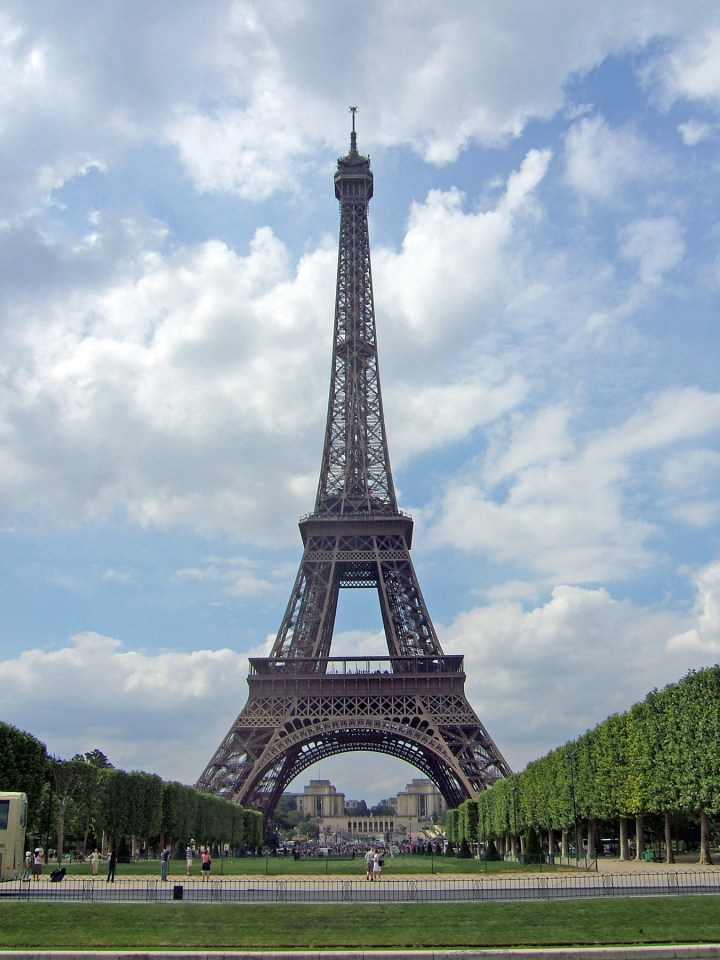
     The other night, I watched a documentary, Le Grande Seine (mostly in French with subtitles), on the preparations and planning for the opening ceremonies being staged on the Seine. In another first for Paris, this will be the first opening ceremony not held in an Olympic stadium. Bien sûr, of course. Leave it to the French to be stylish and original. The work, the planning, the incredible organization and execution of this extravaganza — everything from writing the music to designing the costumes to choreographing the dance performances (on rooftops, no less)  and coordinating the movement of boats and barges transporting 10,500 international athletes from 206 countries down the River Seine in the Parade of Nations — will culminate with the lighting of the Olympic torch and a spectacular fireworks and drone-light display behind the Eiffel Tower.

     The Parade of Nations route, which begins at the Pont d’ Austerlitz bridge at the Jardin des Plantes and travels four miles downriver to the Jardins du Trocadéro across from the Eiffel Tower, recalls one of those Seine River barge sightseeing cruises as it passes some of the most iconic landmarks in Paris: the Louvre, Notre-Dame Cathedral, Les Invalides, and the Place de la Concorde. An expected 320,000 spectators will be lining the River route (notwithstanding the recent coordinated arson attacks on the high-speed train network and, hopefully, without any additional worldly ugliness thwarting the joy of the Games). Another billion people from around the world are expected to be watching all this as it’s happening. Now that’s a lot of people on a river-barge cruise!!

     It’s all so exciting, so uplifting, and so much needed right now. The Olympic torch represents the light of spirit, knowledge and life, and its passing from one carrier, one country to the next symbolizes the passing of the torch from one generation to the next. What could be more welcome, and more timely.

     But that’s enough from this armchair Olympic tour guide. I have to go now. The Opening Ceremonies are just about to begin!

comment 1

This Is Your Life!

     In what might be considered the very first reality show,  This Is Your Life aired on NBC television from 1952 to 1961. I’m giving away my age by confessing that I remember the TV show. It actually began as a radio show in 1948 (before my listening time) and both were created and hosted by the producer Ralph Edwards. The show originated as a homage to WWII veterans at VA hospitals, but then soon morphed into presenting the biographies of better-known people on the air. 

   The format was simple. Host Edwards would surprise the celebrity at some event or at some routine family dinner in a restaurant and, surprise!!! “This Is Your Life.” From there, significant persons from the subject’s past, both personal and professional, made surprise appearances and told stories about the highs and the lows of the celebrant’s history. But always, the ultimate story of the life ended up to be positive and the message for viewers always emphasized perseverance and resilience. This Is Your Life was nominated for three Emmy awards and, while it fared well enough in the TV ratings to be broadcast for a number of years, in 1960  Time Magazine called it “…the most sickening sentimental show on the air.”

     But then, aren’t lifetime tributes always somewhat sentimental — and what’s wrong with that? Sentiment is emotion, after all, and a life is more than just an accumulation of facts. Unless we win some major award or achieve an incredible accomplishment, most of us famous or not don’t get lifetime tributes until our deaths when they come in the form of obituaries or eulogies (which unfortunately are all too often only a recitation of basic facts and clichéd emotion.) Nevertheless, by the time the funeral comes, it’s too late for the deceased to hear how his/her legacy is regarded by others or to benefit from personal hindsight.

     Every life is its own story and everyone experiences similar twists and turns in the plot — similar but not the same.  The patterns that emerge and the lessons that are learned (or not) are unique to each individual. The long view that is afforded by a longer life is a blessing indeed, though you don’t have to be pushing 90 to experience it.  “The long view” is simply a way of evaluating your life so far, a sort of personal, private version of This Is Your Life.

     Now I’m not just talking about developing habits of mindfulness or gratitude journals or even daily prayer or meditation to enhance awareness and make us stop and think. Certainly, these techniques are helpful antidotes to our collective anxiety attacks and all of them are rooted in the notion of awareness and living fully in the moment. Makes sense, because in spite of all our planning and rushing head-long into the future, the present is really all any of us has. Nevertheless, at the risk of sounding like a would-be shrink, I suggest that taking a This-Is-Your-Life long view might help evaluate where you are right now as it dares to ask whether or not you want to stay there going forward. The good news is that no matter how old you are or whether you are rich and famous or not, you don’t have to do any of this soul searching in front of a studio audience!

     What you do have to do is pretty much what Ralph Edwards did as a producer of the TV show: you have to review your life sequentially from childhood to the present and try to identify the pivotal events and most important characters in your own story. Speaking as a writer now rather than a would-be shrink, you must be as objective as possible to see “the narrative” from the outside. You are looking for recurring patterns, for the events and people who have changed your life for better or worse, and for a clear-eyed assessment of their influence on your own actions and choices. Think of this as creating an outline for your biography. Do you see a dominant theme emerging in this narrative? Can you draw a through line in the plot from then to now, to the person you are today?  

     People often make a similar kind of lifetime inventory in times of serious crisis or loss with the intentions of atoning for past sins, reconciling with others, reviewing past accomplishments and accepting one’s mortality. Psychologists call this  a “life review,” a foundational technique of psychotherapy that guides mental and spiritual healing in times of distress. However, a life review differs significantly from the kind of long view that I’m talking about. A life review becomes an edited version of a life complete with excuses, explanations, and rationalizations, in other words a fully authorized biography rather than simply an objective outline.

     So let’s call the long view more of a map for course correction from wherever you are right now than a journey of nostalgia and reminiscence into the past. Are you living on a treadmill at the moment, going faster and faster and getting nowhere? Don’t complain, don’t explain, just change it. Are you bogged down in a bad job or a toxic relationship? Don’t say “I have no choice” because relinquishing your choice is in itself a choice; look for a way out.  Are you in situation that is beyond your control, in the middle of a financial, family, environmental or health crisis? Then find some sources of help to manage it.  

     “Take time to smell the roses” is great advice when your garden is flourishing, but when weeds have invaded — as they do for all of us sometimes — don’t waste the here and now by fretting and flailing and worrying about “what if” or “what might have been.” Rather, take the long view. Look back over your life, recognize those patterns, people and events that have shaped you, and use the strengths and abilities you have developed over the years to navigate even a difficult present.  After all, This Is Your Life and the present is all anyone has.

comment 0

What Does Success Look Like?

It’s June, the season of awards and accolades, of graduations and weddings, of summer relaxation and new beginnings come fall. It is the apex of the season of success, celebrating both real achievements of the past and anticipated accomplishments in the future. June means hope in America, in a culture that firmly believes in success.

     I’ve been thinking a lot about this lately as I have been listening to all those inspiring college graduation speeches on television and watching all the “kiss and cry” responses of Olympic-trial athletes and performing-artist award winners. In one way or another, all address various aspects of success: the secrets to success, the road to success, the overnight (or not) success, the sweet revenge of success, even how to dress for success. If success were a song, it would be our national anthem! 

     So what is success anyway, and what does it look like? The most common definition brings to mind a person who has risen to fame or fortune through outstanding achievement, most particularly in terms of wealth, power or respect. Of course, that definition flirts with the notion of infamy, which might also, in some circles, mean success. But never mind…  Success in business or politics or the arts implies a dedicated work ethic, a plan of setting goals and the determination to achieve them, along with the qualities of resilience and self-confidence to take risks and work outside of convention. A person is deemed successful if he/she achieves wealth, fame, or notoriety among his/her professional cohorts through hard work and determination.. 

     Many many books,  plays and movies have been written about the pursuit of career success and the fallacies of the ultimate reward.  A classic 1957 movie explored this in a satirical comedy called “Will Success Spoil Rock Hunter?” The main character (played by Tony Randall) was a low-level advertising executive who happened onto an unexpected connection with a famous actress (played by Jane Mansfield); from there, the two arranged a mutually beneficial romantic charade, which enhanced her career and catapulted him to the CEO of his company. But in the end, both were left disappointed, unhappy and unfulfilled. Once Rock Hunter realized that being at the top wasn’t all that he thought it would be, he renounced his success and went off with his original girlfriend to raise chickens on a farm.

     Obviously, as so many such stories do, this film begs the question of whether career success gained through deceit and manipulation is ever really worth it. Doesn’t such a perch at the top if not gained through honest work and dedication always end up empty and lonely? Is not the solitary pursuit of worldly success a fool’s errand that can never be fully realized; for that matter, is the setting aside of one’s honor and integrity for the hot flash of momentary fame and glory ever worth the complete loss of self-respect? Many of today’s prominent and powerful political figures present excellent case studies of such Faustian bargains.

     We hear the clarion call of success all the time as we wish a newlywed couple a successful marriage, but what does that mean? Does it mean a partnership that lasts for years and years, whether it is a good match or not? Does it mean an alliance that preserves wealth and property, one that produces progeny who ensure a legacy for the future as in royal traditions?  And are those children themselves only successful if they grow up to make good grades, go to the right schools, enter the proper professions, make a lot of money and — oh yes, marry “well”  themselves?

     Actually, I think the whole question of “what does success look like” really gets to the essence of the issue. In America, we are more about appearance over reality, about what success “looks like” than we are about what it truly means: image, brand, status symbols, fortune 500 lists, and media coverage are the benchmarks. For example, aging successfully means not looking your age, with however many nips and tucks and botox injections it takes, rather than living with patience and acceptance into your 90s, like actress June Squibb, who at 93, finally has a leading role in the newly released film Thelma, or the 105 year old Virginia Hislop who finally got her Masters degree in Education from Stanford University this month. Neither woman, though, would make the cover of a fashion magazine, or hardly any other magazine except maybe The Magazine of AARP.

     Everyone talks these days about the national mental health crisis in America. True, and it’s no surprise given the barrage of national and international crises we constantly hear about: wars, climate change, cultural divisions, political threats, poverty, ethnic persecutions — the list of ills and violence goes on and on. Of course we are all worn out, stressed out, disillusioned, and discontent, but maybe, just maybe, some of that mental distress is our own fault. When we fail to maintain our own moral center and stay true to who we know we are rather than give in to the pervasive social-media standards of what society tells us success looks like, we are bound to  come up empty and hopeless in the end (unless, of course, we have literally “died trying” before coming to the final realization of the futility of it all). 

     Young people, particularly, are susceptible to the mixed messages of mass culture, but even those among us who are a bit older often support the promise of the golden calf and applaud those who promote that false promise. One good thing about years of experience is that we learn, albeit sometimes the hard way, that more is not necessarily better and that good enough is often quite good enough. After all, nothing is ever perfect, and nothing is ever as it seems. And neither is success.

Photo above: Sculpture (Arms) Los Brazos de Dali, 1965, by Salvador Dali; in the Museo Soumaya,  Mexico City

comment 0

The “Meanwhiles”

 In the early days of silent movies, story lines were pretty simple. They always offered adventure and romance, always employed stock characters (good guys, bad guys, and damsels in distress), and were often told as familiar Westerns. Stories set in the wild west were popular with the public, set construction was easy and inexpensive, and costume designers could provide ready sartorial clues for character recognition (white hats, black hats, flounce or frilly dresses). Most of all, familiar, recognizable stories were simple to script in one-line subtitles called inter-titles.

     Train robberies and lost treasures were common narratives; one of the classics, The Great Train Robbery (1903), is still studied and shown as a major example of the genre. One big innovation of the early years was a film technique called “crosscuts,” which presented two different events happening simultaneously. The silent movie era was also just the beginning of the studio system that endured for decades and the creation of major Hollywood movie stars such as Tom Mix, William S. Hart, and Lillian Gish. I remember my grandmother talking about Tom Mix as one of her favorites when I was a little girl, though of course I had never seen these silent screen actors, at least not until much later when I was studying the history of film. (I will, however, date myself by saying that my own favorite movie star when I was little was also an actor featured in Westerns, Randolph Scott.) 

     “Meanwhile, back at the ranch…” had its origin in the inter-titles of these early silent movie Westerns; later, the phrase morphed in to “meanwhile back at the farm” or “meanwhile back at home.”  Even in Country & Western music today we can hear popular tunes such as “Meanwhile Back at Mama’s” by Tim McGraw and Faith Hill. The legacy continues, though now most commonly in the simple use of the word “meanwhile.” Perhaps that’s because every story, even in the reality of everyday life, has a “meanwhile.” There is always something else going on in the background while the obvious action is going on. 

     In classic literature, Horace, a Roman poet, advised epic poets to get straight to the heart of the story by jumping right into the action. This narrative technique is called “in medias res,” meaning in the middle. A favored technique of the Greek dramatists, it is still commonly used today. In film noir, for example, a PI enters a plot already in progress; in the much-beloved film Forrest Gump, the story begins in the middle, but then is told through a series of flashbacks. 

     Along the same line as “meanwhile” is the concept of  backstory, which generally applies to the characters more than the plot. Backstory is what comes before the main story, the forerunner of current events, but more in terms of the how and why of character development. Backstory helps us understand the underlying motivations of the characters’ actions and, thus, allows us to better appreciate the unfolding of story events. There is always a backstory, for everything and everyone. The key to gaining an understanding of other people and the events in which they are actors, whether on stage or in real life, is having access to a full and accurate backstory that precedes their actions. (This explains why most people distrust politicians, because you rarely know enough to distinguish between the truth and the lie.)

     So, where am I going with this?  You probably aren’t going to be happy with the answer, but here it goes. What I’m saying is that you can never really, truly, thoroughly know someone.  You meet a person on a plane or at a party and you start talking and you seem to be instantly “simpatico.” Basically, you are only seeing how they present themselves and hearing whatever they tell you, which usually isn’t much. Nevertheless, you go forward in a relationship based on gut reactions, emotional impulses, or perceived commonalities (same interests, hobbies, hometown, needs, etc.). Friendships, partnerships, and business collaborations are made of such encounters, even marriage proposals!  But what about those “meanwhiles”? 

     Not to sound cynical (though I usually am), but people lie, even to themselves. They deny their own backstories or try to recreate them. Digging into the past and trying to unearth the truth about one’s self is the great business of therapy, but not everyone really wants to know the truth. And unless you have personally known someone for most of his/her life and been a witness to some of the events that shaped them early on, it is virtually impossible to fully understand and authenticate another adult’s backstory, the “meanwhiles” of what’s really going on with them at any present time. Considering that new encounters made in adulthood are basically occurring “in medias res,” it’s amazing that as many relationships, be they marriage or friendship, last as long as they do.

     The longer I live, the more I am dismayed and surprised, for better or worse, by how many people either don’t know the truth of who they are or just aren’t self-reflective enough to find out. These are the people who confuse their family roles or their professional positions with their true identity; these are the people who have a really hard time in later life when those roles and positions no longer exist to support them. We all have our failures and foibles, of course, and understanding and accepting ourselves and others is a life-long task. In the end, however, we love someone else not because we think they are perfect, but because we can see the good in them and accept their shortcomings. 

     Call it what you will  — past or present, context or backstory — we all have our own stories with all the “meanwhiles” of our lives. 

comment 0

A Gentleman Farmer

     May has been a busy weather month here in San Antonio. Typically, May always the most severe weather, notwithstanding hurricane season, and precipitation usually peaks in May. We have already had 10 inches of rainfall so far this year, which is the most in over a decade and which makes everyone hopeful.  Even so, all of Bexar County is still under Stage 2 water restrictions and is considered to be in a “moderate drought,” according to Eric Platt, a meteorologist for the National Weather Service in the Austin/San Antonio office.

     Yet, we know the heat is coming. In fact, we are already flirting dangerously close to the 100 degree mark and the summer hasn’t even officially started. Last year, we had 75 triple digit days, the most since records began in the late 1800s. Given the way our weather patterns have been going, the 2024 Old Farmer’s Almanac prediction for Texas is hardly big news: “Hold on to your umbrellas … and tune up your AC,” it advises. “Summer is coming early this year, and it may bring the hottest temperatures in recorded history.”

     Okay, so what else is new? The weather is becoming extreme everywhere, SouthTexas has always been hot as Hades, and people, including me, are generally tired of talking about it. After all, why worry about what you cannot control, much less can’t even see coming (such as the sudden devastating Derecho storm in Houston last weekend). Of course extreme weather events make me concerned about climate change, but more immediately, I always think about our poor dedicated farmers who live so vicariously from season to season, crop to crop, who try to make a living while dealing with the whims of Mother Nature. Theirs is a life of hope, despair and frustration that I can’t even imagine living.

     But I do get a small glimpse of that life in my dear husband. He’s a New Yorker who never even saw a farm until we started visiting my relatives in South Jersey as newlyweds but now, over the years, he has truly become a “gentleman farmer.” He has always loved nature, plants and animals and seems just intuitively knowledgeable about the natural world. He built a greenhouse at our first home and, ever since, we have had enough acreage for lawns, trees, and gardens at every house we’ve owned (including here). Most of those years were up East in Connecticut, which came with it’s own winter weather challenges, and then we moved here to San Antonio where the “plant hardiness zone”  is the exact opposite of New England’s.

     When we first moved here after retirement, while backhoes were digging a pool in the back yard that was then no yard at all but an expanse of  dirt, dust, rocks and limestone, a dear friend from Connecticut came to visit.  She stood on our patio, looked out and said, “My goodness. What ever possessed you to move to such a godforsaken place?” I have to admit that even though I am a native Texan, I was thinking the same thing about my darling husband’s insistence while house hunting on “some property” for gardening. But he, my Gentleman Farmer, is nothing if not persistent, patient and optimistic. He had a vision, and he knew that he could transform our acre of parched land into a garden of delight — maybe not a lush garden, mind you, but certainly an orderly and productive one.

     And now, here we are years later with a yard that is the envy of the neighborhood. We have raised beds of flowers and vegetables, we have a stone meditation area called “tranquility base” among a cluster of trees, we have flowering crepe myrtles along the back fence and Texas lilacs in bloom along the side property lines, tropical plantings around the pool, and even a chef-proud herb garden right outside our patio doors. After years of study and trial and error and involvement with the San Antonio Garden Center, my dear Gentleman Farmer has become a master gardener himself. Does he spend hours outside every day, even in the winter as weather permits? Yes. Has he had failures with new experiments? Yes. Has he lost trees and shrubs and gorgeous flowers in un-anticipated weather events? Yes. Have some crops failed and favorite plantings like fruit trees and gorgeous hibiscus met their demise? Yes. But he has the patience and the determination to try and try again. That is the essence of a farmer’s resilience, no matter what the crop.

     Now let me be clear here. My husband and I are not farmland people; we are city people. We like the hustle and bustle of big metropolitan areas, the delights of fine restaurants, the cultural enrichments of museums and live theatrical performances, and beyond that, world-wide travel. Personally, I prefer indoor activities, such as reading, writing  and art quilting though I do love the natural world. I just don’t necessarily want to be out in it, in the heat, the dust, the cold, the bugs, the rugged terrain — eww! 

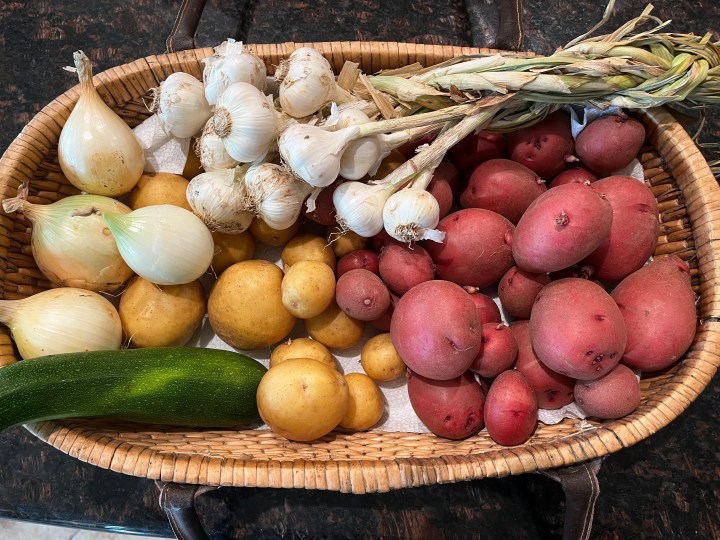
    Believe it or not, though, even if I’m not a pioneer woman, I can also cook and clean, can and preserve, wash and iron, sew and craft, and generally do all the traditional homemaker things with the best of them. I never took home ec in high school, but as a newlywed, I learned to cook because I love to eat; I learned to sew because I love beautiful fabrics and interior design; I learned to clean because I can’t stand clutter and dirt; I learned to can and preserve because I want to enjoy all the freshness of those peppers, onions, tomatoes, strawberries and other produce that can’t be preserved otherwise. And I absolutely love all the roses and lilies and mums and poppies and wildflowers and irises that my husband grows for me, with which I make floral arrangements in our home (which I also learned through the San Antonio Garden Center), and all the fruits and vegetables, the potatoes, string beans, tomatoes, squashes, corn, peppers, onions, garlic and more that he cultivates in all those raised beds. (Yet, even though I like wine, I did draw the line at stomping the grapes he grew; we just made jelly instead.)

     In a world full of fear, chaos, and controversy, the eternal optimism of all farmers, even gentlemen farmers, gives us a ray of hope for the future. I embroidered a pillow for my husband with a quote from Audrey Hepburn: “To plant a garden is to believe in tomorrow.” Gardens may bring but small joys amid life’s greater disappointments, but sometimes they are all we have to cling to. 

     And boy do those fresh spices gathered from outside my patio door make  great Italian food!

comment 0

Letters to Live By

  Letters. Gifts of thought for an audience of one — you. Neither as transient as a phone call nor as expedient as an e-mail nor as perfunctory as a text message, a personal hand-written letter is valued precisely because it isn’t technological, because it reminds us of days when people took the time to think, to care, and to deliberate before they spoke. 

     In the time-honored tradition of personal correspondence, words mean something: they are chosen, often with great pains, to impart just the right meaning. Indeed, one of the greatest consolations of receiving a personal letter is that it can be saved and savored over and over again, its lines revealing yet another layer of meaning each time it is reread. Who among us doesn’t have a stash of letters somewhere, however small, that were just too special to throw away?

     That specialness is inherent in letter-writing because knowing that another person took the time to write this message, this note, this card just for you makes you feel special. (And that, by the way, is why so many people, including me, are bothered by these single-spaced, long-winded computerized “family yearly resumes” about people whom you do not even know that masquerade as personalized holiday greetings.) Writing should be personal, as well as informative.

     Specialness works the other way too, in that a letter can’t help but reveal the writer. Whether typed on customized letterhead or written by hand on idiosyncratic stationery, rare is the letter that fails to present the personality of its author on the page. And I don’t know of any avid letter-writer who isn’t an absolute fanatic about paper and pens and ink and envelope size, and even the design of the postage stamp! We are as fastidious about all that as we are about the clothes we wear.

     And then there’s what’s inside: the words. All of us are so readily seduced by the freedom, and the hubris, of the opportunity for uninterrupted discourse that we find it almost impossible to conceal ourselves. Even in the most business-like letter, pretense is hard to  sustain past the salutation and the first sentence or two. Wittingly or not, through tone and mood and choice of language and expression, our fantasies and fears and foibles will reveal themselves, even more so when the receiver knows us well and can “hear between the lines.”

     The quiet, private nature of letter-writing allows many people to be more truly themselves on the page than anywhere else. The verbally reticent are more articulate, even humorous and playful, because they have time to think about what they want to say. Conversely, the more verbose among us (myself included) become calmer and more succinct without the immediacy of speaking. And almost all of us find it easier to write about sensitive topics — love, hurt, fear —than we do to talk about them. We are consoled by the fact that if we don’t get the words right the first time, we can start over and try again, notwithstanding the fact that once written and sent, words can’t be retracted (which is why one should never send an angry letter immediately)..

      From the time I was a youngster in school with pen pals and far-away cousins, to the three years of engagement to my far-away fiancé, I have always been an avid letter-writer. I have saved years’ worth of letters and notes and postcards from my husband, my son, old friends and colleagues, former students and their parents, and even some well-known people. Taken together, they run the gamut of purpose and emotion: accolades and praise, disappointments and regret, anger and love, acceptance and rejection. Were they all organized into some sort of chronological order, which they probably never will be, they would offer a complete biography of my interpersonal relationship, with some interesting insights on history, work, and culture, as all letters do.

     The continued existence of these letters and cards in cartons and file cabinets have been an immeasurable source of joy and reflection for me over the years, even though I don’t dig through them regularly. But each time I come across one of them in a drawer or a folder, I am immediately transported back in time and circumstance while the real or imagined face of the writer floats in my mind. Of course, letters from those who have died are especially sacred, even if they were fussing at me when they wrote them. Their lessons continue to be letters to live by.

     My long history of letter writing is at least partly responsible for turning me into a professional writer as an adult, I’m sure, but it is most certainly responsible for teaching me to appreciate the unique power of self-expression as a way to stay connected to a lifetime of friends and family members who are scattered all over the globe. That I have maintained such close relationships, even sustaining my engagement over a three year period while my fiancé, was out of the country, is a tremendous source of satisfaction and pride for me.

     “People don’t write letters anymore,” or “they don’t send cards or thank-you notes anymore.” I hear these laments all the time; perhaps you’ve said them yourself. Remember, though, that you have to write letters in order to receive them, and that you have to encourage written correspondence among your friends and family (as I am doing even now) so that it becomes a routine, even a preferred way of communicating.

     In this hectic, harried world, what could be more satisfying than spending a few minutes alone in private conversation with someone dear to you? And at still a few cents an ounce, what other pleasure is so popularly priced? So, if you are one of those kindred souls who continues to persevere in penning personal messages even when those you care about claim that they don’t have the time to reciprocate,  then I hope this will validate your efforts and remind you why you persist in writing letters to live by.

comment 0

F R I E N D S

     From September, 1994, to May, 2004, a very popular, award-winning television sitcom aired on NBC called “FRIENDS.” It was about six friends in their early 20s and 30s who lived in Manhattan and it followed the ups and downs of their daily lives.. It explored questions of sex, love, careers and relationships at a time in life when everything seems possible and your friends become your family. 

     The show was light and funny and it made stars out of Jennifer Aniston, Matt LeBlanc, and Matthew Perry, among others, but there were also poignant moments with important messages. Beyond the show’s decade-long popularity, it was also critically acclaimed. As an expert in pop culture from the University of Buffalo wrote, “Friends is one of those rare shows that marked a change in American culture.” The images of young people and the lifestyle they depict centers around creating and sustaining relationships between friends running their own lives and relying on help from each other. (Wikipedia article, “Friends”)

     Hmmmmm…. Sounds like my life, my whole life, as an only child with a single mother and only a couple relatives even living in the same part of the country. My earliest friends were made before I started first grade and, one of them, who was later the maid of honor at my wedding, is still my friend. Our mothers were friends, our grandmothers were friends, and we actually played together in a playpen as toddlers. We still talk regularly even though our lives have taken remarkably divergent paths over seven decades.

     My larger group of childhood friends continued to be made throughout elementary and high school and yes, except for one of my earliest, closest friends from first grade who has since died, we have all stayed in touch regularly too. (Actually, we  now see each other more often since I have retired back in Texas.) Next are my college friends, all made in my freshman year and three of whom have remained consistently close to me all these years, (again, except for one who recently died). On and on it goes, from those special friends made during my early-married years, to those found in the various places in the country that we lived, to those developed  among colleagues and cohorts in my adult and professional life.

     Believe it or not, though most of these people do not live near me, haven’t for years in most cases, I’ve managed to sustain a relationship with many of them over time and distance and in spite of vast differences in backgrounds and lifestyles. Of course, not all these are intimate friends, if they ever were, but many are a great deal more than simply names on a Christmas card list. We stay in touch, we call or write occasionally, we visit when one of us is in the other’s “neighborhood,” and we show up, at least emotionally, when needed.

     I get amused when the author of a book or an expert on the art of friendship touts a relationship of 20 or 25 years’ duration as being so exceptional. Are you kidding? I’m talking friends of 70 plus years and counting all the way down to my “newest friends” made in retirement of only 17 years. If it sounds as though I’m boasting, well, I am. As the saying goes, you can’t choose your relatives, but you can choose your friends, and for the most part, I think I have chosen wisely. 

     From the very beginning, my friends were cultivated because they were important people in my life. Whether they were classmates or work colleagues, teachers or mentors, neighbors or common community members, I chose them because they inspired me to grow and learn and I trusted them to help me be my better self. (Now that I think about it, that is exactly the reason I married my husband 55 years ago!) As a line in the lyrics from the Friends theme song states, “…even at my worst, I’m best with you.” (I’ll Be There for You,” recorded by the Rembrandts, 1995) I should add to that sentiment: “Even at my worst, you will forgive me and accept me for who I am.”

     It takes work and attention to sustain any relationship, never mind a close one, but I have always considered the effort worthwhile and am proud of the diverse “cadre of compadres” I know and love. Of course, people change and can grow apart, sometimes seriously, and  unfortunately I have lost two or three once-good friends along the way. Sadder still are the greater number of good friends I have lost to mortality, many at younger ages years ago from totally unexpected causes. I miss them all, even those who disappointed me at some point, but I remember them and am still grateful that they were part of my life.

     There is an old Spanish saying going back to the 16th – 17th century: “Muéstrame quiénes son tus amigos y te diré quiénes eras.”  Show me who your friends are and I’ll show you who you are. I have always loved this saying and used to often quote it to my students. So I say go ahead. Look at my friends. I will be proud of the comparison you make and it will be true.

comment 1

Introducing …

     She arrived unexpectedly last Friday, just like my son did years ago — don’t they always. But she is everything I wanted, and more — just like my son was. And in fact, my now-grown son was actually there with me at the dealership for the delivery.  

     Introducing my new Cadillac 2024 CT5 Premium Luxury, with a V-6 dual-turbo charged engine, in Raven Black with Sahara Beige interior! She is beautiful, if I say so myself.  I have named her “Sassy,” because she is smart and fast, just like me and just like I need her to be going forward. Of course, given all the new technology in cars since 2011, there is a significant learning curve for me to measure up to her smartness, but I’m getting there. A couple technology lessons at the dealership, a quick read through the owner’s manual (yes, thank goodness, they still provide one), and some fiddling around with settings and dashboard buttons while idling in my driveway are gradually getting me up to speed on information. Some inaugural drives up on open country roads are going to get me literally up to speed (but not this weekend with all the eclipse traffic here where I live).  

     Anyway, it’s good, it’s exciting, it’s necessary, it’s time. As one ages, it becomes not so much  about the age at which you need to quit driving, but rather about the time at which you have to recognize any physical and/or emotional limitations that impede safety. Any limitations at any age, of course, result in a waning of driver confidence behind the wheel and that makes any reasonable person afraid.. For example, I have friends who will no longer drive after dark because of limited peripheral vision or eye disease; friends who don’t drive on freeways because of heavy traffic and hesitant defensive-driving responses; others who won’t drive on  inter-states because they are intimidated by big trucks and high speeds, especially in bad weather. Those living in or near a big city or in a big state like Texas, where public transportation is virtually nonexistent, end up becoming daylight prisoners of their immediate neighborhoods or simply homebound altogether. 

     Yes, years of driving experience count, but self-confidence makes, and has always made, the difference between a good, able driver and a poor, timid one. I’ll admit that I am an aggressive driver, but when you live in place where other drivers are also aggressive, you need to be able to hold your own. And a big part of confidence, for me at least, is an automobile that drives the way I drive and one that I can absolutely trust through any and all driving condition. “Sista” did that for me, taking me through fracking country passing 18 wheelers, through floods and hurricanes and dust storms, in winds and fog and mud rain, over ice and hoar frost and even snow. Whatever it was, whatever the urgency that forced me to be behind the wheel at all, I knew I could count on her. “Sista” saved my life more than once.

     These days, the incredible navigation, communication and safety technology built into new automobiles should inspire even more confidence in the driver, as long as the driver learns how to properly manage it all.  It’s early yet in our relationship, but already I have a good feeling about “Sassy.” I hope she will prove as unfailingly steady and trustworthy as “Sista” was. As someone who lost her young father in a fatal car accident on the highway to Houston when she was six years old, I am keenly aware that my life, and the lives of those with me and around me, depend on it.

comment 0

Springing Forward

  Spring has come to South Texas, though it isn’t a spring as most people visualize it.  Spring here means clean-up, much like the fall season in New England, with leaf blowers whirring and edgers shaving and big lawnmowers riding over and over the grass to mulch the detritus of winter. Live Oaks have shed their leaves and covered the ground in February and then, in March, the buds start to appear for new growth. All the lawn maintenance crews are out and about and all the neighbors are assessing the damage from this winter’s brief, but significant, freezes. And so here we go again, another season of unexpected surprises in South Texas, which actually, has always characterized Texas weather.

     What has been nice these days is that the sun rises a little after 7 and so it is daylight by the time I get myself out to walk with the girls at 8. The daylight wakens me early enough that I can go in, do my recumbent bike, lift weights, and even strike some yoga poses before heading out for my walk. But, alas, that will change this weekend with the return of Daylight Savings Time. Springing forward an hour means that, at least for a few weeks, it will be dark again in the morning. Bummer. I am not a morning person to begin with.

     But what has come seemingly early this year are the bluebonnets, god bless ‘em. They are suddenly everywhere — down the side streets in my neighborhood, along all the highways and interstates, even in patches on individual farms and ranches. They seem especially plentiful this year — not sure why — maybe because there were a couple really deep cold freezes, and then a lot of rain in earlier January. A mystery, for sure, especially since grass and lawns aren’t yet green. But I’ll take it. Next to the expansive Texas sky, the bluebonnets along all the roadways are the most  beautiful, spirit-lifting signs Mother Nature has to offer. 

     So, I go down a side street where I walk every morning and where the bluebonnets are plentiful in the spring. I take my floral clippers, so as not to rip up the flowers by the roots, and I gather enough bluebonnets to make a bouquet for my kitchen and a small one for my desk. In Texas, if the law is the same as it was when I was growing up (I’m not sure it is, but I don’t care), people are free to cut wildflowers alongs roadsides as long as they are not along public Texas highways where TXDOT continues to seed them each year (and, given the speed limits, where you would be killed if you tried).  If you cut them early, like now, they are tall and sturdy; as they grow taller and stronger, over the next couple weeks, however, they block the sunlight for the ones coming up later, which are then shorter and weaker.

     As I have written here before, when I was a kid, my Mother and I would go down to Colletta Creek, out on the country roads south of Victoria, and we would pick bluebonnets and Indian pinks and Indian paintbrush by the buckets-full. There were sooo many. The biggest worry was not replenishing the beds, but the snakes that could be lurking underneath. This was always the week or so before Easter, and then we would come home and make huge wildflower arrangements for the house. I would use the leftovers to “feather” my Easter nest in front of the fireplace and the flowers would last, somehow, for days! 

     Wildflowers were the ultimate symbol of spring, but a distant cousin of ours, Mrs. Ernst, cultivated a yard full of Easter lilies for sale every year. A yard full — front and back, tall and white, like trumpets blowing in the breeze. Still can’t imagine how she did that, since I can’t ever get my purchased Easter lily to grow again even when I take meticulous care of it and try to follow all the instructions for saving and replanting. Anyway, from Mrs. Ernst we had vases full of regal, white Easter lilies in the house, which also lasted incredibly long. You don’t see Easter lilies as cut flowers anywhere anymore, and you only see a few potted ones for sale in garden centers for a short time. People used to put fresh lilies on gravesites at Easter, but you don’t see that anymore either. Everything these days is artificial — ain’t that the truth!

     Traditions, practices and, of course, trends change over time. Easter in Texas was always about lilies and wildflowers, new outfits and Easter bonnets, bunny nests and baked hams, holy week and the stations of the cross, and no meat on Good Friday, even if you weren’t a Catholic. Some of us hold on to the remnants of these practices in an attempt to keep faith and hope alive. 

     And then we spring forward from there, as in this weekend, in an effort to save the daylight in our hearts.

comment 0

Enjoy Now!

  I have always been a worrier, perhaps because I have always lived for the future. Plans, goals, benchmarks all dominated my thinking for many, many years, not only for myself, but for my family, my students, and my colleagues. I was so goal oriented that you would have called me driven. But then, how else would I have accomplished all of my goals and dreams from youth, as well as my other goals along the way into adulthood. That was until retirement; then I had to construct a whole new set of plans for the future. I would travel, I would write, I would continue learning, I would spend time with my friends, and I would support and enjoy my family. But even with those happy plans, I couldn’t get rid of worry. What if…? was always in the back of my mind.

     As one ages, one hopefully learns from experience that the things most feared rarely happen, while the things one never sees coming are the very threats that cause one’s undoing: death. loss, illness, natural disasters, domestic catastrophes, random accidents. As the old saying goes, “Whatever CAN go wrong probably will.”  Nevertheless, with the benefit of age and hindsight, patterns emerge, priorities begin to assert themselves, and the truth becomes remarkably clear: the past is over, the future hasn’t happened yet, and the present is all there is. 

     There is a big difference between worrying about the future and striving toward it. The current prevalence of mandates to “live in the present,” “practice mindfulness,” “develop an attitude of gratitude,” “live one day at a time,” “take time to smell the roses,” — all these mantras, while clichéd perhaps, contain a fundamental truth: you can’t foresee the future, and you certainly can’t control it.  All you really have is the present and, if you spend all your time worrying about what might happen in the future, you essentially squander the time you have to live right now.

     Younger generations, Millennials  (b.1980 – 1994) and Gen Z (b. 1995 -2009), have long since recognized their present reality and acknowledged rational limits to future possibilities. Some might say it’s because, sadly, that younger people don’t have the high aspirations or see the unlimited prospects that previous generations did. While that’s probably true, it’s still sad. Certainly, we Boomers thought we could have it all/do it all/be it all and we would kill ourselves trying. Yet, there is a certain solace, even a quiet power in recognizing limitations amid the reality of what is. “It is what it is,” as everyone quips today. Ironically, we are all, old and young  alike, now coming to understand that. My young friends, ie. my former students, call it “living in Realville.” Sounds right to me, though I have a more classic name for it.

        Stoicism is a school of philosophy that flourished in ancient Greece and Rome. Essentially, it professes that a well-lived life is achieved by the practice of virtue. In other words, it is not what you say, but how you behave that matters, and it is not what you accumulate, but what you do with what you accumulate, because things are neither good or bad in themselves. One of the main virtues of Stoicism is living in the present, and so “It is what it is” is merely the contemporary expression of that philosophy. Thinking about, worrying about, stressing over the past and the future is futile. It’s our loss when we nonchalantly ignore the positive realities of the present — the beauty of the sunrise, a clear blue sky, the crystal oceans, a magnificent landscape, the presence of the people we love — all the simple, natural wonders before us.  Appreciation and awareness of the now is perhaps our last hope to some solace and sanity in a complicated, chaotic, and often ugly world.

     Now I’m not suggesting that accepting the realities of present life situations is always easy; far from it. In times of great stress and difficulty, acceptance can be one of the hardest, most daunting challenges we face. But the powers of appreciation and awareness — and I don’t just mean “gratitude journals” — may soften the landing from a sudden fall into chasms sadness and desperation. I’m talking about waking up grateful for another day, deciding how to make that day the best day you can, and then embracing whatever is available that might make you happy. 

     Perhaps it is a new outfit, or an additional decorative touch to your hone. Maybe it is a small day trip, or reading a really good book, cleaning out a closet or talking to a friend. It doesn’t have to be a lavish indulgence or an expensive purchase; it just has to be something satisfying, like eating chocolate ice cream or watching a good movie or looking for shooting stars.

     I have been going through somewhat of a difficult time myself lately, and have thought a lot about what can make each day not only tolerable, but pleasurable and meaningful, because each day is all we have. There is a philosophy called “presentism,” which literally insists that the present is the ONLY reality and that nothing else, past or future, even exists. I can’t quite go that far, because we are all human, we all have memories of our past, and we all sometimes worry about the future whether we want to or not. But I have, at this late stage in my life, finally found a new mantra for living with life’s vicissitudes: Enjoy now, worry later!

     And that’s what I intend to do — especially when my new car arrives.