
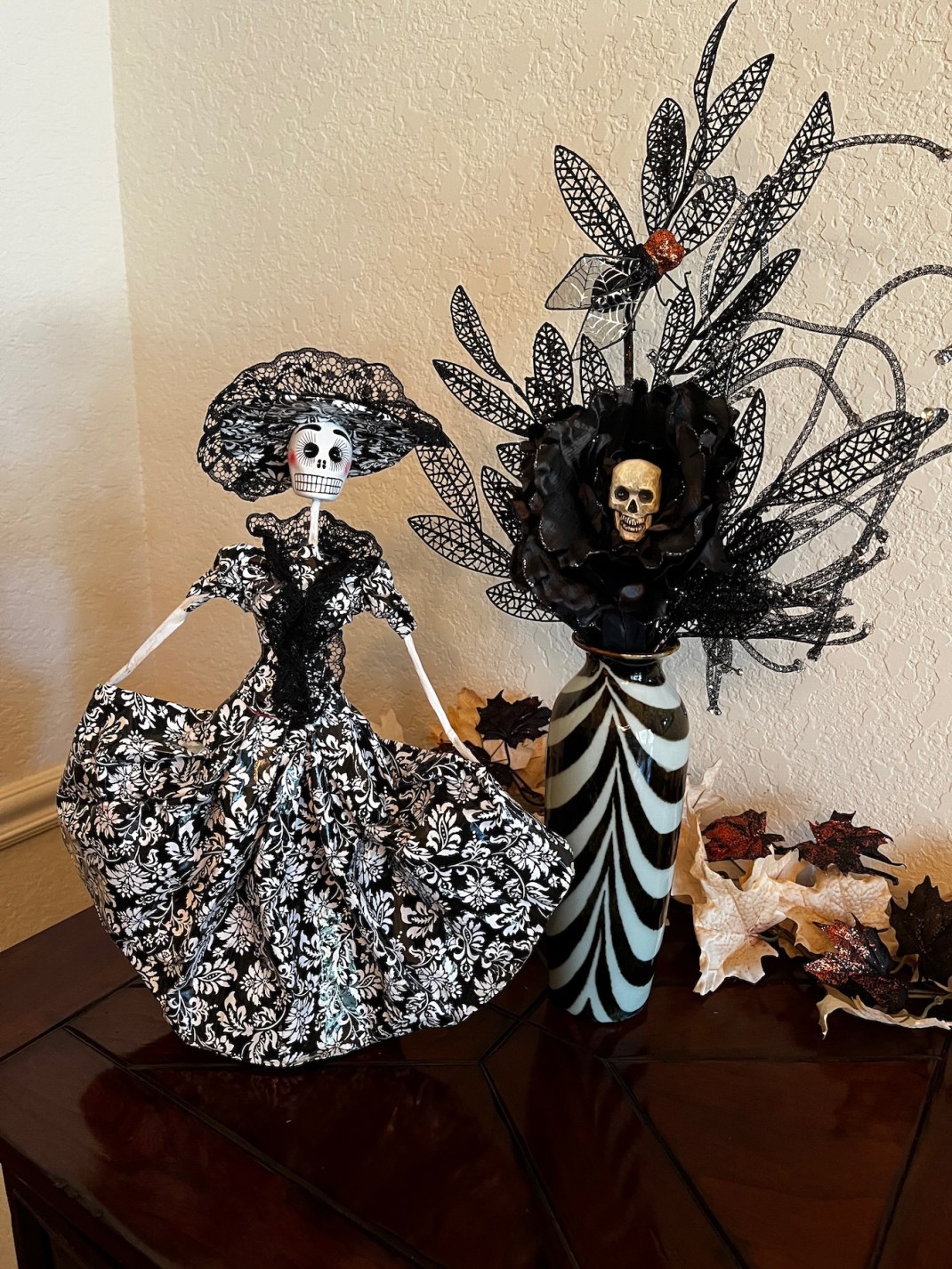
All Hallows’ Eve is an old-fashioned term for Halloween. You seldom hear it these days, perhaps only in old New England towns or in some isolated ethnic communities. It brings to mind ancient history, Puritan superstitions, Celtic mysticism — all the myths and legends and beliefs associated with Halloween, remnants of which are part of America’s secular and quasi-religious Halloween celebrations today.
When we talk about Halloween, most people immediately think about the thoroughly commercialized American version of the day in black-and-orange with candy-corn and pumpkin-carving. For sure, while not being the most popular holiday in the US (Christmas and Thanksgiving are numbers one and two), Halloween does have very high celebration rates, especially among younger people, with roughly 73% of Americans admitting that they celebrate the day in some way. The National Retail Federation projects that we will spend $3.9 billion on candy this year (the government shutdown notwithstanding). Trick or Treat!
But the roots of Halloween and contemporary celebrations go way, way back. The ancient Celts celebrated a festival called Samhain around November 1 to mark the end of the harvest season and the beginning of winter. They believed that the night before their November New Year was a time when the boundaries between the living and the dead were blurred. They wore costumes and masks to ward off evil spirits and and danced and sang around the fire at night. Today’s traditions of bonfires and scary stories come directly out of this ancient festival.
In the 8th century, Pope Gregory III sought to Christianize Samhain by assigning the feast of All Saints or “All Hallows” as it was called (“hallows” meaning holy) to November 1 and naming November 2 All Souls Day; these feast days remain today in the Catholic Church. In addition to highlighting their importance in the Christian calendar, the period of October 31 to November 2, once known as “Allhallowtide,” was intended to substitute and ultimately replace Samhain. But instead elements of Christian and pre-Christian beliefs and rituals mingled to create the Halloween, or All Hallows’ Eve, we observe today.
Early immigrants, especially Irish and Scottish, brought many common Halloween traditions to the United States; the notion of trick-or-treating, for example, evolved from customs like the Irish tradition of “guising,” going door-to-door performing tricks for treats. In the Middle Ages, children of the poor would go “souling,” collecting food in return for prayers for the dead on All Souls’ Day. (The guisers dropped the prayers part and offered songs and jokes instead.)
All Souls’ Day in particular reinforces the ancient belief that the living can be in direct contact with the dead, for better or worse. Thus, the spectre of ghosts and goblins, of people being possessed by spirits, or of witches casting spells through their black cat “familiars” have become the commonly recognized, and recorded, darker aspects of All Souls’ Day. One need look no further than accounts of the famous witch hunts of the past, of the 700 witches condemned in Catalonia, Spain, over three centuries beginning in 1424, or to our own historic records of the Salem Witch Trials of 1692-3 in Massachusetts to see the worst manifestations of believing in the interactions between the living and the dead. Even today, there are many who associate Halloween with witchcraft and sorcery and believe the holiday to be anti-Christian. (Hobby Lobby, the nation-wide arts and crafts stores, do not sell Halloween decorations for largely religious reasons.)
Yet, many cultures of the world maintain that the communion between the living and the dead is a positive reality and find ways to celebrate their ancestors and traditions in a good way, an appropriate way in this season when nature mirrors the cycle of life. In Japan, there are Yōkai Parades (ghost parades); in Nigeria, the Awuru Odo Festival honors returning spirits with traditional ceremonies; in Cambodia during the Buddhist festival of PcheumBen, people visit pagodas to offer food to the dead and to guide their ancestors’ spirits to peaceful rest; in Haiti during Fet Gede (Festival of the Dead) on November 1 & 2, Voodoo practitioners dance in the streets to communicate with the dead and then walk through the graveyards bringing “food” to feed them; and in Portugal on the Dia das Bruxas (Day of the Witches), families “trick-or-treat” asking for bread, fruit or nuts to then take to the graves of their relatives.
While our common Halloween customs originally found their way to America with Western European immigrants, a similar merger occurred between the Spanish Catholic All Souls Day and the indigenous Aztec ceremonies honoring deceased ancestors in early colonial Mexico. This produced the holiday known as Día de los Muertos (Day of the Dead) celebrated for several days over November 1 & 2 and now as familiar as Halloween itself to most of us in the United States. (The US Postal service even issued Dia de los Muertos forever stamps in 2021 and they are still available today.)
The tremendous numbers of Mexican Americans and Central and Latin American immigrant families, particularly here in South Texas, have spread their cultural traditions to be enjoyed and respected by all. For example, the Catholic Churches here in San Antonio all build altars (ofrendas) in the vestibules to honor the memory of departed loved ones with flowers (marigolds), photographs, candles, and calaveras and catrinas (skeletal figures and dolls dressed to represent the deceased — see photo above). In the public squares and plazas there is music and dancing and recitation of family stories, and food — lots of food — often taken by family members to be shared on visits to the cemetery. You don’t have to be Mexican to celebrate Día de los Muertos and you certainly don’t have to be Latin to embrace its spiritual philosophy.
Día de los Muertos is NOT an occasion for mourning, but for remembering and celebrating lives well lived. Having been born from five generations of German immigrants and raised in South Texas, Mexican is my culture of immersion and Día de los Muertos is my All Hallows’ Eve.
“Viva los muertos!”
 the narrative thread
This is a really fabulous history lesson! Thank you.
LikeLike
Thank you for your comment. I fear I do get a bit “teacherish” sometimes, but I really get into research. Glad you found it informative,
LikeLike