
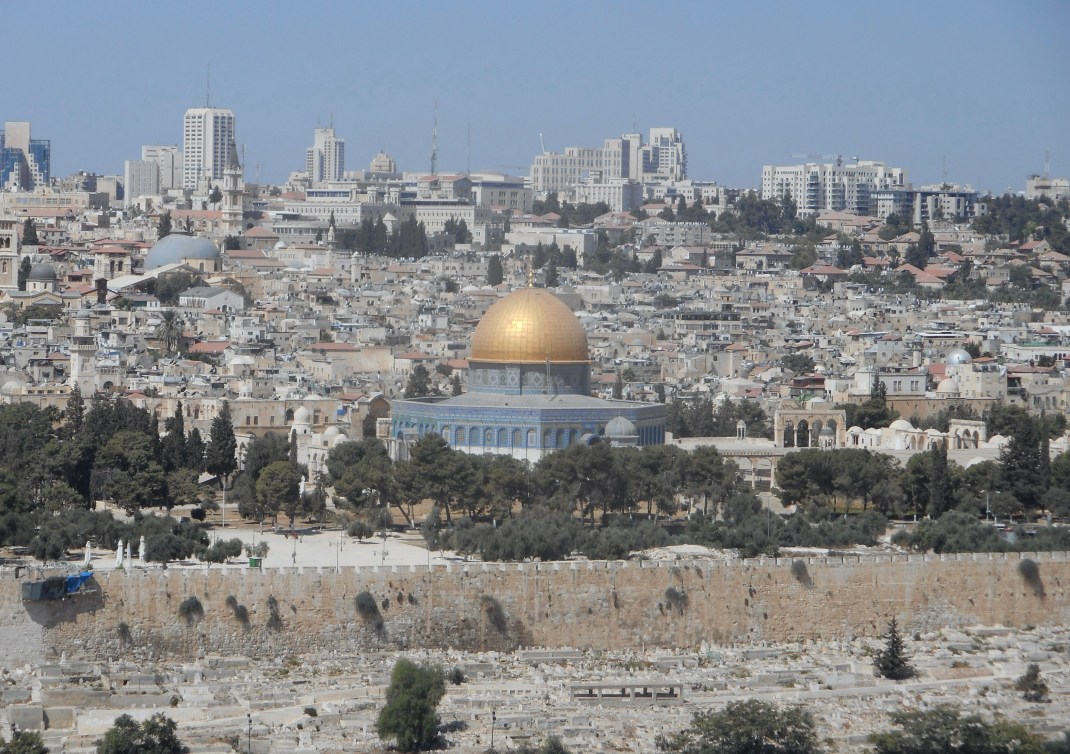
We are within the ten-day period between Rosh Hashanah, the Jewish New Year, and Yom Kippur, the Day of Atonement. In the Jewish calendar, these are known as the High Holy Days, also called “The Days of Awe.” The exact dates change, but the season is always early fall; this year, the New Year began at sundown on September 15 and the Day of Atonement ends at sundown on September 25. It is a special time, a holy time for the Jewish people, a period of reflection, repentance and hopeful resolution for the year going forward.
I am not Jewish, though I do have a Jewish ancestor who left Germany in the early 19th century for religious reasons, and I do have many, many Jewish friends. My first job as a newlywed in New York City, as a matter of fact, was with a shirt manufacturer in the garment district founded by two Jewish brothers. It was there that I learned not only all about New York City, but also all about Jewish holidays and traditions. I was, you see, the only “shiska” in the company (not necessarily a disparaging term), as well as the only former Texas cheerleader my co-workers had ever met! They were delighted to educate me in the “ways and means’ of Manhattan, to tutor me in Yiddish words and expressions, and to share their particular brand of dark Jewish humor.
Since I had been both a cheerleader and a teacher in Texas, it was assumed that I was positive and experienced in dealing with difficult situations, so I was soon put in charge of handling buyers, fielding complaints and tracking merchandise shipments. I was young and naive, of course, but I was determined and I learned fast; this was my first job in the Big City and I loved it. Our company was in the Empire State Building on the 54th floor (halfway up), and I gladly rode the subway to Penn Station, walked the few blocks up and over from Herald Square in sweltering heat or freezing rain, and held my breath all the way up in the express elevator every single day because I was so eager to get to work. (Yes, I did get stuck, but only once — with the sales director of our company, no less!)
I had gotten married in July and moved to New York and started interviewing for jobs later that summer. I was determined to work in one of the two industries that I considered quintessentially New York: the garment industry or Wall Street. From the moment I walked into this iconic Art Deco building, I felt that was where I was meant to be. My interview was conducted by the vice-president right out in the big middle of the general office. It was a warm and lively exchange with other employees occasionally chiming in with questions or comments. I accepted the job offer on the spot and started to work that day.
That was in September, right before Rosh Hashanah. I worked as office manager for that company for almost three years before leaving to write my Master’s thesis and complete my degree, but what I learned about Jewish history and traditions, the appreciation for Jewish humor and perspective, and the enduring friendships I made at my first Big City job have stayed with me for over 50 years now. I often think of that place and those people, especially in the fall, and when I do, I smile.
This period in the fall around my birthday (early October), is always a serious and contemplative time for me personally, and it usually coincides with the High Holy Days. Somehow, Jewish or not, that seems appropriate to me. Often, my birthday actually falls on Yom Kippur, and I have experienced many poignant events and encounters on that particular day over the years. The Days of Awe are about repentance, forgiveness, and acceptance. Those are not easy virtues to pursue, especially in the mean and ugly climate of today’s national discourse and in the war-torn world around us. Repenting requires saying, “I’m sorry,” forgiveness requires saying, “Okay, I absolve you,” and acceptance requires saying, “I am at peace with that.” As for hope in the future, well, this is the year 5784 in the Hebrew calendar. We’ll see if we can last that long.
The traditional greeting for the Holy Days is G’mar Hatimah Tovah, meaning may you be sealed for a good year (in the Book of Life). I like that: The Book of Life. It helps me remember and it makes me smile. L’Shana Tova.
 the narrative thread
Beautiful memory and explanation. Happy Birthday in October.
LikeLike
Thank you, Diane.
Steph
LikeLike