comment 0

Not Just a Figure of Speech

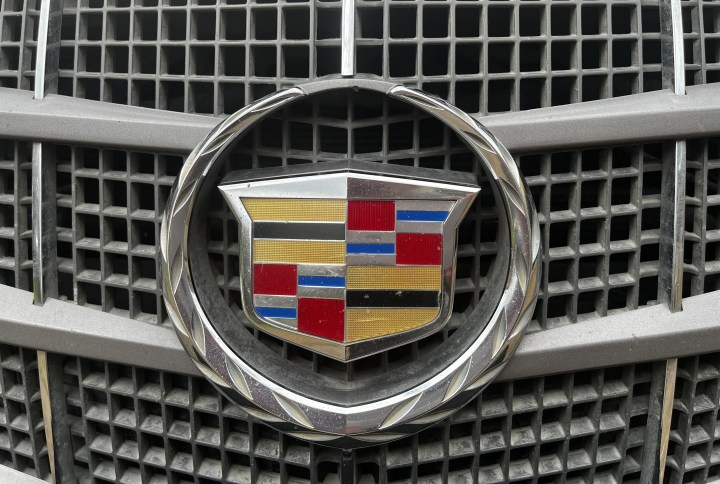
Cadillac was founded by Henry Leland in 1902. It was named after a French explorer, Antoine Laumet, a commoner who presumptuously changed his name to that of a nobleman, Antoine de la Mothe Cadillac, when he founded Detroit in 1701. Hence, the moniker “Cadillac” as a symbol of noble excellence was embedded in the brand from the very beginning. 

     Over the years, the term Cadillac as a figure of speech has been used to laud  everything from Obama’s healthcare plan to comprehensive insurance coverage, from WW II fighter planes called the “Cadillacs of the skies,” to everyday consumer items like Huffy bicycles and home appliances. Even the extra large shrimp from the Texas Gulf Coast are called Cadillacs. While the reputations of the various models of the car itself may have waxed and waned over the years, the Cadillac name has endured as a synonym for luxury. 

     Today, it is the third most preferred luxury brand after Lexus and BMW, and its performance and reliability rank up there with the best of all autos. Currently, the CTS 5 (the latest incarnation of the Catera Touring Sedan first introduced 15 years ago) has a 5 star safety rating in all three NHTSA (National Highway Traffic Safety Administration) safety crash tests. Cadillac is owned and manufactured by General Motors and the cars are still made in the United States; way back in the 20th century, Cadillac was the first to introduce the idea of interchangeable parts to the industry, which revolutionized car production forever. 

     Incidentally, interchangeable parts among all General Motors brands, and Ford Motor Company brands, also explains why Cadillacs and Lincolns became the luxury vehicles of choice for wealthy landowners, ranchers and oilmen living and working out in the vast, remote areas of Texas. Rich or not, nobody wants to break down in the rural hinterlands driving a Maserati. 

     But back to Cadillac, which is where I came to be after pondering Sista’s looming repair bill. Since I hadn’t anticipated being in the market for a new car, I was unfamiliar with current models so I spent time on line researching what Cadillac was offering.  (According to market research data, car buyers these days spend approximately 14 hours researching their purchases on-line before actually shopping.)  A visit to my dealership to look at cars confirmed what I had seen. All the hype and most of the inventory featured the Lyriq, an EV, and the new XT6 SUVs. (My husband drives an XT5.)  Among the 134 vehicles on my local dealer’s lot, there was a smattering of Escalades (not for me since I’m not a rock star or a politician) and a few sedans like Sista, now called the CT4 and the CT5. It was clear that if I bought a new Cadillac, it would have to be one of those. 

     Even though the lot was not filled to capacity, it was still overwhelming to me considering how totally empty it had been all during Covid and for months thereafter. I had arranged to meet a sales advisor, but had also asked our son to meet us because he’s the real car enthusiast in the family and is always up on the latest automotive trends. Plus, he actually likes doing this sort of thing!

     So, we gathered for the test drives. First up was a CT4 turbo charged sedan. “Yes, it’s a 4 cylinder engine, but believe me, you’ll be surprised by the power,” said the salesman as we piled in. Sitting in the driver’s seat, I noticed that even with all the new technology and “infotainment” in the dashboard, the car did have some familiar features and a nicely-done interior. But it seemed small, close; the top of my head barely cleared the sunroof mechanism and the console between me and the passenger seat was small. 

     We took off.  Before I even exited the dealer lot, however, I was already feeling claustrophobic, though I did have to admit that there was a certain get-up-and-go when I pressed the accelerator. The ride was “zippy,” more like a sporty Baby Beamer than the smooth glide of a Cadillac, but then, as we headed up the on-ramp to the Interstate, there it was: the labored whirrr of the 4 cylinder engine, turbo or no turbo. “Nope,” I said. “This isn’t going to do.”  

     Back to the dealership. There I learned that if I wanted a 6 cylinder sedan, it had to be a CT5 V-6 dual turbo and there were only three of those models on the lot. The salesman pulled up in a white one with Sahara beige interior. Again we piled in, much more easily this time, I might add. We took out on the same route as before, but this ride was so much more comfortable. The car was only a few inches wider and longer than the CT4, but what a difference. The interior was roomier and the engine was smoother — no whirs or grinds as we ascended the on-ramp. “Yes,” I said, “this is much more like it.”

     We went back to the office “to negotiate.” I did like the car, but there were two main problems with this particular vehicle: there were some upgrades that I didn’t want and didn’t want to have to pay for, and then there was the biggest drawback: it was white!! Summit white!! I hate white. We discussed price, incentives, trade-in, but I kept coming back to the fact that the car was white. Finally he asked exactly what it would take for me to be “color blind.” I gave him a number and, surprisingly, he agreed (after checking with his boss). It was a good deal but, ultimately, I was still reluctant to confirm the sale that day. He wasn’t happy, but that’s the the way it goes…

     In between calls from the salesman and his boss, and in discussions with my husband and son, I continued to think about all this for a few days. This was a big decision and it boiled down to an existential issue: if this were to be my last car purchase, should I “settle” for something that wasn’t exactly what I wanted?

     My son suggested we get on line and configure the exact CT5 V-6 for me in Raven black with Sahara interior, a Bose sound system, and 20 inch wheels. I had no idea that nearly 30 percent of new car sales these days are completed this way in the “build-and-buy” programs of auto manufacturers through their local dealers. (No doubt this is another now-preferred practice resulting from low inventories during Covid.) Anyway, up she popped on screen: my next “Sista.” The following week, I took the order into the dealership. They got the sale and I’m happy. The car will be here in the spring.

     All I have to do now is think of a new name for her. I’m excited. Its arrival is something to look forward to, though I am still driving Sista with nostalgic affection these days. For me, Cadillac is not just a figure of speech, it is a love of the cars and a loyalty to the brand based on 40 years of good experiences. 

     And FYI: No, I am not getting any incentives from Cadillac for these posts. 

comments 5

About My Sista!

  I drive a 2011 Cadillac CTS V-6 , 3.6 L. She is raven black with ecru leather interior, she has a little over 100,000 miles on her, and she flat moves — in and out, over and under, around and through. I have driven this car through floods and hurricanes, hoar frost and ice storms, light snow and mud rain, debris-hurling winds and fog so dense that I couldn’t see the car in front of me. I have gone from zero to 60 in a few seconds and passed 18 wheelers pushing 100 mph. I have driven long miles in several states and long, hard miles all over Texas, especially through fracking country. This vehicle has saved my life more than once and I trust her implicitly. 

     In short, I love this car. I call her “Sista” because she has been, for 13 years now, my only companion, my sibling as it were, driving those hard miles back and forth to my hometown of Victoria to take care of my aging Mother. Truthfully, memories both good and bad of my retirement years here in Texas are heavily associated with this vehicle and, while I don’t generally form an emotional attachment to a physical object, I have to admit a real affection for “Sista.” I have taken good care of her and she has taken good care of me in return.

     So it was that a few weeks ago I found myself dismayed by the sounds she was suddenly making: was it arthritis? In spite of her good looks, was she suddenly showing her age? Part of it might have been the cold weather, as it often is with arthritis of any sort, but then, when it got warmer, the noises didn’t abate. So I called up my Cadillac service manager (with whom I have a long and steady relationship) and complained: “My car sounds like I’m driving an old bed with a mattress whose springs have sprung. Maybe we need a lube job or some shock absorbers?”

     I took Sista in for an evaluation. She was there for diagnostics for a couple days before my service manager got back to me. Yes, no surprise that she was a little creaky because all the struts, shocks, links, control arms, stabilizers, even the sway bar (whatever that is) — all original to the car—  needed to be replaced. And oh yes, while we were at it, there was the matter of the 100,000 mile routine maintenance that was now a bit overdue — fluids, filters, spark plugs, disks, wiper blades, etc. And I needed an oil change. 

     I was sitting down at my desk when he called, and it was a good thing because then I didn’t have far to fall when he gave me the estimate for all this: a tad under $8,500! While I was exclaiming in shock and starting to hyperventilate, he was quick to add that I didn’t have to do everything at once. The routine maintenance should be done now, but I could tackle the parts replacements bit by bit over a few months. “The creaks and groans may bother you, but the car isn’t going to fall apart or leave you stranded anywhere because it needs shock absorbers,” he assured me.

     I guess it was my heavy breathing and sudden silence that prompted him to add, “Why don’t you think about this and call me back when you decide what you want to do?”  

     Think about it indeed, and talk about it. I vacillated back and forth all day long. I called him back with questions, then got a valuation of my car, then called back with an initial go ahead, then called again to withdraw it. Everyone in the discussion, the service manager, my husband, and my son, was surprised at my indecision because they all realize how much I love Sista and they all know that she easily has another 100,000 miles or more ahead of her. But still …

     Lest you think this is all an ado about nothing, let me give you some backstory. I have been driving a Cadillac for 40 years. With the exception of my very first one, they have all been black with a light interior and a big engine. I drove Eldorados until they quit making them, and then I reluctantly moved into a V-6 when I bought the CTS. I have been driving since I was 13 years old (with a learner’s permit allowed in Texas at the time), and have always driven GM cars — first Pontiacs and then Oldsmobiles before Cadillac. And, lest you think I am some road-raging, gas-guzzling, speed demon, I hasten to add that I have never gotten a ticket and I have never, thank god, had a major accident. But I do insist on a car that will get out of its own way.

     These cars drive the way I drive and they possess the speed and the agility to drive defensively in the 16 lane freeways and 85 mph speed limits of Texas. They make me a confident driver and, at this point in my life, I don’t plan to change horses in the home stretch. But let me tell you that I was NOT ready to buy a new car right now. First of all, I hate buying cars: the whole “let me talk to my manager” routine, along with the test driving and the yada-yada-yada of negotiating price and then the rigamarole of financing. Even when you know what you want, it’s a hassle. Years ago, I used to just call up my Cadillac salesman at the local dealership and say that I wanted “another one.” But of course, these days post-Covid and with SUVs and EVs dominating the market, there is not likely “another one” to be had. 

     But back to Sista. I decided to get the oil changed and then to go pick her up and bring her home. Even then, with the cost of the diagnostic and the oil, I had a tab of just over $300. And that made me think about this whole situation. Even if I do all the work and Sista is “as good as new” for a while, there will inevitably be more repairs and maintenance along the way. Sure I love her and she can be on the road for another 100,000 miles or more, but can I?  How much more will I spend on upkeep in the coming years? And then, will I find myself approaching 80 years of age and having to buy a new car for however long I might be driving after that. Does any of this make sense?

     So now, a simple car repair has become an existential dilemma, forcing me to think about the future and to face the fact that whatever I decide and if I buy a new car, it is likely to be my last. I’m going to have to mull this over with Sista. Stay tuned.

comment 0

Savoring the Small Things

    I have never been person who clings to the past. I’m not terribly sentimental and I carry  forward neither grudges nor regrets. When I recall the past at all, it is because some small reminder, a photo or a song, conjures up usually happy memories of a person or a place that make me smile. Unfortunately, I have several friends who live perennially in the past, and as we age, they seem to disappear further and further into it. It’s probably no coincidence that Alzheimer’s patients regress in the same way.

     I have lived in the future all my life. My father died when I was just six years old, and so I learned early on that things change suddenly and that nothing is forever.  My “go like hell” race toward the future is an obvious result of this early trauma. My whole life has been about “what’s next”? And, as I’ve grown older and most of my goals have been achieved, I have found it increasingly difficult to settle into the “presence” of my life, especially my retired life.

     And then Covid came along. Funny how things happen. We basically sequestered ourselves for three years, and I found the isolation somehow comforting, and surprisingly creative. It was like a great, long snow day: no responsibilities, no social obligations, no travel, no guests, no plans, no  nothing. An excuse for just being. You couldn’t visualize the future, so you couldn’t live in it. It was all here and now, and for the first time in my life, that seemed to suit me just fine. Finally, all the admonitions to “live in the present,” to “take one day at a time,” to go slowly “step-by-step” and “take time to smell the roses” began to seem possible. 

     We’ve been hearing about “mindfulness” for years now, ever since Jon Kabat-Zinn, a Ph.D. professor of medicine at the University of Massachusetts  medical school, founded the Mindfulness-Based Stress Reduction Program in 1979. Originally intended to help treat a variety of conditions in both healthy and unhealthy people, mindfulness practices have now become so commonplace both in healthcare and in popular culture as to border on cliché.  Of course we all need to pay attention, but to everything? Could it be that heightened attention to every event and experience collectively serves to contribute to a national epidemic of anxiety and depression?

     Maybe there’s another way. I’ve been reading and hearing a lot lately about a new movement afoot called “savoring.” While savoring is also a form of present-moment awareness, it is different from mindfulness in that it focuses on the positive and pleasurable rather than on all present-moment experiences. It is a matter of distance vs.intimacy, I think: mindfulness encourages people to observe their own experiences and thoughts in a more detached, objective way, whereas savoring promotes a deepening engagement with experiences that are specifically pleasurable. The theory is that the habit of savoring the moment, however fleeting and even under stressful conditions, can reduce overall anxiety by releasing positive emotion.

     Developing positive emotions during periods of high stress and anxiety in your life is not as simple as it sounds, however, and involves a great deal more than just the self-help advice found in books like The Power of Positive Thinking (Norman Vincent Peale, 1952).  Given the horror and chaos of the world around us today, telling someone to “be positive” is akin to telling a depressed person to “just cheer up.” Meanwhile the politics of fear and threats of violence and retribution that dominate our national discourse do nothing but promote the negative emotions of a primitive “fight-or-flight” response to everyday problems. Not a productive way to build resilience.

     Savoring, on the other hand, prompts us to slow down, be quiet, and consider alternative ways of  handling even difficult situations, perhaps even to find some positive meaning in them. We might, for example, savor the beauty of nature and  the sunrise of each day while stuck in heavy traffic, or we might notice the kindness of a stranger in the supermarket amid a long check-out line. We might savor our home environment through organizing and redecorating, appreciating anew the pleasure and security of our everyday surroundings. We might savor the thrill of anticipation of a future plan or purchase, or even relish a bit of sudden good news that we haven’t yet shared with anyone else. We can savor the meals we cook, the books we read, the memories we have, and above all, the people we love. We can let all the other nonsense go.

     To live in the present, you have to find those sustaining moments in your life and let go of the things that you cannot reliably anticipate or change. January is a good time to try to accomplish this, because January is a “non-month.” It is dark, cold, uneventful, and usually a quiet time, a month of less is more, much like the months of Covid were. Here we can find a respite from the craziness and chaos of the holidays, and if we turn off our cell phones and the incessant noise of the news feed, maybe even find time to think and reflect. And then maybe we can learn to  savor the small things. 

comment 1

Nots for New Year’s

Here we are again at the “intermezzo” of the year, before old becomes new again. We’re eating leftovers from Christmas, picking up all the trash, putting away dishes and gifts (if any), and settling down to write some notes, review the year, and yes — engage once again in that traditional year-end folly designed to assuage our guilt for lapses in character and behavior and to try anew by inscribing our high-minded ideals on paper. It’s time for New Year’s Resolutions.

     We all know how this goes. You want to improve, you want to be better, you want to bolster your efforts toward making positive choices going forward. For that reason, resolutions are almost always stated in the affirmative: to lose weight, to be more patient, to help those in need, to eliminate bad habits, etc. etc. If you’re like me, you might have a copy of the resolutions you made last year to help you assess your progress (or the lack of it) and reformulate your goals for this year. And again, if you’re like me, you might find that your new list becomes little more than a stronger reiteration of your old one. Oh well … self-improvement is a heavy life, even heavier as we get older, it seems. 

     This year, I have actually been brave enough to go back and review resolution lists going back ten years or so (yes, I keep a journal of these things), and guess what?  Many, too many I’m afraid, of the exact same resolutions have appeared over and over again year after year. Covid apparently made me lazy because, since then, I haven’t even bothered to change the language. I’ve just begun to add a snarky comment at the end of the old year— something like, “Hey! Six out of ten ain’t bad” or “Am I to be, or not to be, ever any better?” — before copying the old goals on to the new list.

     So after this unhappy stroll down memory’s Failure Lane, I have decided that maybe the problem is not so much my lackadaisical attempts at betterment, but rather simply a matter of the wording of my intentions, the point of view of the desired change, if you please. For example, I’ve always focused on positive statements, the things I want to do, but honestly, positivity is not my usual mode. So this year, I’m going to focus on the negative, the things I do NOT want to do. The list is a little shorter, which may portend a better success, but it is also born out of experience rather than aspiration. This may finally be my recipe for success with New Year’s Resolutions.

     To begin: First, I will not persevere in reading to the bitter end a book that I do not like out of a sense of guilt for not having finished it. This includes not only current new works I acquire, but also the classics which I have never finished such as Ulysses by James Joyce, The Hobbit by Tolkien and several of Shakespeare’s plays (Egads!). Now for an English professor, a writer and an undergrad drama major, this is a BIG step. I don’t take saying “no” to great (or supposedly great) literature lightly, but enough is enough. Besides, I’m downsizing my library and it’s time that many of these books find a home somewhere else.

     Secondly, I will not any longer say “yes” when I really mean “no,” nor will I hesitate with my response or try to make excuses as to why not. No is no, from here on out; it’s a matter of self-preservation. This includes everything from jobs and service for organizations, to social  invitations and professional events, to meaningless meetings on trivial topics, to favors for “friends” and accommodations for visitors. The answer is simply NO. (You can add a “thank you” if that makes you feel better.) We bring so much stress on ourselves in trying to meet other people’s needs and expectations, and we have no one but ourselves to blame for that. I am at an age, and a stage, where I simply cannot afford the additional anxiety that half-hearted commitments ultimately produce.

     Lastly, I will not ever take any flights longer than two hours in economy class, nor do I want to take anymore long-haul flights (over 8 hours) in any class at all! While we’re talking nots and nevers, I am also through racing through airports to make connections on flight schedules that were cutting it too close to begin with even before any unforeseen delays occur. For that matter, I’m through racing anywhere, for anything, on any kind of conveyance whatsoever — taxi, bus, train, plane, ship, tender, carriage, rickshaw, or camel. My husband and I have been fortunate to have traveled all over the world to six continents (no thank you to the Antartic), to roughly 50 countries, and to almost all of the U.S. states and possessions. I am forever grateful for the wonderful experiences I’ve had, the people I’ve known, and the resilience I’ve shown even in the worst travel moments. I’ve raced, trekked, hauled, climbed, and slept sitting up with the best of them, but I think I’m done with anything that isn’t slow, easy, and unabashedly luxurious 

     That’s it. It’s a short list, though considering how much of my life has been spent wrestling with these three NOTS, it pretty much covers everything I hope not to do again. Old habits may die hard, but acceptance of yourself and your limitations also comes with age. My time has come.

comments 2

Not Shopping, Just Looking

  My Mother loved Christmas, more than any holiday, or birthdays, or other special occasions.  She spent her career in retail as a personnel manager at a J. C. Penney store and, in spite of the extra long hours including nights and weekends during the holidays, she would still come home, tired and exhausted, but full of excitement about helping people, solving problems, and reveling in the joy of the decorations and good cheer at work. Bless her.

     A number of years later when I first moved to Stamford, CT, I took a job as a holiday worker in the Lord & Taylor store there. I thought I would get an introduction to my new community, while also benefitting from the 20% store discount (which I did). Lord & Taylor had been one of my favorite stores ever since I had lived in New York City, and it long continued to be a favorite department store in Connecticut.  My stint at L&T was simply a seasonal job, but I have to admit that I really caught the holiday spirit there, even though I worked in the credit department and was tasked with picking up charge cards from over-extended customers down on the sales floor. Ah yes .. a challenge even for a former teacher accustomed to unruly students. But I will never forget the thrill of riding down the escalator in that store hearing Christmas music and being flanked by beautiful poinsettias and tiny white lights and experiencing the retail beauty of the season. And then I understood my Mother.

     During my years living in New York and Connecticut, our grand holiday tradition was not necessarily going to Radio City performances or the NewYork City ballet presentation of “The Nutcracker, “ though we did do those things. No, our biggest tradition became going into the City to see all the magnificent window displays of the major Fifth Avenue department stores.  This was high art and inspiration in itself, plus the thrill of the hustle and bustle of Fifth Avenue shoppers, the ringing bells of the Salvation Army, and the smell of roasting chestnuts from street vendors. My Mother used to take vacation time to be with us at Christmas (which wasn’t easy for her as a member of management), and she continued to come up for longer visits after her retirement. Her arrival at La Guardia (weather be damned) and these holiday excursions into the City became the cornerstones of making family Christmas memories for many years.

     Christmas first truly exploded for me when I was newly-married and living in New York City. My most vivid memories are not of shopping, but of looking. The great department store windows were so spectacular as to be a destination in themselves, as the barriers and line ropes for crowds around them indicated.  And so when my Mother started coming up to visit during the holidays, the Christmas windows became our prime destination as well. 

     We would start at Macy’s (not technically on 5th  Avenue but on Herald Square at 34th Street), not so much because of their windows, but because of Santa’s culinary workshop in the basement called The Cellar showcasing gourmet cookware and delectable, beautifully decorated holiday pastries and candies. Then we walked straight across 34th Street over to B. Altman & Co. (34th and 5th, from 1906), my absolute favorite New York department store until it went out of business in 1989.  (An aside: Once during my lunch hour shopping at Altman’s when I was working in the Empire State Building across the street, I tried on a pair of cashmere-lined leather gloves at the counter there. As I put them on and admired them, I turned my head and there was Elizabeth Taylor right next to me. She smiled and shook her head in approval. The gloves were beyond my budget, but I bought them anyway — and yes, she really did have violet eyes!) 

     Anyway, continuing the trip up 5th Avenue, it was only a short walk to Lord & Taylor’s flagship store (at 5th Avenue and 39th Street), then the nation’s oldest department dating from 1826. Sadly, L&T closed its doors forever after the holidays in 2019; I was there for its final clearance sale (and bought a cashmere sweater). They always had fanciful, mechanized holiday displays which caused crowds ten-deep to spill out into the street. 

     The farther up 5th Avenue we window-shoppers went, the more sophisticated the displays and the more exclusive the merchandise seemed to be. Sak’s Fifth Avenue (5th and 50th Street, 1924 – present) was right across the street from Rockefeller Center and proved the perfect vantage point for taking that long-shot photograph of those angels with gold trumpets heralding the walk to the skating rink from the street. Just a bit farther, Tiffany’s (at 5th and 57th, 1940 to present), bedazzled enough as it has always been with its own merchandise, hardly needed much else to make store windows glitter and shine. 

     Bergdorf Goodman (5th and 58th, 1928 to present), known for its high-fashion and somewhat avant guarde window designs, is located in the old Cornelius Vanderbilt mansion right next to the famous Plaza Hotel at 59th and Central Park South. This was always a convenient location for taking a rest, either for lunch or tea in the Palm Court at the Plaza or for a relaxing carriage ride around Central Park. Afterward, we might have enough energy to venture East on 59th Street over to Bloomingdales’ flagship store (1861 to present), which promised the most hip, most current, most design-forward window displays anywhere.

     The New York Times recently featured this year’s department store windows in the City (“Holiday Windows Aim to Delight and Wow,” 11/26/23). Reading the article made me smile at the memories, but also a little sad. So many of the grand dames of retail have disappeared that only four major stores appeared in the article: Bergdorf’s, Macy’s, Bloomingdales, and Sak’s. True to a long tradition of “wowing,” however, this year’s windows showcase hours of work and creativity and lots of innovative technology making possible a ten-story “wheel-of-fortune” installation over the facade of the Sak’s building, and an interactive music display at Macy’s that encourages viewers to play the piano by pressing a set of keys on the glass window. And, while its windows weren’t featured in The Times, Tiffany’s now has a new feature of it own: visitors can enjoy “Breakfast at Tiffany’s” in the Blue Box Cafe, the new restaurant operated by Michelin-starred Chef Daniel Boulud. Decorated in that famous Tiffany’s turquoise blue, the Cafe offers a reasonably-priced light menu of seasonal items for under $50. 

     Now that IS a window shopper’s delight! 

comment 1

Give Thanks, Not Things

 So, here we are in the last week of November.  The year is winding down, the turkey has turned into leftovers, and shoppers on-line spent a record $9.8 billion this Black Friday (up 7.5%  from last year, according to Adobe Analytics). We have entered the season of plenty, or as I have come to see it over the years, the season of too much. Ho — ho — ho

     It IS all simply too much: the traffic, the frenetic shopping, the unrelenting advertising, the endless Christmas music, the parties and conviviality, the stress of  too little time and too many expectations, and the intense pressure to be merry and joyful no matter what. Now, especially four years post-Covid,  Americans want desperately to return to “normalcy,” whatever that was, and to recapture those idealized Norman Rockwell images of an era long gone. Certainly, that is a yearning strong enough to have fueled a major political campaign and birthed a national movement, but it has also created a national crisis of dissonance between the ideal and the reality, the truth and the lie.

     The American Psychological Association reports that 38% of Americans’ cite increased stress and depression during the holidays. That may be true in an average year (in years past), but consider where we are today. Americans were already experiencing unprecedented levels of anxiety and depression before the holidays even began. We are all living with the fear of mass shootings, for example; in fact, one of the largest malls in New Jersey was evacuated on Black Friday due to a bomb threat. The threat of crowd violence is everywhere, and massive crowds assembled this weekend in cities all across the country to protest the Israeli-Hamas War.  Shootings and violence make people wary of going into large, crowded places, hate crimes and road range make people nervous about dealing with others, and ugly political divisions even among friends and family members, never mind neighbors and community members, make most of us want to just avoid people altogether.

     This is hardly a climate conducive to good cheer and brotherhood. News of war blares from our televisions and bellows from the mouths of our politicians, while hate crimes and bigotry are on the rise. Conspiracy theories and false information inundate us on social media. Threats and retribution are in the air, and nations abroad are increasingly installing far-right populist leaders (most recently in Argentina and the Netherlands). Even here in America, a narcissistic demagogue leads the polls as a probable presidential nominee. Never mind the effects of holiday stress, there is enough doom and gloom in daily life to overwhelm us all.

     About now you are probably wondering if the original Grinch who stole Christmas is writing this post instead of someone who is, believe it or not, trying to find a positive angle on this angst. Well, while I admit that I’m hardly known for my bright-eyed optimism and perky platitudes, I can offer is some realistic advice learned through hindsight and my own life experience spent wrestling with anxiety attacks in every season of the year. 

     So here it is: we all need to reign it in, to assess who and what is most important in our lives, and to get a grip on ourselves and our emotions, whether those emotions are anger or sadness or fear, or even unbridled love. 

     As for the holidays in particular, we do NOT need to exhaust ourselves by racing to every party and honoring every request for help. This includes those “command performances” at family get-togethers or business events. Rather, to quote Nancy Reagan, we need to “just say no.” (You can add “thank you” if you want to be extra polite.) Like most women, it has taken me most of my life to simply be able to say NO, without excuses, without equivocation, and without guilt. We can’t exhaust ourselves by trying to do it all, and then blame everyone else for our exhaustion. 

     Nor do we need to strain our budgets and exhaust our patience by investing hours shopping for “stuff” for those who have everything. My closest friends and I have long-since agreed to no longer exchange gifts, not even of the fruit-food-gift card variety (because, eventually, these just become exchanges of like for like). As for tchotchkes and other gifty items, most of us have enough of those already to open our own gift shops; besides, we older folks are downsizing and donating anyway, and younger folks want no part of all the “stuff’ that we accumulated “back in the day.” Minimalism is in!

     What we do need to give, however, is time and attention to the people and the causes we care about most. Let those you love know how much you appreciate them with a call or a hand-written note, or even a zoom visit over a cup of tea. Offer to help a friend or neighbor with some small chore or to take them somewhere they need to go. If you have extra time and money, volunteer for a day at a soup kitchen or a clothing drive or make a donation to a special charity. Acknowledging the value of others is a gift of gratitude that both the giver and the receiver can enjoy.

     Life is short and some days can be very long indeed, especially if you are a planner and a worrier like me. The older I get, though, the more I try to live in the present: after all, the past is over and can’t be changed, and the future hasn’t happened yet. The present is really all we have, and if we can manage that, then we’re  doing okay. 

     This holiday, make memories, give blessings, and be grateful for who and what you have. These are the best, most enduring gifts for yourself and others, and they don’t cost a dime.

comments 2

A World of Kindness

  November 13 is World Kindness Day, and the whole week of November 13-19 is Kindness Week.  No doubt you’ve heard of “random acts of kindness,” such as paying for a stranger’s cup of coffee or leaving money for someone’s groceries in line behind you. Perhaps you’ve even performed some anonymous random kindnesses yourself.  Bless you. But who knew that a movement to make World Kindness Day an official observance every November 13 began back in 1998 with an international coalition of kindness NGOs (non-governmental organizations). I certainly didn’t. 

     The organization was first formalized in Swiss law and originally included Canada, Australia, Nigeria, and the United Arab Emirates; Singapore observed the Day for the first time in 2009, and Italy, India, and the United Kingdom soon followed.  Repeated appeals to the United Nations for recognition of a World Kindness Movement have been made, but so far nothing has been enacted. The movement’s original purpose was to highlight good deeds focusing on the community and the positive power of the common thread of kindness in humanity. Obviously, finding a “common thread” of any kind anywhere seems to be a challenge these days, especially here in America.

     There is no official recognition of World Kindness Day in the United States, though the whole kindness movement has spread to some extent throughout the world. Numerous programs have been developed for school children even in America, such as “Be Kind to People Projects” and “Cool to be Kind Awards.” There have been events such as “The Big Hug” in cities everywhere, and there was even a Global Dance for Kindness flashmob organized by an American in 2012 and held in 15 countries and 33 cities all over the world, images of which were projected onto the big screens in New York’s Times Square. (Visit www.lifevestinside.com for more information.)

     So, okay. Kindness counts. The cynic in me says, “Yeah,  right, and so…?” I’m not surprised that Kindness Day isn’t officially recognized in the US. I doubt if we could find any two politicians or government agencies to even agree on a definition of what kindness is, much less on how to celebrate it. In the current domestic climate of anger, violence, retribution, hatred, bullying, bigotry and anti-everything that pervades the US society, someone who really believes that a small random act of kindness (even a million of them), can somehow restore our divided people into a civil, reasonable, compassionate, tolerant unified nation that it once was, or was at least trying to be, is either not paying attention or, at worst, is totally delusional. 

     But back to the topic of kindness. I’ll admit that even I have some difficulty defining exactly what kindness is. Generally, I have always thought of kindness as basic etiquette, good manners: you hold the door for someone, give up your seat on a train for someone, let another vehicle into traffic ahead of you, say “please” or “thank you” or “excuse me” whenever you overstep or interrupt. You don’t intentionally offend, by language or action, anyone in either a public or a private space — which is rude — and you try, in general, to just be “nice”  and ignore any rudeness that comes your way. To me, kindness is simply restraint: if you can’t say anything nice, don’t say anything at all. Let it go because after all, who cares about what people you don’t know think anyway?

     Curiously, though, that’s the rub. I find it easier to be kind to strangers and, if the truth be told, I think most of us do. The small everyday acts of polite behavior that we extend to people we don’t know, might never see again, and have no personal relationship with, are sort of automatic — if we’ve “been raised right.” Giving a guy money at a traffic intersection for a meal, donating money for relief funds, any charitable giving actually, whether anonymous or not, is a sort of kindness that costs us nothing personally except money, and demands nothing in return — except perhaps a tax deduction.

     The real kindness challenge is to be kind with those we love and know well and with whom we interact everyday: our parents and spouses, our siblings, our children and family members, our dearest friends, our closest colleagues.  In other words, these are the people whom we tend to take for granted, whom we assume know us so well that any off-hand comment, any personal transgression, will be understood and forgiven. Because we assume their love and good intentions, we often omit even the most basic goodwill gestures, the pleases and thank yous, the cards and notes, the “you first” response — all the common courtesies that we routinely afford others without even thinking about it.

     But today is a different time and a different era, and if you’ll forgive me for sounding like a snob, the “raised right” manners and etiquette of a civilized society seem to have skipped a generation or two. Rude, brutish behavior and violent, threatening language have been normalized by our politicians, our media influencers, our celebrities, and our corporate leaders, and these are the models of behavior our younger generations have to emulate. In a society where success is defined by money, power and material acquisition rather than on personal character and dignity, there is little to distinguish human beings from animals — except that animals act out only when threatened and never with premeditated malice.

     I taught speech and communication to college freshmen for a number of years, and part of that curriculum was listening skills: how to listen, really listen, to what the other person was saying without thinking about your own retorts. It’s a lesson I taught, but one that has been hard for me to master. I am very quick-witted, often with humor, but also very direct and sometimes sarcastic. But I don’t yell and I don’t curse; I know that language matters and words lead to actions. The more serious the conversation, the more important it is to remember that. So, for me, my greatest kindness challenge is to ask myself before speaking, “Do I really need to say this?” It takes a lot of restraint to tell myself no and simply shut up.

     As I’ve gotten older, the issues personally, nationally and globally have gotten more serious, but perversely, the ones that I care enough to talk about have become fewer and fewer. I’m just so tired of it all, the endless arguments, empty gestures and pious platitudes when there really is little left to say. So my motto for Kindness Day, once again taken from my favorite poet T.S. Eliot and his poem The Wasteland, is: “Teach us to care and not to care; Teach us to sit still.”

comments 3

Look Up to the Sky

 I have always loved the sky. My father did too. Having been an Army Air Corps flight instructor during WWII, he became a commercial airline pilot afterward. His passion was planes and flying.  When I was little — I mean really little, like 4 or 5 — he and I used to lie on our backs in the vacant lot next to my childhood home down in Victoria. During the day, we’d watch the clouds (if there were any) and identify types, shapes and movements, and at night, we’d look at the stars. He taught me to find the constellations, showed me how to locate the North Star and recognize the visual differences between a star and a planet. Whenever there were forecasts of planetary sightings, the Milky Way, dramatic moon phases, or any other phenomena, we were out there, on our backs, getting dirty and getting chigger bites.

     Those are among the most vivid memories I have of my father, and I still remember much of what he taught me. He died before Sputnik was launched (1957), but by then I was already going out by myself to study the sky, looking for shooting stars or, later, satellites. Fortunately for me, I married a man who went to a maritime college and spent years at sea, so he too loves the sky, as well as the water (as do I).  We think nothing of setting our alarms to get up to view comets or passing space stations, or driving to a perfect spot for a better photograph of a super moon, or even making a 400 mile trip out to West Texas to see the Marfa Lights!

     So of course, with solar glasses and newly-acquired special camera lenses in hand, my husband, son and I were psyched for the solar eclipse on October 14. Although San Antonio offered a prime location in the viewing path, we elected to go down to the Gulf Coast. A friend had generously offered us his lovely condo down in Rockport for the weekend, and we were grateful for the chance to get away together and excited about the seeing the eclipse over the Bay.

     The October eclipse was what is called an “annular” eclipse, which means that the moon is closer than its maximum distance from the earth so that its shadow is not quite large enough to completely cover the sun during the eclipse. Our view did not reveal the so-called “ring of fire,” but more of a ring of bright white (which explains why I chose the more dramatic photo of the partial passing above for this post). Nor did the annular eclipse create a total darkness at 11:54 a.m., but rather a glowing dimness more akin to dusk. 

     We have another eclipse to follow, this time a total one coming up on April 8, 2024. Once again, San Antonio is centrally placed in the 10,000 mile path that will stretch from Mazatlán in Mexico, up into Texas through the Edwards Plateau in the Hill Country, and then Northeast through 13 states all the way up to Maine and into Canada. In a total eclipse, the moon falls within the darkest part of the earth’s shadow called the umbra and, thus, it completely covers the sun. This creates total darkness for about 4 minutes, depending on where you are in the path. (Just a note: many religious scholars and historians have suggested that a total eclipse is what took place when Christ was crucified.)

     Accounts of solar eclipses go all the way back to the ancient Greeks. The poet Archilochus spoke about the eclipse of April, 647 B.C.E. The Greeks believed that the heavenly phenomenon was the work of the gods, that the sun and the moon were fighting. No doubt this is what spawned the many beliefs that have arisen through the centuries and and found their way into not just Western culture and mythology, but into the traditions and beliefs of countless other cultures.  In in spite of modern science and recorded data about solar and lunar eclipses, many of these superstitions persist (as they do about other heavenly phenomena).

     Some of these superstitions read like “old wives’ tales,” such as pregnant women shouldn’t watch an eclipse lest it harm their baby, or that food prepared during an eclipse will be poisoned. Sort of reminds you of some of our more recent superstitions, such as those theories about wind turbines or Covid vaccines, doesn’t it?  Beyond all the particular beliefs, however, is the enduring myth that eclipses are generally harbingers of things to come — mostly bad things.  

     The catalogue of bad omens includes war, natural disasters, major life changes, world-wide health epidemics, calamitous celestial events, even the end of the world itself.  These astrological forecasts are all perfect examples of confirmation bias in that they are based on coincidence and presume to establish a cause/effect relationship between the cosmic universe and human events. Never mind the scientific fact that eclipses happen with regularity and can be mathematically plotted and predicted across thousands of years, as Sir Issac Newton noted over 300 years ago. 

     So, if something awful happens during an eclipse, some people will forever link the two events and insist that the eclipse caused, or at least foretold, their personal disaster. Meanwhile, they will overlook any good things that might have also happened during an eclipse in their lifetimes. Maybe the basic human impulse is to find somebody or something else to blame for one’s own misfortune. That certainly seems to be the dominant human behavior today.

     As for me, whomever or whatever I might try to blame for my failures and disappointments, it will never be the sky. During the forty years I lived in the Northeast, the single greatest thing I missed about Texas was the sky, that pure and perfect blue, cloudless, limitless daytime sky that stretches from horizon to horizon from almost any vantage point, even in cities. The pure gold of a sunrise, the brilliant fire of a sunset, the deep blackness of a starry night, or the rolling storm clouds that bring bolts of lightening and torrents of rain — there are always reasons to look up to the sky. Infinite beauty, spiritual inspiration, and personal humility are to be found there. 

     I’ll be looking up this weekend because there is a full moon out and a forecast for our first arctic mass bringing cooler fall temperatures. Promises a perfect night for Halloween, don’t you think?

comment 0

Waiting for …

According to MIT Professor Richard Larsen who studies such things, Americans spend roughly 37 billion hours a year waiting. Yes, I said “waiting.” A 2022 consumer survey, “The State of Waiting In Line” (on waitwhile.com) identified waiting in retail check-out lines as the most common situation, but lines in restaurants, pharmacies and grocery stores are also close contenders for the biggest time wasters. As you know from your own experience, all this idle waiting breeds feelings of boredom, apathy, annoyance, frustration and anger.

     At the risk of aggravating you further, let me itemize the many ways in which you wait in line: at retail stores, grocery stores, banks, restaurants and fast-food establishments, pharmacies, gas stations, movie theaters and ticket booths, airport security, and let’s not forget the proverbial post office. I’m sure you can think of more. There is the waiting for your name to be called in a waiting room: at medical offices, in legal, professional and municipal offices, at beauty salons and spas, at the DMV, and even when reporting for jury duty.

     Those who commute by car know well the waiting involved in traffic: time spent at stop signs and traffic lights, railroad crossings, construction lane closures, traffic jams and gridlock, waiting in the “zipper” feed, traffic accidents, even at curbside pick-up! And then, of course there is the ever-present waiting on-hold: on the phone or for return calls, for airline reservations, to make appointments, to solve a billing problem, or just to get information. And let’s not overlook the interminable generalized waiting for meetings to begin, test results to be completed, late friends to arrive, packages to come, or service people to show up. It’s exasperating! If you divide that 37 billion hours by the total population, it all comes out to about 113 hours per person per year, depending on your age, your particular work and commuter patterns, and where you live. 

     And if all that aggravation isn’t bad enough, that isn’t all there is. These common situations test our patience all the time, but by far the most troubling and trying to me are situations that I call “anticipatory waiting.” Examples include everything from simply waiting for the local weather to change to waiting for some grand improvement in social, economic, or political conditions in the world. You might be waiting for your personal luck to change, or for a difficult personal period like the Covid pandemic to end, or even for something wonderful to happen such as a job promotion or a lottery win. The waits in these situations seem interminable because there is no immediate resolution in sight, and often not even a satisfying or recognizable end result if you finally reach one. These are the “be-careful-what-you-wish-for” waits that cannot be tallied in hours or days, but only in sleepless nights, upset stomachs, and existential angst. In effect, you find yourself  Waiting for Godot.

     For those who might not recognize the reference, Waiting for Godot is a play in two acts written by Samuel Beckett (1906-1989) and first performed at the Théatre de Babylone in Paris in 1953. Originally described by critics as a “play in which nothing happens,” it has become the iconic theatrical work of what is known as the Theatre of the Absurd. While rooted in the foundational philosophy of existentialism, the origins of this literary movement hue more to the absurdist ideology of Søren Kierkegard, which proposed that the inherent meaning of existence in the universe may exist, but humans are not capable of finding it. Thus we are doomed to the absurdities of life without intrinsic purpose. Heavy stuff, indeed.

     At first, Beckett’s play got a rocky reception because audiences simply didn’t understand a drama without a narrative arc and a clear beginning, middle, and end in the conventional sense.When Godot first opened in the United States in Miami in 1956, it was promoted as a comedy (the subtitle of the play is “A Tragicomedy”), but the audience of mostly Florida vacationers walked out by the droves. It was reported that the taxis which brought theatre-goers were waiting outside for their patrons to exit before the second act even began. 

     But, of course, the lack of a clear resolution and a final ending was the whole point: who is Godot, why are the characters waiting for him when they are repeatedly told that he will not come (until maybe tomorrow), and why is everyday the same over and over again? What is the point of endless banter and discussion? What is the point of existence itself?  The philosophical questions and the whole enigma of who/what Godot represents has become the stuff of infinite inquiry and endless academic literary dissertations (including my own). And Beckett, himself, offered no help insistently refusing to better clarify scenes and characters, much less identify who Godot was supposed to be. “If I knew, I would have said so in the text,” he often quipped  when asked.

     Eventually, in the turbulence and chaos of the 1960s and ‘70s, Waiting for Godot found receptive audiences and brought Beckett fame and success along with other Theatre of the Absurd playwrights such as Harold Pinter, Eugène Ionesco, Jean Genet, and Edward Albee. Absurdism explores a complex reality in which we create the value of existence by affirming and living in the present, not by merely talking about it with some abstract expectation for the future; that philosophy resonated with a new generation of people who were angry and disillusioned with the status quo and out of patience with old cultural norms and institutional values. 

     Obviously it still resonates. Today, seventy years later,  Waiting for Godot continues to be staged and performed in theaters around the world. The latest New York production opens off Broadway in Brooklyn at the Palonsky Shakespeare Center next month. In our own days of such chaos, uncertainty, and disillusion, are not we all here still Waiting for Godot?

comments 2

Days of Awe

    We are within the ten-day period between Rosh Hashanah, the Jewish New Year, and Yom Kippur, the Day of Atonement. In the Jewish calendar, these are known as the High Holy Days, also called “The Days of Awe.” The exact dates change, but the season is always early fall; this year, the New Year began at sundown on September 15 and the Day of Atonement ends at sundown on September 25. It is a special time, a holy time for the Jewish people, a period of  reflection, repentance and hopeful resolution for the year going forward. 

     I am not Jewish, though I do have a Jewish ancestor who left Germany in the early 19th century for religious reasons, and I do have many, many Jewish friends. My first job as a newlywed in New York City, as a matter of fact, was with a shirt manufacturer in the garment district founded by two Jewish brothers. It was there that I learned not only all about New York City, but also all about Jewish holidays and traditions. I was, you see, the only “shiska” in the company (not necessarily a disparaging term), as well as the only former Texas cheerleader my co-workers had ever met! They were delighted to educate me in the “ways and means’ of Manhattan, to tutor me in Yiddish words and expressions, and to share their particular brand of dark Jewish humor. 

       Since I had been both a cheerleader and a teacher in Texas, it was assumed that I was positive and experienced in dealing with difficult situations, so I was soon put in charge of handling buyers, fielding complaints and tracking merchandise shipments. I was young and naive, of course, but I was determined and I learned fast; this was my first job in the Big City and I loved it. Our company was in the Empire State Building on the 54th floor (halfway up), and I gladly rode the subway to Penn Station, walked the few blocks up and over from Herald Square  in sweltering heat or freezing rain, and held my breath all the way up in the express elevator every single day because I was so eager to get to work. (Yes, I did get stuck, but only once — with the sales director of our company, no less!)

     I had gotten married in July and moved to New York and started interviewing for jobs later that summer. I was determined to work in one of the two industries that I considered  quintessentially New York: the garment industry or Wall Street. From the moment I walked into this iconic Art Deco building, I felt that was where I was meant to be. My interview was conducted by the vice-president right out in the big middle of the general office. It was a warm and lively exchange with other employees occasionally chiming in with questions or comments. I accepted the job offer on the spot and started to work that day. 

     That was in September, right before Rosh Hashanah. I worked as office manager for that company for almost three years before leaving to write my Master’s thesis and complete my degree, but what I learned about Jewish history and traditions, the appreciation for Jewish humor and perspective, and the enduring friendships I made at my first Big City job have stayed with me for over 50 years now. I often think of that place and those people, especially in the fall, and when I do, I smile.

     This period in the fall around my birthday (early October), is always a serious and contemplative time for me personally, and it usually coincides with the High Holy Days. Somehow, Jewish or not, that seems appropriate to me. Often, my birthday actually falls on Yom Kippur, and I have experienced many poignant events and encounters on that particular day over the years. The Days of Awe are about repentance, forgiveness, and acceptance. Those are not easy virtues to pursue, especially in the mean and ugly climate of today’s national discourse and in the war-torn world around us. Repenting requires saying, “I’m sorry,” forgiveness requires saying, “Okay, I absolve you,” and acceptance requires saying, “I am at peace with that.” As for hope in the future, well, this is the year 5784 in the Hebrew calendar. We’ll see if we can last that long. 

     The traditional greeting for the Holy Days is G’mar Hatimah Tovah, meaning may you be sealed for a good year (in the Book of Life). I like that: The Book of Life. It helps me remember and it makes me smile. L’Shana Tova.