
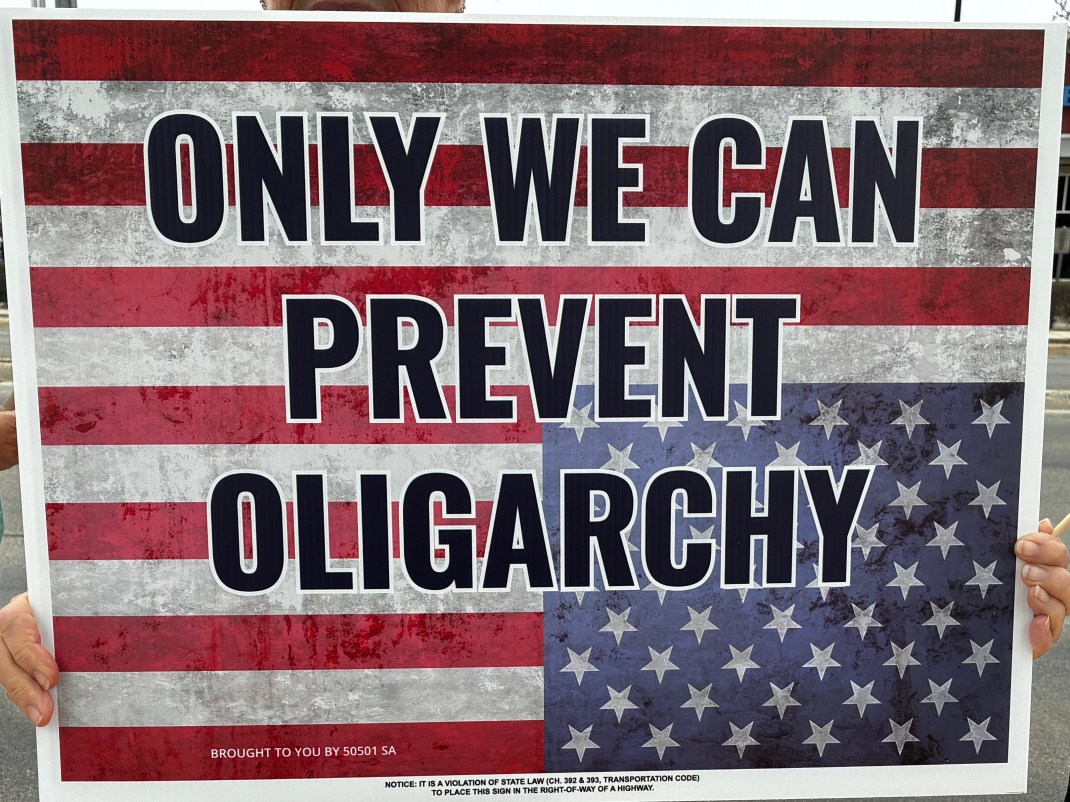
Citizen protests, some quiet and peaceful and some not so much, have a long history in this country beginning in the 18th century. As you may remember from school days, the Stamp Act Rebellion (1765), the Boston Tea Party (1773), and the effective boycott of British goods among New England merchants and customers were all effective catalysts leading up to the American Revolution of 1776.
The 19th century saw the rise of labor unions and strikes against authoritarianism in the 1830s in the North, and overt and covert acts of defiant rebellion by enslaved people in the pre-Civil War South. The early 20th century brought land occupations by indigenous people in protest of treaty violations and the illegal acquisition of their territories, while the Suffrage Movement of 1913 had hundreds of women taking to city streets marching for the right to vote.
Obviously, these events were well before my time, but being a child of the 1960s, how could I not have my own history with protests of all kinds large and small? From sit-ins to walk-outs to teach-ins to boycotts to sign-wielding marches, my protests started quietly one-on-one with the school principal in a girls’ Catholic high school about the length of our skirts, continued on into college with small student rebellions against dorm curfews and co-ed dress codes (again). And then I graduated and moved to New York City where I enrolled in graduate school and encountered big-time protests to almost everything.
What I didn’t experience first-hand, I witnessed while watching television. There were all the protests and marches for Civil Rights, from Rosa Parks to the Freedom Riders to Dr. King and the March on Washington to John Lewis crossing the Edmund Pettus Bridge. Concurrently, the Vietnam War was raging and young men of my generation who were not wealthy, connected, or academically able to stay in college for advanced degrees, were being drafted in huge numbers.
Our large cohort of Baby-Boomers mostly fueled the explosion of anti-war demonstrations on campuses, in the streets, and at public events; these demonstrations were generally not peaceful, with clashes between young people and the police often violent and sometimes tragic: at the Pentagon (1967), at the Democratic National Convention in Chicago (1968), on campus at Kent State University (1970). The 1970s also saw the rise of the Chicano movement and the formation of the United Farm Workers.
All in all, the second half of the 20th century was a chaotic time with many issues and causes at stake and citizen activism on both local and national levels taking a variety of forms. Issues were serious, intentions were earnest, and many were sad. Who can forget the images of those so-called “tree-huggers” holding on to save the natural environment.
Now here we are in the early quarter of the 21st century finding ourselves once again in a period of chaos and division over many of the same basic issues, although the issues are presenting themselves in slightly different ways: civil liberties and government overreach, immigration and discrimination, freedom of the press and political persecution, affordability and economic disparities. And another war. For all our on-going disagreements and societal problems, it is worth celebrating as we arrive at the 250th anniversary of our nation this year, that we have largely preserved where we were as a country in 1776: we still live in a democracy and we still have no king!
The current No Kings protests began in June of 2025 as a nationwide, peaceful demonstration organized by a coalition of progressive groups to raise awareness about the growing threats to our democracy by an autocratic leader with a proclivity toward dictatorship and a “billionaire first” administration. The No Kings movement, which grew substantially by the second rally in October, 2025, emphasized that America is managed by laws, not by absolute rulers governing by fiat with Sharpie pens on executive orders.
Saturday, March 28 was the third and latest No Kings rally across the Country. This one was notable for several reasons, not the least of which was its size. Organized by Indivisible, Move On, and the 50501 Movement, it included more than 3,300 protest events across the nation in all fifty states plus American Samoa and Puerto Rico, and drew an estimated eight to nine million protesters making it the largest single-day protest in American history. (There were also protests of solidarity in Australia, Canada, Costa Rica, Japan, and Europe.)
Beyond the crowd sizes, however, this third No Kings rally was remarkable for some other important reasons: first, the marches no longer focus on just one issue, but now include opposition to any and all of a growing number of egregious actions and policies of the Trump administration. Secondly, the geographic reach of the movement, which was originally concentrated in major, mostly blue cities, now extends out from urban centers into small towns and rural areas, well into the solidly red states and counties that Trump won in 2024. There were 80 different protest sites in Texas alone on Saturday, and well over half of them were held in the suburbs.
I attended one of them near where I live and it was the best, most-inspiring and hopeful couple hours I have spent in a long, long time. There wasn’t a huge crowd — maybe only 400-500 people — and we didn’t march, rather we laid claim to a large intersection and stood with signs and flags around the four corners. It was peaceful, almost joyful, serious, but also humorous with funny costumes and creative signage: “No crowns for clowns,” “Clean-up on aisle 47 — please!” “Ikea has better cabinets,” “Freedom neat, no ICE.”
It was a cool, cloudy day and and easily accessible even for those with walkers and wheelchairs, since a nearby Walmart Super Center conveniently let us park in their huge lot. And it was encouraging to see a collection of so many different people (of many races and ethnicities, retired and working, old and young, members of both political parties and none), from so many different walks of life (military, teachers, artists, farmers, business owners, mothers with kids in tow), and other areas of the country (since so many local residents have moved here from somewhere else). In short, it was a welcome reminder that not all Americans are “ugly Americans,” even these days.
There were no altercations at Saturday’s rally, though there was one MAGA nut on a motorcycle who kept racing up and down and around the corners spewing obscenities and playing loud music, but a sheriff soon started “escorting” him back and forth at a distance while curbside protesters smiled and laughed and some yelled “God bless you.” I had discussions with veteran protesters about precautions they always take no matter where they go, things like being careful with signs on posts that could be considered a weapon if a kerfuffle developed, or wearing a scarf and having water to wet it should tear gas be exploded, but gratefully, those warnings seemed more in line for the protests in the 1960s than here in 2026 where organizers were giving out free donuts and American flags.
So here’s the bottom line: Protests alone, no matter how big or loud or civil, cannot change situations overnight, but they can build the power of public opinion by exposing the issues, garnering attention and galvanizing support. Then it is up to each citizen to find other ways to get involved to effect meaningful change. There was a booth set up for voter registration at Saturday’s rally and I was pleased to see young people taking advantage of that opportunity. Voting, especially this year, is the most immediate way to show disapproval with the status quo and with the politicians who support it.
I was discussing my plan to attend the rally beforehand with a friend and she said that, while she had thought about going, she felt afraid of what might happen. That did it for me. I realized then that intimidation is the primary tool being wielded by this administration (and dictators everywhere) to control everyone and everything not only in the country, but in the world. And since I have never been intimidated by anyone or anything in my entire life, I’m sure not about to shrivel up and start now. So it felt good to show up on Saturday; it sort of reminded me of who I am.
The next nationally planned event is scheduled for Friday, May 1 and will emphasize workers over billionaires mostly through inaction this time: No work, No school, No shopping. Look for details on indivisible.org or mobilize.us
 the narrative thread