
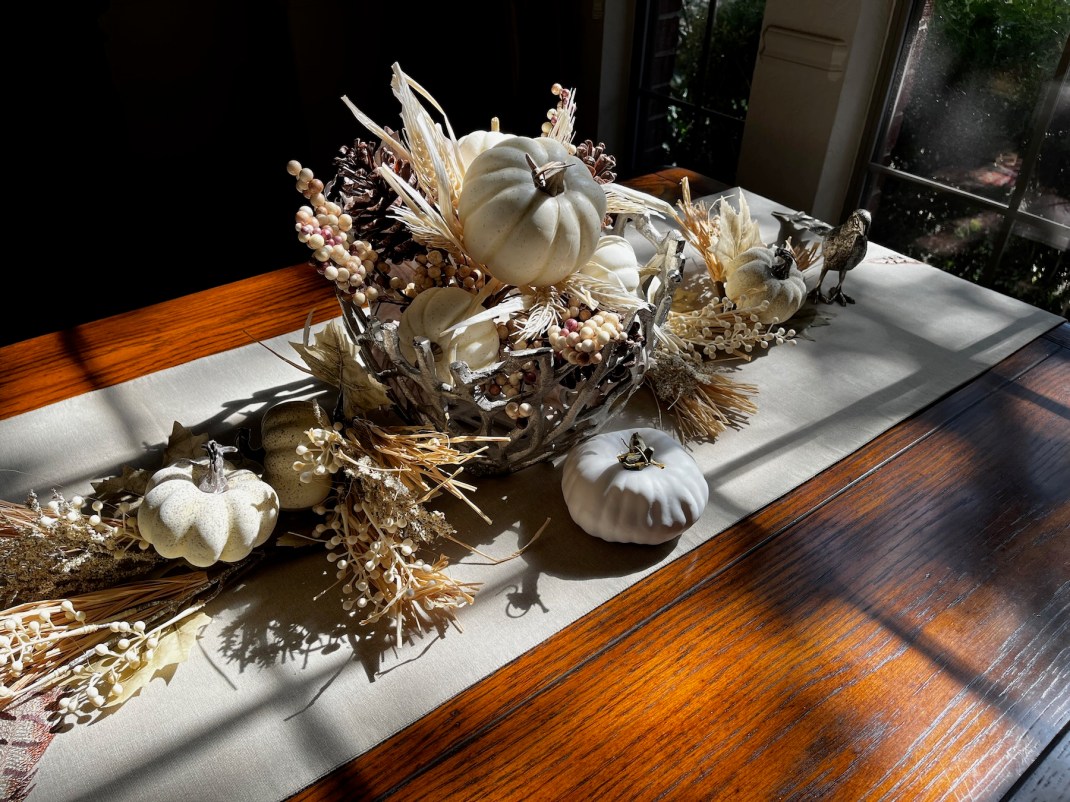
Fall officially arrives this week, though you might be hard-pressed to know that in South Texas. Yes, some pumpkin patches are popping up and garlands of faux autumn leaves are for sale in Michael’s, but temperatures here this week will still be in the 90’s. If you want to find any of Mother Nature’s colorful display along country roads and hillsides, you’ll have to drive due north and maybe even wait another week or two to do that.
Fall has always been my favorite season, especially when I lived in New England. Every year we would take a day trip out to Eastern Connecticut or upstate New York around my birthday in early October, where fall colors were already exploding. (Local newspapers and television stations actually provided “leaf-peeping guides” for the area.) We’d head to our favorite restaurants for squash soup and our favorite roadside stands for pumpkins and fall produce. Most years, the air was clear, the sun was bright, and you came home feeling good to be alive.
Even though I had never had the full New England experience while growing up in South Texas, fall was still my favorite season even then. In those days, fall meant football games (I was a cheerleader) and homecoming dances and my own birthday parties, and Halloween (my favorite holiday) was always just about to flip up on the calendar. Most of the time, we’d get a “norther” in late September or early October, which would then lower the temperatures and render the air crisp and clear. I could hear the Friday night football cheers and band music at the local stadium from across town as clearly as if I were next door.
I don’t do much cheerleading these days and I no long have big birthday parties, but there are other sure signs of fall that I have become acutely aware of here in San Antonio as the autumnal equinox is upon us. Absent brilliant fall foliage, the biggest sign of the season is the changing light, especially in late afternoon. The Northern Hemisphere tilts away from the sun in the fall, causing it to appear lower in the sky. With the sun lower on the horizon, light travels through a thicker layer of the atmosphere, which makes the sunlight is more scattered. The scattering of shorter wavelengths means the light reaches us with more red and yellow tones. Everything takes on a sepia tone, if you will.
While still intense, the late-day light is more diffused and not as direct because it is not high overhead. A lower sun angle also creates longer, more distinct shadows. Since autumn air usually contains less moisture and fewer dust particles than in the summer, the sky actually appears brighter and whiter and the air seems especially crisp and clean. With less atmospheric haze, the colors of autumn foliage (if you have any autumn foliage) will naturally appear more vibrant against the clear sky. Now if we could just get one of our famous Texas “northers” to rustle our branches and cool our temperatures down, it might actually start to feel like fall.
I love to look out the windows or sit on the back patio and watch the light filter through the trees as dusk approaches. And I love to watch the squirrels as they scamper and play up and down the tree trunks and across the yard. Their activity is another sure sign of autumn. While we don’t have big oak trees (white oaks or red oaks) in South Texas, we do have live oaks which are indigenous to the area and fiercely protected. Unlike their stately New England cousins that are deciduous and shed their leaves once a year in autumn to carpet the ground in red and gold, live oak trees are semi-evergreens that may only lose their leaves (always green) for a short time in the spring. But live oaks do produce acorns, which are a staple of the squirrel diet, and their arrival prompts a feeding frenzy and frenetic digging as the energetic little critters bury their provisions in caches for the winter. Believe me, you don’t dare walk outside barefoot once the acorns have begun to fall!
A week or two after Labor Day every year I dig out my home decorations and create some autumn color indoors. This year, in keeping with the subtle signs of the season that I am noticing more and more, I decided to forego the traditional oranges and reds and employ more subdued beiges and whites. My dining table is situated in a front window, a window that catches the lengthening rays of light through the trees and highlights distinct shadows from both inside and out. If I walk by the dining room at just the right time in the afternoon, I can’t help but stop and admire the way the light and the shadows cascade over my newly-designed table arrangement (photo above). Seems it changes with the movement of the sun a little every day.
Every time I look to the light, I see something different.
 the narrative thread