
It’s June, the season of awards and accolades, of graduations and weddings, of summer relaxation and new beginnings come fall. It is the apex of the season of success, celebrating both real achievements of the past and anticipated accomplishments in the future. June means hope in America, in a culture that firmly believes in success.
I’ve been thinking a lot about this lately as I have been listening to all those inspiring college graduation speeches on television and watching all the “kiss and cry” responses of Olympic-trial athletes and performing-artist award winners. In one way or another, all address various aspects of success: the secrets to success, the road to success, the overnight (or not) success, the sweet revenge of success, even how to dress for success. If success were a song, it would be our national anthem!
So what is success anyway, and what does it look like? The most common definition brings to mind a person who has risen to fame or fortune through outstanding achievement, most particularly in terms of wealth, power or respect. Of course, that definition flirts with the notion of infamy, which might also, in some circles, mean success. But never mind… Success in business or politics or the arts implies a dedicated work ethic, a plan of setting goals and the determination to achieve them, along with the qualities of resilience and self-confidence to take risks and work outside of convention. A person is deemed successful if he/she achieves wealth, fame, or notoriety among his/her professional cohorts through hard work and determination..
Many many books, plays and movies have been written about the pursuit of career success and the fallacies of the ultimate reward. A classic 1957 movie explored this in a satirical comedy called “Will Success Spoil Rock Hunter?” The main character (played by Tony Randall) was a low-level advertising executive who happened onto an unexpected connection with a famous actress (played by Jane Mansfield); from there, the two arranged a mutually beneficial romantic charade, which enhanced her career and catapulted him to the CEO of his company. But in the end, both were left disappointed, unhappy and unfulfilled. Once Rock Hunter realized that being at the top wasn’t all that he thought it would be, he renounced his success and went off with his original girlfriend to raise chickens on a farm.
Obviously, as so many such stories do, this film begs the question of whether career success gained through deceit and manipulation is ever really worth it. Doesn’t such a perch at the top if not gained through honest work and dedication always end up empty and lonely? Is not the solitary pursuit of worldly success a fool’s errand that can never be fully realized; for that matter, is the setting aside of one’s honor and integrity for the hot flash of momentary fame and glory ever worth the complete loss of self-respect? Many of today’s prominent and powerful political figures present excellent case studies of such Faustian bargains.
We hear the clarion call of success all the time as we wish a newlywed couple a successful marriage, but what does that mean? Does it mean a partnership that lasts for years and years, whether it is a good match or not? Does it mean an alliance that preserves wealth and property, one that produces progeny who ensure a legacy for the future as in royal traditions? And are those children themselves only successful if they grow up to make good grades, go to the right schools, enter the proper professions, make a lot of money and — oh yes, marry “well” themselves?
Actually, I think the whole question of “what does success look like” really gets to the essence of the issue. In America, we are more about appearance over reality, about what success “looks like” than we are about what it truly means: image, brand, status symbols, fortune 500 lists, and media coverage are the benchmarks. For example, aging successfully means not looking your age, with however many nips and tucks and botox injections it takes, rather than living with patience and acceptance into your 90s, like actress June Squibb, who at 93, finally has a leading role in the newly released film Thelma, or the 105 year old Virginia Hislop who finally got her Masters degree in Education from Stanford University this month. Neither woman, though, would make the cover of a fashion magazine, or hardly any other magazine except maybe The Magazine of AARP.
Everyone talks these days about the national mental health crisis in America. True, and it’s no surprise given the barrage of national and international crises we constantly hear about: wars, climate change, cultural divisions, political threats, poverty, ethnic persecutions — the list of ills and violence goes on and on. Of course we are all worn out, stressed out, disillusioned, and discontent, but maybe, just maybe, some of that mental distress is our own fault. When we fail to maintain our own moral center and stay true to who we know we are rather than give in to the pervasive social-media standards of what society tells us success looks like, we are bound to come up empty and hopeless in the end (unless, of course, we have literally “died trying” before coming to the final realization of the futility of it all).
Young people, particularly, are susceptible to the mixed messages of mass culture, but even those among us who are a bit older often support the promise of the golden calf and applaud those who promote that false promise. One good thing about years of experience is that we learn, albeit sometimes the hard way, that more is not necessarily better and that good enough is often quite good enough. After all, nothing is ever perfect, and nothing is ever as it seems. And neither is success.
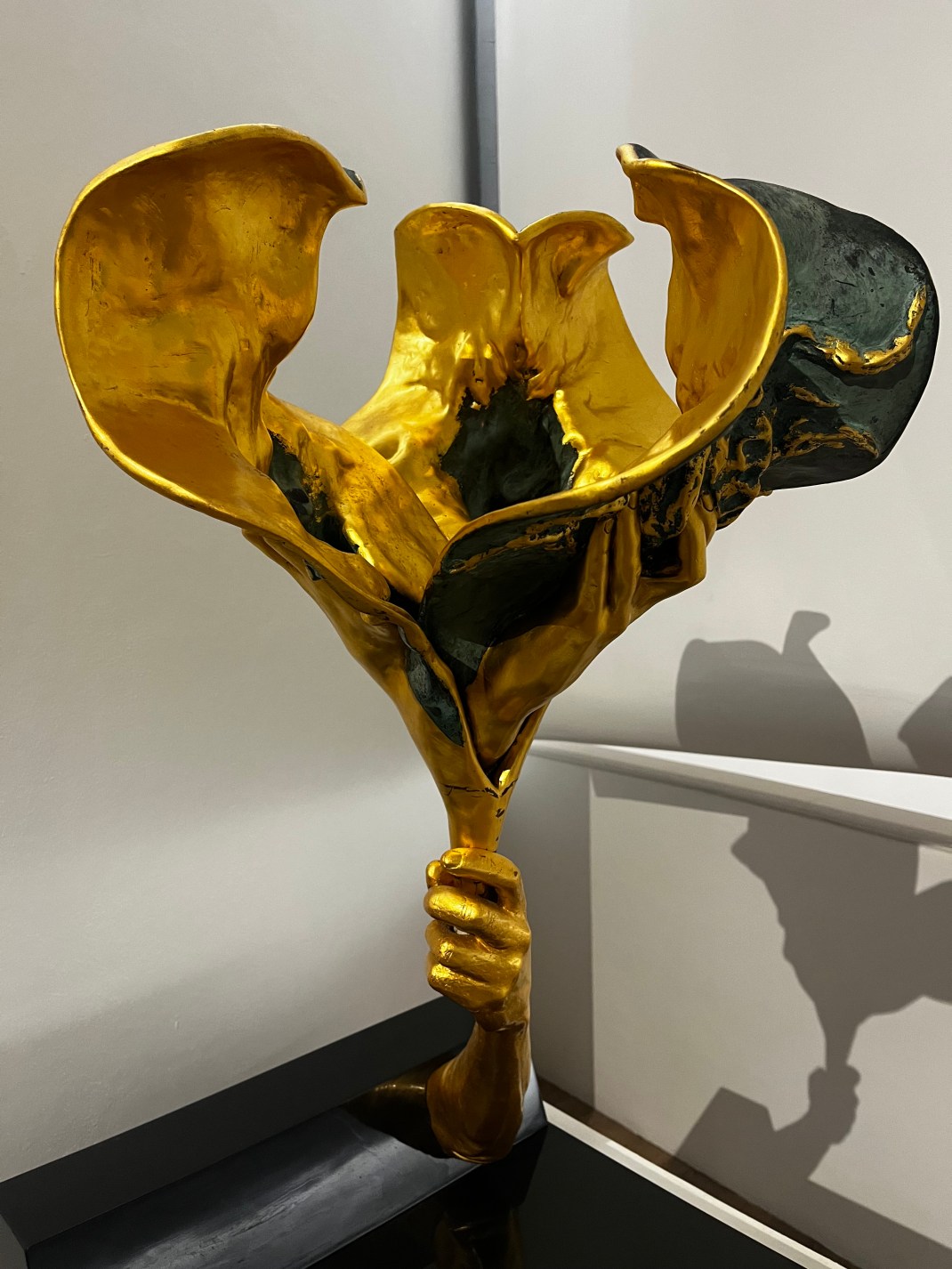
Photo above: Sculpture (Arms) Los Brazos de Dali, 1965, by Salvador Dali; in the Museo Soumaya, Mexico City
 the narrative thread