
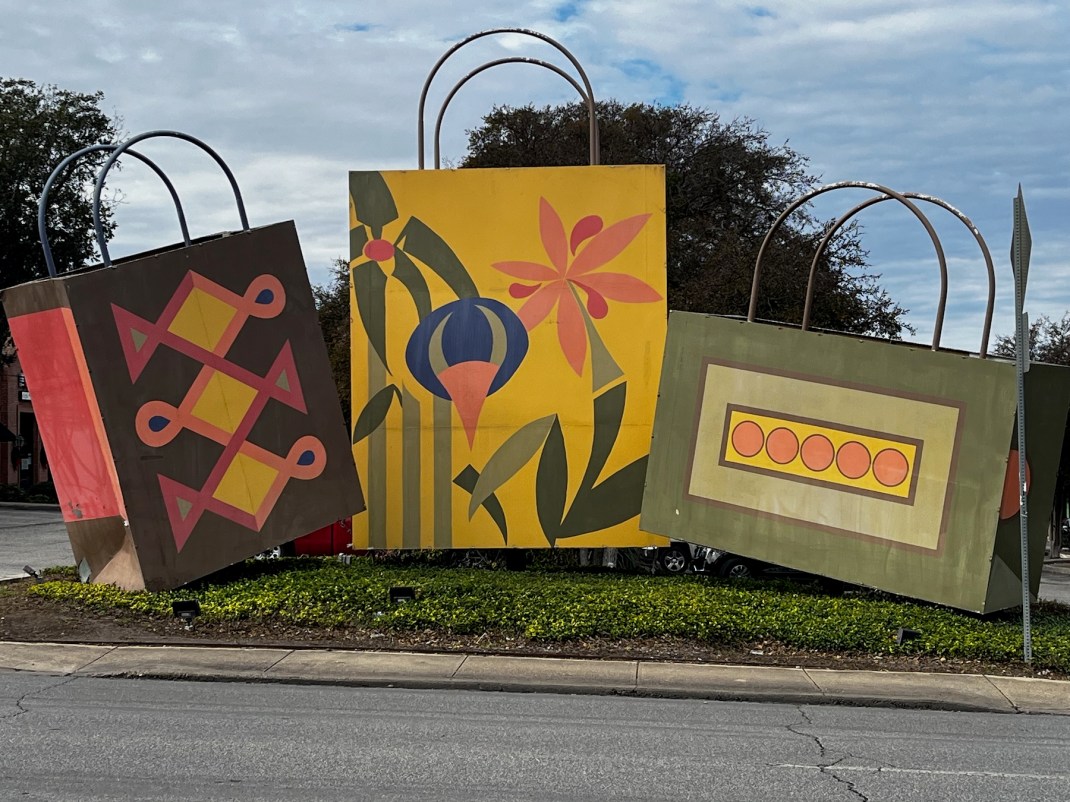
So, here we are in the last week of November. The year is winding down, the turkey has turned into leftovers, and shoppers on-line spent a record $9.8 billion this Black Friday (up 7.5% from last year, according to Adobe Analytics). We have entered the season of plenty, or as I have come to see it over the years, the season of too much. Ho — ho — ho
It IS all simply too much: the traffic, the frenetic shopping, the unrelenting advertising, the endless Christmas music, the parties and conviviality, the stress of too little time and too many expectations, and the intense pressure to be merry and joyful no matter what. Now, especially four years post-Covid, Americans want desperately to return to “normalcy,” whatever that was, and to recapture those idealized Norman Rockwell images of an era long gone. Certainly, that is a yearning strong enough to have fueled a major political campaign and birthed a national movement, but it has also created a national crisis of dissonance between the ideal and the reality, the truth and the lie.
The American Psychological Association reports that 38% of Americans’ cite increased stress and depression during the holidays. That may be true in an average year (in years past), but consider where we are today. Americans were already experiencing unprecedented levels of anxiety and depression before the holidays even began. We are all living with the fear of mass shootings, for example; in fact, one of the largest malls in New Jersey was evacuated on Black Friday due to a bomb threat. The threat of crowd violence is everywhere, and massive crowds assembled this weekend in cities all across the country to protest the Israeli-Hamas War. Shootings and violence make people wary of going into large, crowded places, hate crimes and road range make people nervous about dealing with others, and ugly political divisions even among friends and family members, never mind neighbors and community members, make most of us want to just avoid people altogether.
This is hardly a climate conducive to good cheer and brotherhood. News of war blares from our televisions and bellows from the mouths of our politicians, while hate crimes and bigotry are on the rise. Conspiracy theories and false information inundate us on social media. Threats and retribution are in the air, and nations abroad are increasingly installing far-right populist leaders (most recently in Argentina and the Netherlands). Even here in America, a narcissistic demagogue leads the polls as a probable presidential nominee. Never mind the effects of holiday stress, there is enough doom and gloom in daily life to overwhelm us all.
About now you are probably wondering if the original Grinch who stole Christmas is writing this post instead of someone who is, believe it or not, trying to find a positive angle on this angst. Well, while I admit that I’m hardly known for my bright-eyed optimism and perky platitudes, I can offer is some realistic advice learned through hindsight and my own life experience spent wrestling with anxiety attacks in every season of the year.
So here it is: we all need to reign it in, to assess who and what is most important in our lives, and to get a grip on ourselves and our emotions, whether those emotions are anger or sadness or fear, or even unbridled love.
As for the holidays in particular, we do NOT need to exhaust ourselves by racing to every party and honoring every request for help. This includes those “command performances” at family get-togethers or business events. Rather, to quote Nancy Reagan, we need to “just say no.” (You can add “thank you” if you want to be extra polite.) Like most women, it has taken me most of my life to simply be able to say NO, without excuses, without equivocation, and without guilt. We can’t exhaust ourselves by trying to do it all, and then blame everyone else for our exhaustion.
Nor do we need to strain our budgets and exhaust our patience by investing hours shopping for “stuff” for those who have everything. My closest friends and I have long-since agreed to no longer exchange gifts, not even of the fruit-food-gift card variety (because, eventually, these just become exchanges of like for like). As for tchotchkes and other gifty items, most of us have enough of those already to open our own gift shops; besides, we older folks are downsizing and donating anyway, and younger folks want no part of all the “stuff’ that we accumulated “back in the day.” Minimalism is in!
What we do need to give, however, is time and attention to the people and the causes we care about most. Let those you love know how much you appreciate them with a call or a hand-written note, or even a zoom visit over a cup of tea. Offer to help a friend or neighbor with some small chore or to take them somewhere they need to go. If you have extra time and money, volunteer for a day at a soup kitchen or a clothing drive or make a donation to a special charity. Acknowledging the value of others is a gift of gratitude that both the giver and the receiver can enjoy.
Life is short and some days can be very long indeed, especially if you are a planner and a worrier like me. The older I get, though, the more I try to live in the present: after all, the past is over and can’t be changed, and the future hasn’t happened yet. The present is really all we have, and if we can manage that, then we’re doing okay.
This holiday, make memories, give blessings, and be grateful for who and what you have. These are the best, most enduring gifts for yourself and others, and they don’t cost a dime.
 the narrative thread
Amen! So beautifully stated.
LikeLike